


There is a reason the bob refuses to go out of style. It is the rare haircut that reads as polished and modern, works in a boardroom and a school run, and can be tweaked a dozen ways to suit your face, your hair type, and how much time you actually have in the morning. For professional women, it might be the most versatile cut there is.
The trick is choosing the right version. A blunt bob and a soft layered bob send completely different signals and demand different upkeep. Below are 12 bob variations that look expensive and professional, with who each one suits and exactly what to ask your stylist for.
Why the Bob Works So Well for Professional Women
A good bob hits the sweet spot between effort and polish. It is long enough to feel feminine and versatile, short enough to look intentional and low-maintenance, and structured enough to always read as “pulled together.” That is a powerful combination when you want to look capable without spending an hour on your hair.
Bobs also flatter a huge range of face shapes and hair types once you adjust the length, layering, and part. The versions below range from sharp and statement-making to soft and easy, so there is a professional bob for everyone.
12 Bob Variations for Professional Women
1. The Classic Blunt Bob
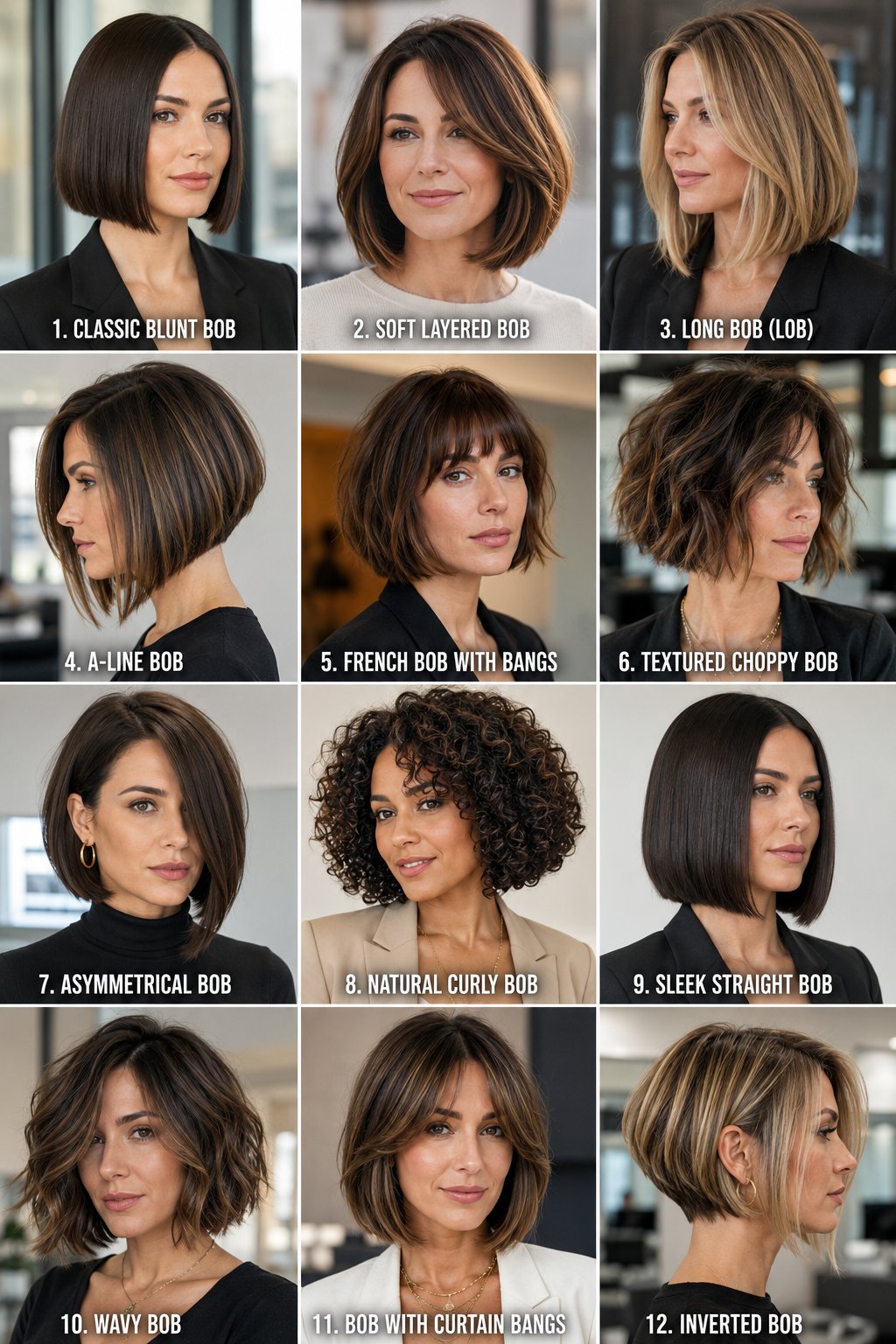
Cut to one length with a sharp, straight-across bottom, the blunt bob is the definition of polished. It makes fine hair look thicker and reads as confident and precise. Best for straight-to-wavy hair; ask your stylist for a one-length blunt cut hitting around the jaw or collarbone.
2. The Layered Bob

Soft layers add movement and volume, making this the go-to for anyone who wants a less severe, more forgiving shape. It suits most hair types and grows out gracefully. Ask for gentle, face-framing layers that keep the weight at the bottom so it still feels like a bob, not a shag.
3. The Long Bob (Lob)

Hitting between the chin and collarbone, the lob is the least intimidating way to try a bob and the easiest to style. It is professional, flattering on nearly everyone, and long enough to still tie back. Ask for a lob just below the shoulders with subtle layering for movement.
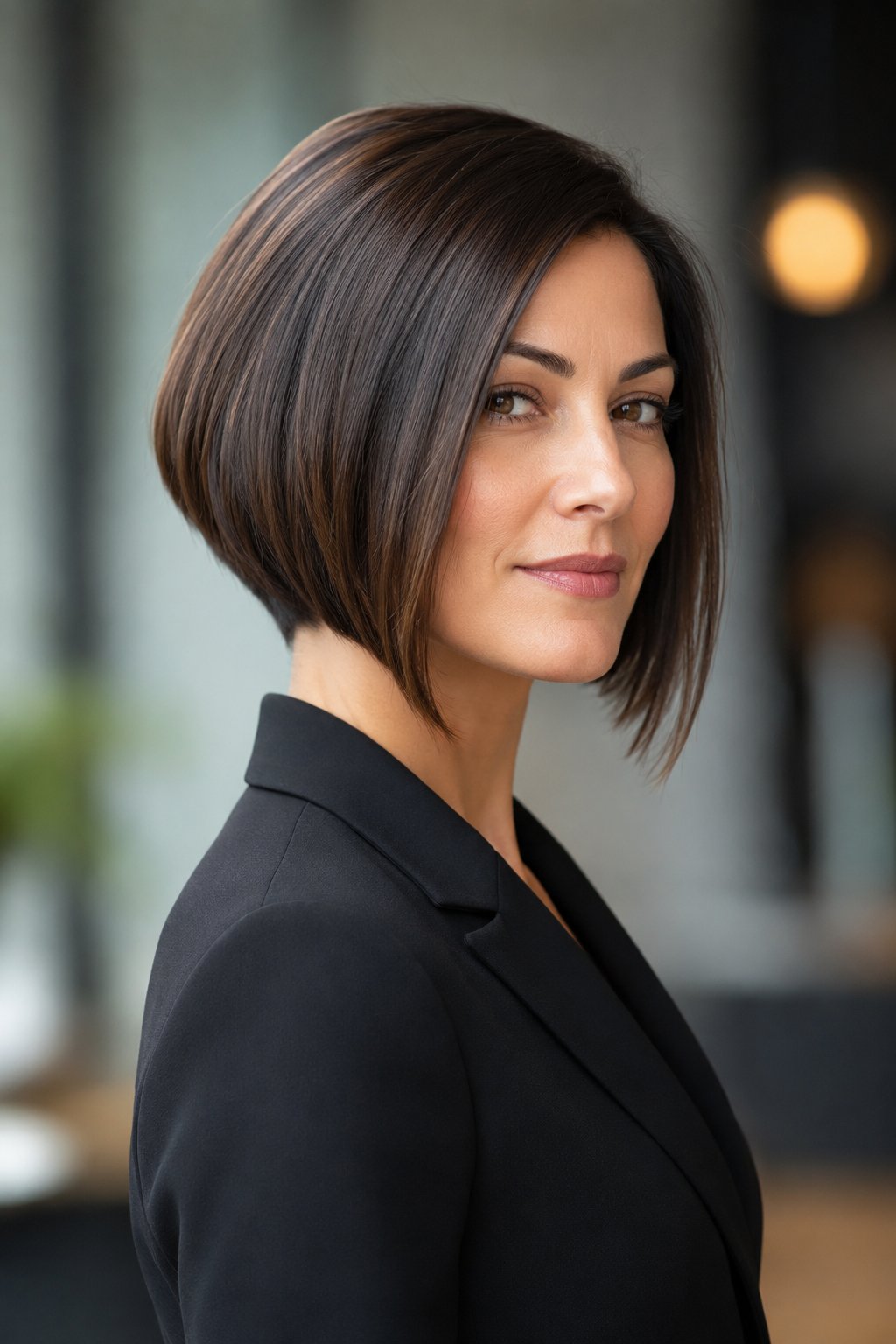
4. The A-Line Bob

Shorter at the back and gradually longer toward the front, the A-line bob is sleek and modern with a built-in sense of drama. It flatters round faces by drawing the eye down. Ask for an angled bob with a soft graduation, keeping the front pieces at or below the chin.
5. The French Bob
Chic, short, and usually paired with a fringe, the French bob sits around the cheekbone or jaw and looks effortlessly editorial. It suits those confident with shorter hair and minimal fuss. Ask for a short, slightly tousled bob with soft bangs for that undone Parisian feel.
6. The Textured or Choppy Bob

Piecey, lived-in texture makes this bob feel current and relaxed while staying professional. It is ideal for thick hair that needs de-bulking or fine hair that wants grit. Ask for a bob with point-cut ends and some internal texture so it moves without looking messy.
7. The Asymmetrical Bob
One side longer than the other gives this bob a bold, fashion-forward edge that still works in most modern workplaces. It is a statement, so it suits confident, creative professionals. Ask for a clear but wearable asymmetry, keeping the longer side around chin length so it stays office-appropriate.
8. The Curly Bob
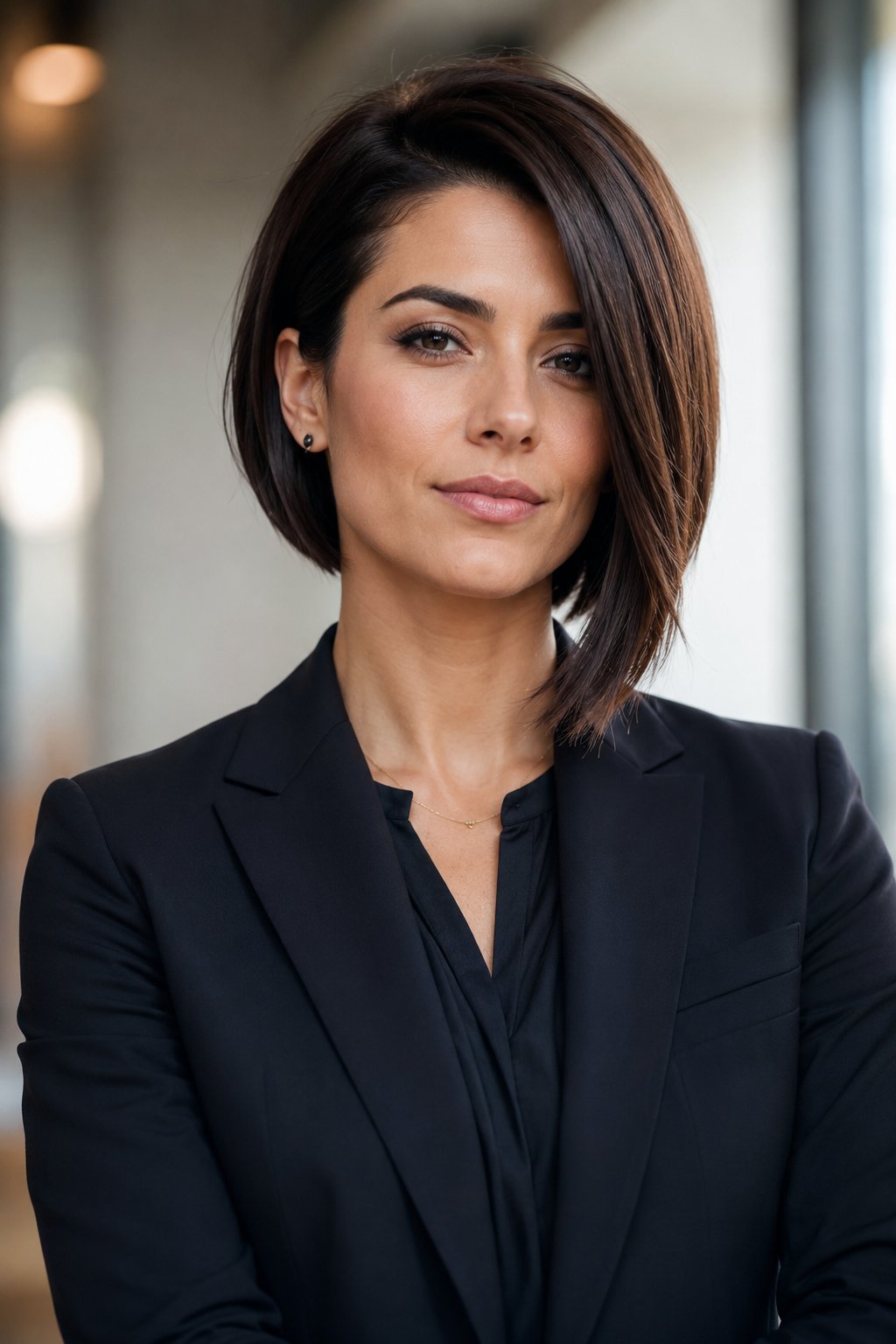
Bobs are fantastic on natural curls, letting them spring up into a rounded, voluminous shape. The key is a curl-specific cut. Ask for a dry cut or a curl-trained stylist who shapes your bob based on how your curls actually fall, usually leaving a little more length to account for shrinkage.
9. The Sleek Straight Bob
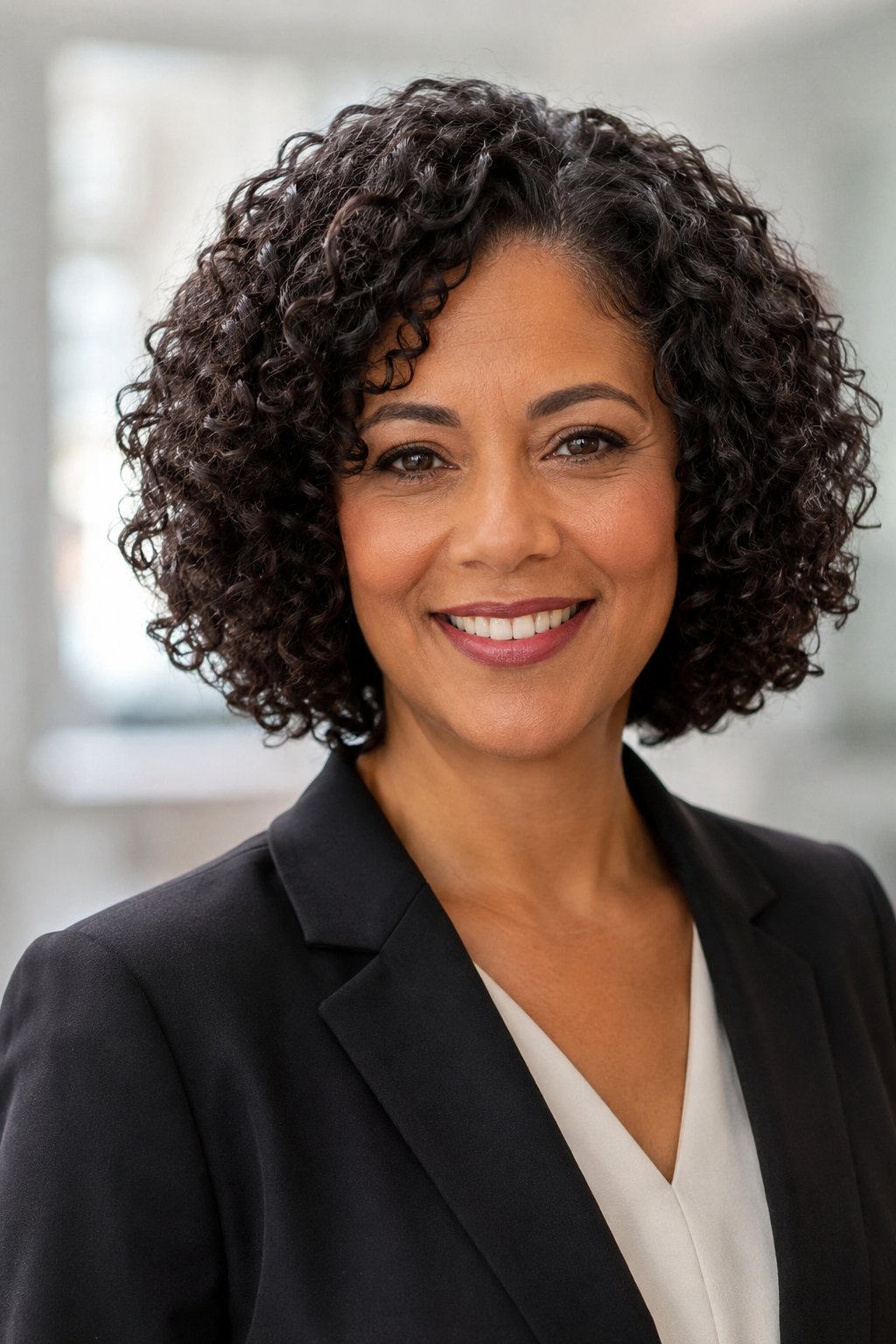
Glass-smooth and glossy, the sleek straight bob is the most executive-looking version of all. It signals precision and polish, perfect for high-stakes settings. It does require straight hair or regular smoothing. Ask for a blunt or slightly graduated bob and finish with a smoothing serum and flat iron.
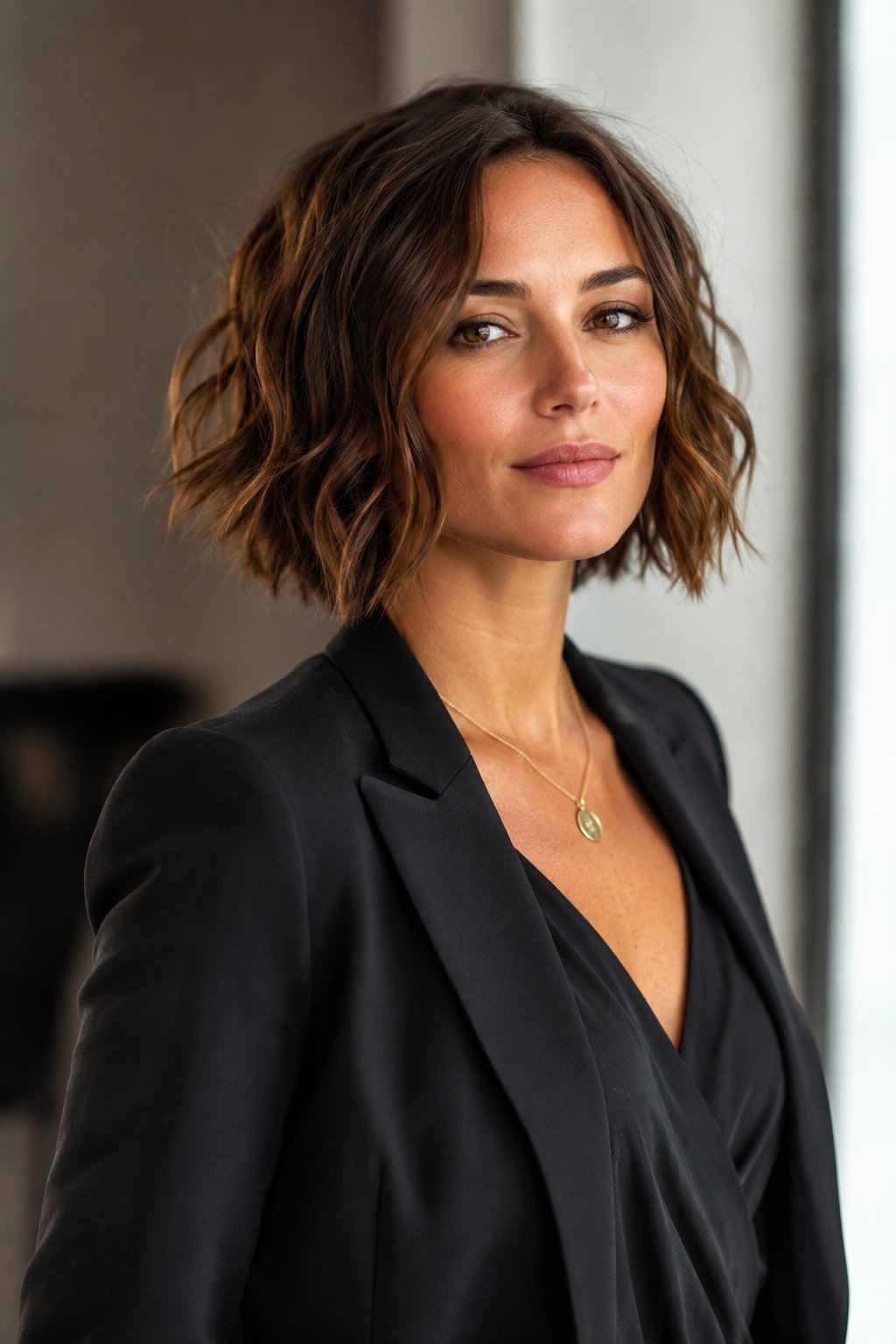
10. The Wavy Bob
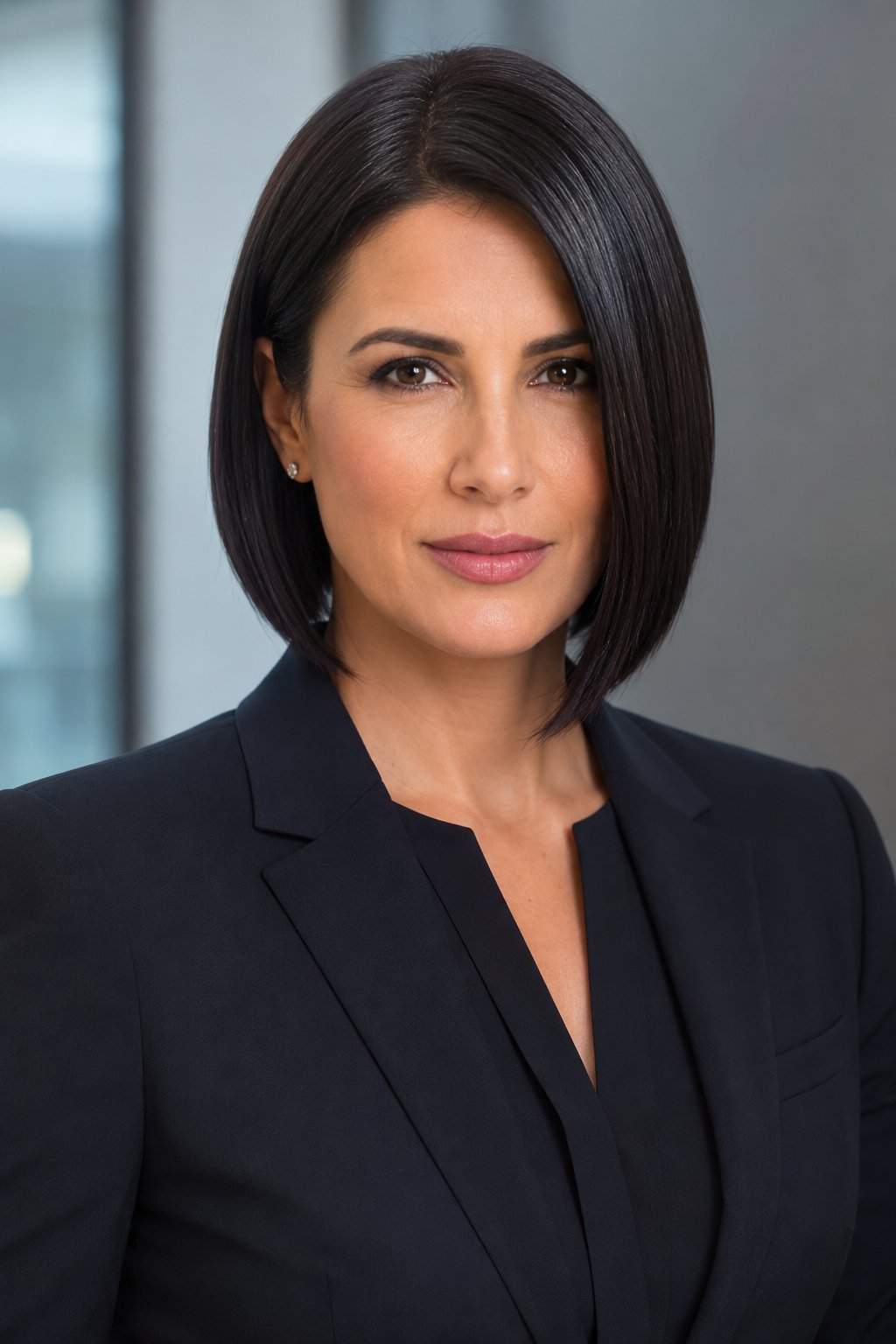
Soft, tousled waves give a bob an approachable, modern elegance that still looks professional. It hides grown-out layers well and forgives a rushed morning. Ask for a mid-length bob with light layering, then style with a texturizing spray and a curling wand for loose, natural-looking waves.
11. The Bob with Curtain Bangs

Curtain bangs soften any bob and frame the face beautifully, flattering nearly every face shape. They are the low-commitment way to update your look. Ask for soft, center-parted bangs that blend into the length, so they grow out gracefully instead of demanding constant trims.
12. The Inverted Bob

Stacked and shorter at the back with longer front pieces, the inverted bob adds volume and a rounded, full shape. It is great for thin hair that needs body. Ask for a stacked, graduated back with face-framing front layers, keeping it soft rather than severe for a professional finish.
How to Choose the Right Bob for Your Face Shape
The most flattering bob depends largely on your face shape. Round faces are lengthened by longer bobs, A-lines, and anything with height at the crown, while very short blunt bobs can widen them. Oval faces suit almost any bob, so you can choose based on lifestyle rather than balance.
Square faces are softened by wavy, layered, and curtain-bang bobs that blur a strong jaw, while heart-shaped faces are balanced by chin-length and longer bobs that add width at the jaw. When in doubt, a lob with soft face-framing layers is the safest, most universally flattering choice.
Matching Your Bob to Your Hair Type
Your hair type matters as much as your face shape. Fine hair loves blunt and inverted bobs that create the illusion of thickness, and it will struggle with heavy layering that removes precious volume. Thick hair benefits from textured and layered bobs that remove weight and prevent that boxy, triangular look.
Curly and coily hair shines in shaped curly bobs cut for your specific pattern, and wavy hair is happiest in soft, mid-length bobs that let its natural bend do the work. Tell your stylist your hair type honestly and ask which version will look good with the least daily effort, since the best cut is one you can actually maintain.
Keeping Your Bob Looking Expensive
A bob lives and dies by its shape, so it needs more regular trims than long hair, roughly every six to eight weeks, to keep its clean line. Between cuts, a good smoothing or texturizing product and a few minutes with a blow-dryer or wand make all the difference between “styled” and “grown out.”
Invest in one quality styling tool and a heat protectant rather than a shelf full of products. A polished bob is less about expensive extras and more about a precise cut and consistent, simple upkeep. If you want more low-effort professional looks, our guide to easy, pulled-together outfits pairs perfectly with a wash-and-go bob.
How to Style Your Bob in Under 10 Minutes
A bob rewards a quick, consistent routine far more than a big product collection. Start on damp hair with a heat protectant, then rough-dry with a blow-dryer, using your fingers or a round brush to build volume at the roots. For a sleek finish, flat-iron in sections and smooth the ends under with a light serum.
For soft waves, wrap one-inch sections around a curling wand away from your face, leave the ends out, and break the curls up with your fingers and a little texturizing spray. Either way, the whole thing takes under ten minutes once you have done it a few times, which is exactly why the bob is such a friend to busy professionals.
Talk to Your Stylist Like a Pro
The gap between the bob you imagined and the one you got usually comes down to the consultation. Bring two or three reference photos of the exact length and shape you want, and be honest about your daily routine so your stylist can cut something you will actually maintain.
Use specific language: name the length relative to your jaw, chin, or collarbone, and say whether you want blunt, layered, or textured ends. Mention your hair type and any cowlicks or growth patterns. A good stylist will also tell you honestly whether a look will suit your hair, so listen to their input rather than insisting on a photo that will not translate to your texture.
Bob Mistakes to Avoid
A few common missteps turn a great bob into a frustrating one. Do not go too short too fast; if you are unsure, start with a lob and take more off at your next appointment. Do not ignore your hair type and chase a photo of someone with a completely different texture, because the same cut behaves very differently on straight versus curly hair.
Do not skip your regular trims, since an overgrown bob loses the shape that made it look sharp. And do not over-layer fine hair or under-texture thick hair, as both remove the balance a bob depends on. Get the length, texture, and upkeep right, and a bob is one of the most reliably flattering cuts you can wear to work.
Colors That Make a Bob Look Expensive
The right color can make a bob look like it cost a fortune, even when the cut is simple. Dimensional colour, subtle babylights or a soft balayage, catches the light and gives a blunt bob depth without looking high-maintenance. Rich, glossy single tones read as sleek and expensive, especially in deep brunettes, soft blacks, and warm caramels.
Whatever shade you choose, gloss is what sells it. A shine treatment or at-home glossing product keeps colour looking salon-fresh and stops a bob from ever looking flat or dull. If you are blending greys, a lived-in colour with soft root melt keeps regrowth from showing and stretches the time between salon visits, which is a quiet win for any busy professional.
The Bottom Line
The bob endures because it flexes to fit you. Match the length and layering to your face shape, choose a version that suits your hair type and your morning routine, keep it trimmed and glossy, and you have a cut that looks expensive and professional with very little daily effort. Bring clear photos to your stylist, be honest about your upkeep, and let the bob do what it does best: make you look effortlessly pulled together.
Frequently Asked Questions
Which bob is best for a professional setting?
The long bob (lob), classic blunt bob, and sleek straight bob read as the most polished and executive. They are universally flattering and easy to keep neat, which is why they are the safest professional choices.
How often does a bob need trimming?
Every six to eight weeks. A bob relies on its shape, so it grows out of its clean line faster than long hair and needs more frequent trims to keep looking intentional and expensive.
Is a bob low maintenance?
It can be. A lob or wavy bob styles quickly and forgives grown-out layers, while a sleek blunt bob needs more daily smoothing. Choose your version based on how much time you realistically want to spend each morning.
Can I get a bob with thick or curly hair?
Absolutely. Thick hair suits textured and layered bobs that remove weight, and curly hair looks great in a bob cut specifically for your curl pattern. The key is a stylist experienced with your hair type.
What is the most flattering bob for a round face?
Longer bobs like the lob and A-line, especially with some height at the crown and face-framing layers, lengthen and slim a round face. Avoid very short, wide blunt bobs that add width at the cheeks.
You might also like: Cute and Comfortable Teacher Outfits for Every Season · 11 Realistic Side Hustles for Women That Actually Pay
Related Post