

A suit is never just fabric. It’s one of the fastest signals a man sends before he opens his mouth — in a boardroom, at a wedding, on a first client call, at an investor dinner. The right men suits communicate who you are and what you expect to be taken for. The wrong ones quietly work against you all day.
This guide walks through ten suit styles worth knowing. Each one is pulled apart for what it actually says, when it works, and when it doesn’t — so you can pick with intent instead of defaulting to whatever’s hanging in your closet.
1. The Beige Suit with an Open White Shirt — Relaxed Authority
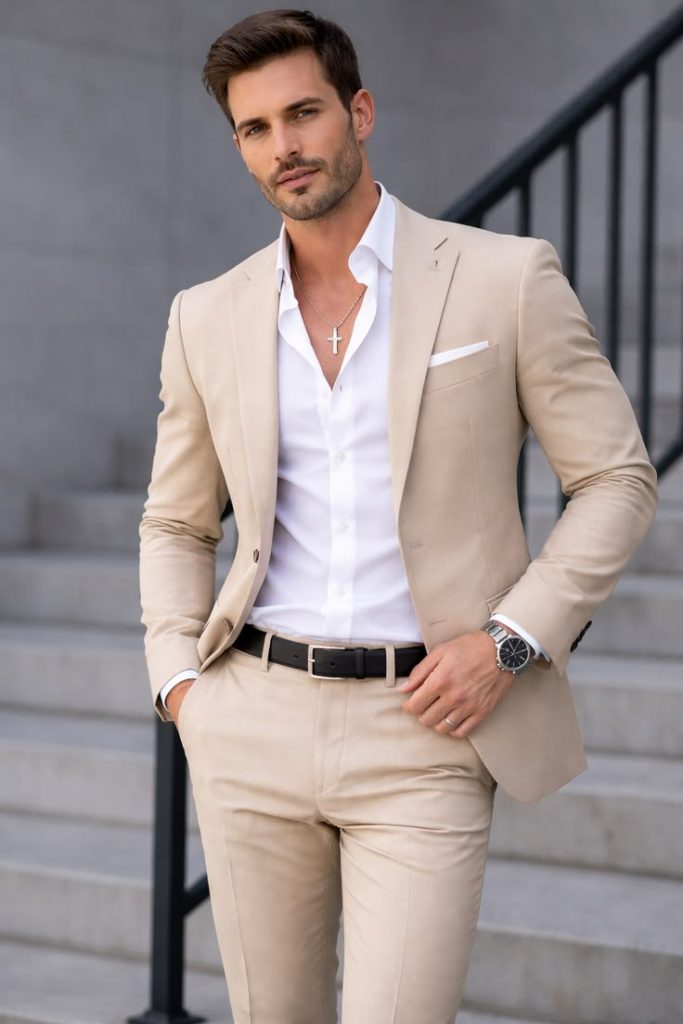
Image credit: Pinterest
A beige suit paired with a crisp open-collar white shirt is one of the most underrated looks in menswear. It reads confident without trying too hard. The light tone softens the formality of a two-piece, and the open collar signals ease — the kind of ease that comes from already having your day handled.
This works best in warmer months, daytime events, and settings where you want to look put-together but not overdressed. Think outdoor weddings, daytime business meetings in casual cities, or a founder dinner where the room is split between suits and smart casual. Pair it with brown leather and a simple watch. Skip the tie — a tie here kills the whole point.
2. The Emerald Green Three-Piece — For When You Want to Be Remembered
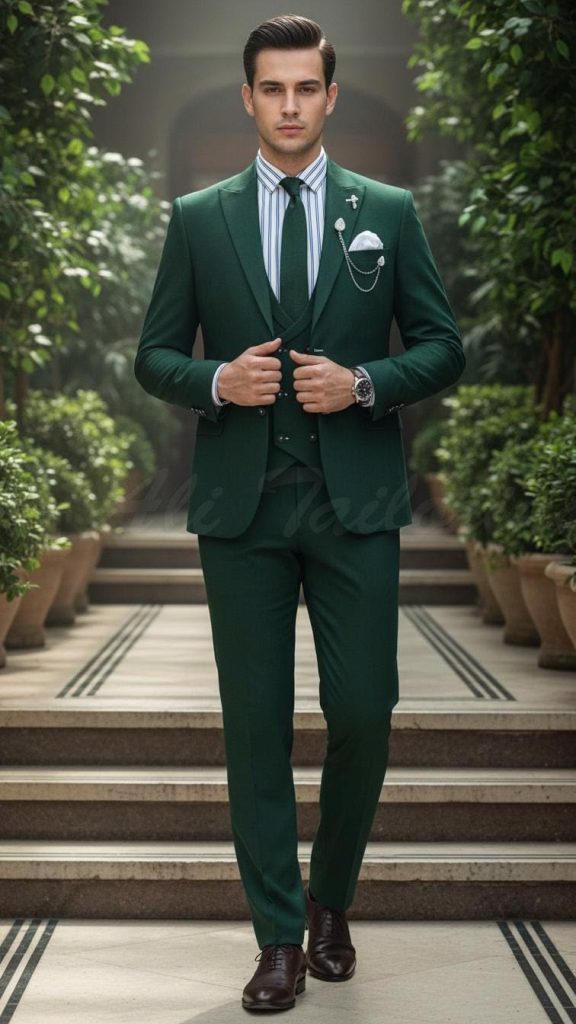
Image credit: Pinterest
Most men play it safe with navy and charcoal. A deep emerald green three-piece is what you reach for when playing it safe isn’t the goal. It carries weight, depth, and a slight old-world elegance that still feels modern when cut properly.
The three-piece construction — jacket, waistcoat, and trousers — adds visual structure and makes the outfit feel intentional rather than loud. This is a wedding suit, a milestone-event suit, a founder-closing-a-funding-round suit. Keep the shirt classic (white or subtle stripe), add a matching tie, and let the color do the talking. Brown oxfords ground it; black shoes fight it.
3. The Charcoal Suit with a Burgundy Tie — The Executive Standard
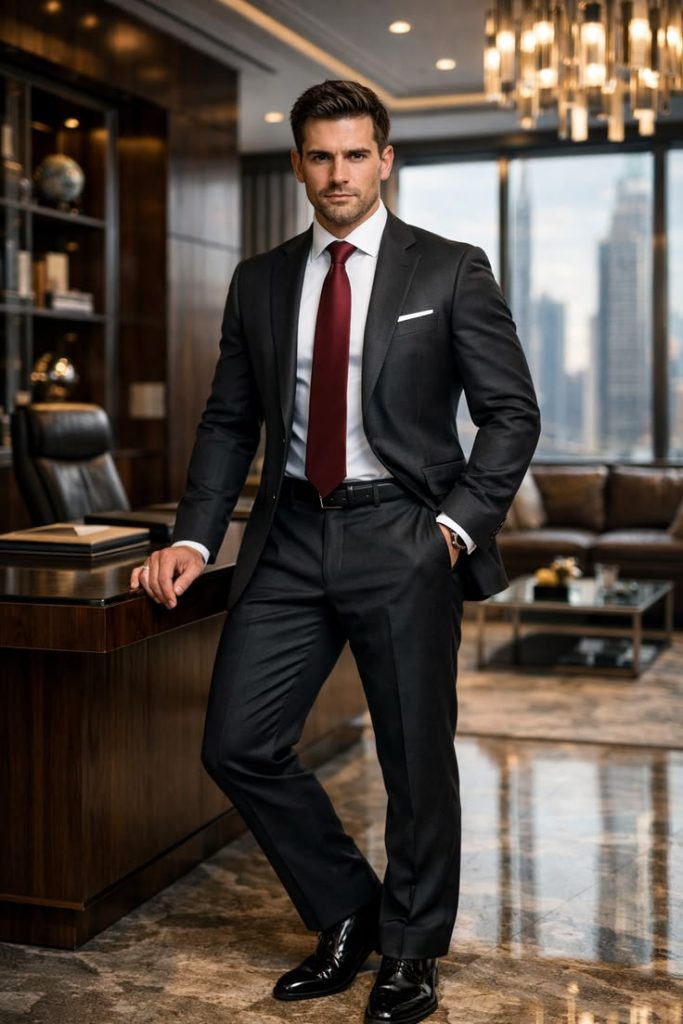
If there is one suit every professional man should own, this is it. A well-fitted charcoal suit with a white shirt and a burgundy tie is the baseline uniform of serious executives, operators, and founders who need to be taken seriously in rooms where decisions get made.
Charcoal is more versatile than black, more authoritative than mid-grey, and photographs well under almost any lighting. The burgundy tie adds enough color to feel alive without crossing into flashy. This is your boardroom suit, your pitch-day suit, your high-stakes-meeting suit. If you’re going to invest in one piece of tailoring, this is the one to get exactly right.
4. The Navy Suit with No Tie — Modern Professional
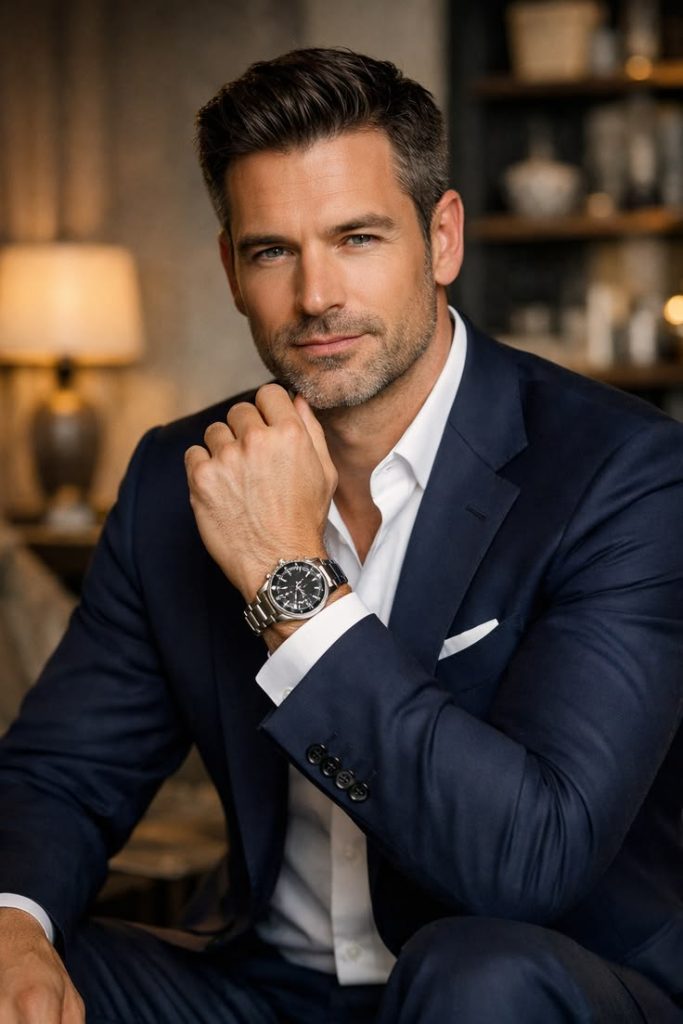
Image credit: Pinterest
Navy is the most flattering suit color on most men, and the reason it works is simple: it complements nearly every skin tone and adds contrast without harshness. Worn with an open-collar white shirt and a proper watch, it becomes the modern professional’s go-to — formal enough for meetings, relaxed enough for networking dinners.
The key detail here is fit. A boxy navy suit looks dated instantly; a slim, tailored navy suit looks sharp for years. This is the outfit for the founder who doesn’t want to wear a tie every day but still wants to walk into a room and be read correctly. Works equally well in the office, at a conference, or at a client dinner where you’re the one picking up the check.
5. The Cream Suit with a Black Shirt — High-Contrast Confidence
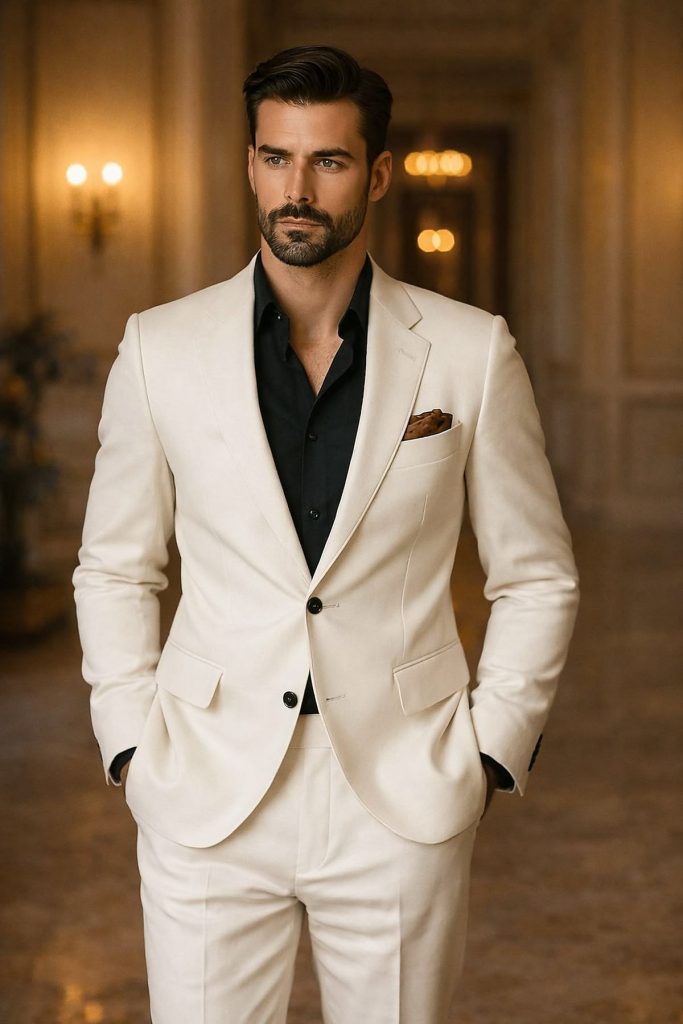
A cream or ivory suit paired with a black shirt is a deliberately bold pairing — it demands you stand behind it. Done right, it looks like Mediterranean evening style: elegant, warm, and slightly cinematic. Done wrong, it looks like a costume.
What makes it work is restraint. No tie. Minimal accessories. Let the color contrast do everything. This suit belongs at summer evening events, destination weddings, rooftop parties, and nights where you want to look like the most composed person in the room. It is not an office suit. It is not a safe suit. And that’s the point.
6. The Beige Blazer with Black Trousers — Smart Casual That Still Works
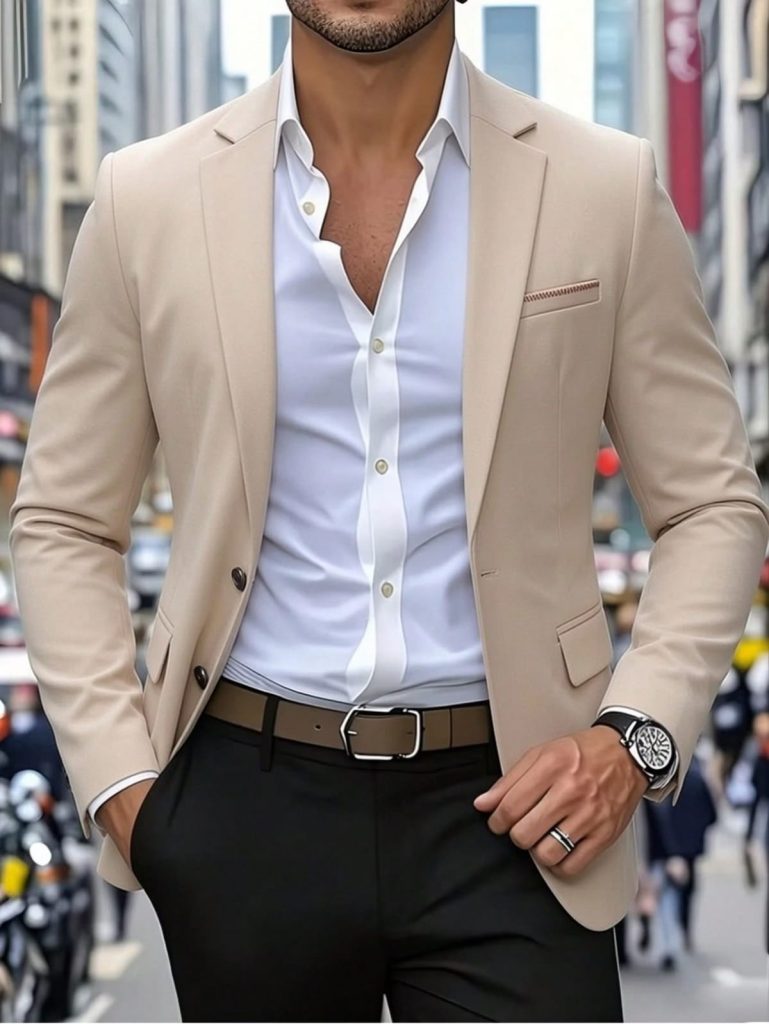
Image credit: Pinterest
Technically this is a separates look rather than a matched suit, but it deserves a place on any serious menswear list because it solves a real problem: how to look sharp without looking corporate. A beige or camel blazer over a white shirt and tailored black trousers is the uniform of men who move between meetings, coffees, and dinners without changing outfits.
The neutral blazer softens the formality of black trousers, and the break in color makes the whole look feel considered rather than stiff. This is ideal for modern founders, creatives, consultants, and anyone operating in a smart-casual professional culture. Add a brown leather belt and matching loafers or derbies to tie it together.
7. The Grey Double-Breasted Suit — Old-School Power
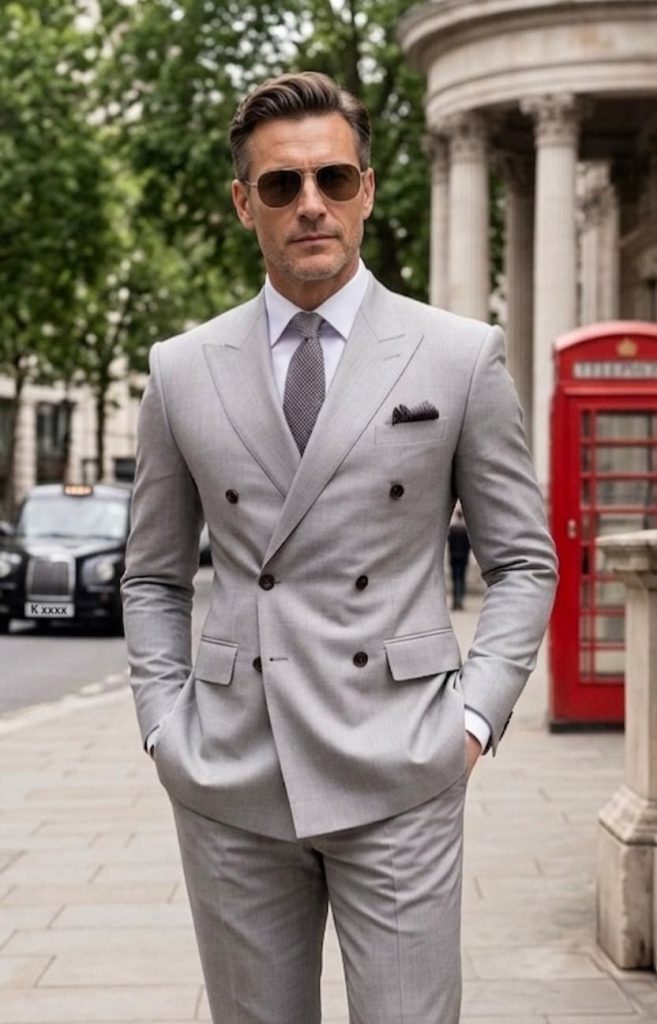
Image credit: Pinterest
The double-breasted suit is having a quiet comeback, and the light grey version is the most flattering place to start. The wider lapels, the overlapping front, and the structured silhouette all read confidence — this is a suit that takes up space without apologizing for it.
Grey double-breasted works particularly well for men who want a slightly older, more European sensibility without tipping into costume. It pairs beautifully with a solid tie, a crisp shirt, and simple accessories. Save it for weddings, formal daytime events, and moments when you want to look slightly above the room. The one rule: keep it buttoned. An unbuttoned double-breasted suit loses all its structure.
8. The Classic Grey Suit with a Patterned Tie — Timeless and Safe
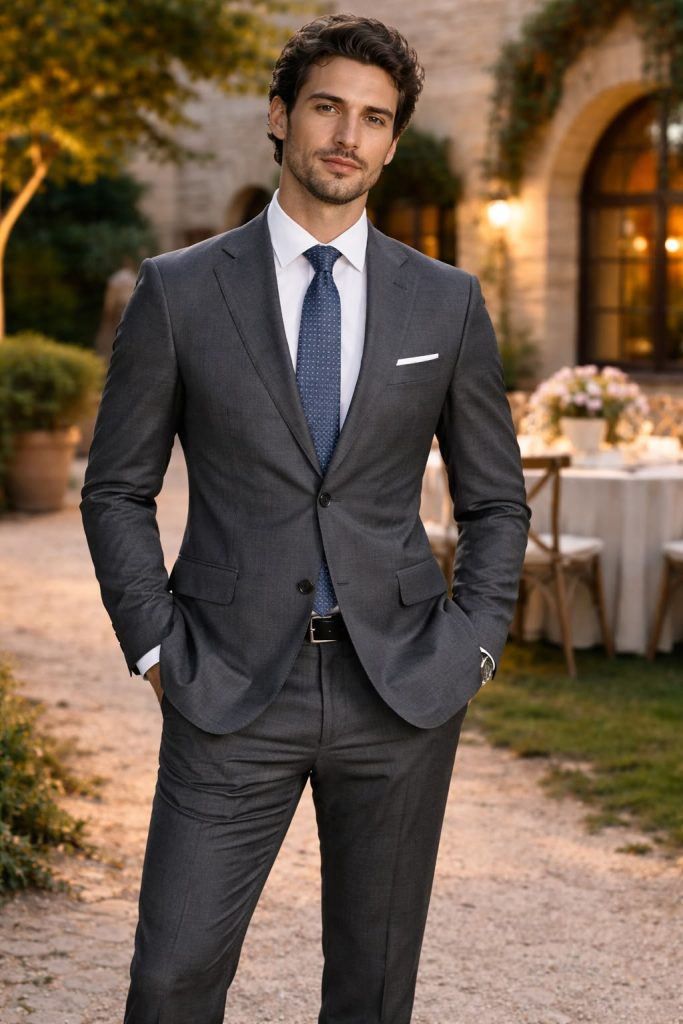
Image credit: Pinterest
Mid-grey is the quietest workhorse in a man’s wardrobe. It’s less severe than charcoal, more flexible than navy, and almost impossible to get wrong. Paired with a white shirt and a patterned tie — subtle dots, small geometrics, or a textured weave — it becomes the suit you can wear to almost any daytime formal occasion.
This is the wedding-guest suit, the daytime-event suit, the “I don’t know exactly how formal this is” suit. It photographs beautifully in natural light, which is why you see it so often at outdoor weddings and garden events. Pair with black or dark brown leather depending on the rest of the outfit’s undertones.
9. The Tan Suit with a Knit Tie — Quietly Stylish
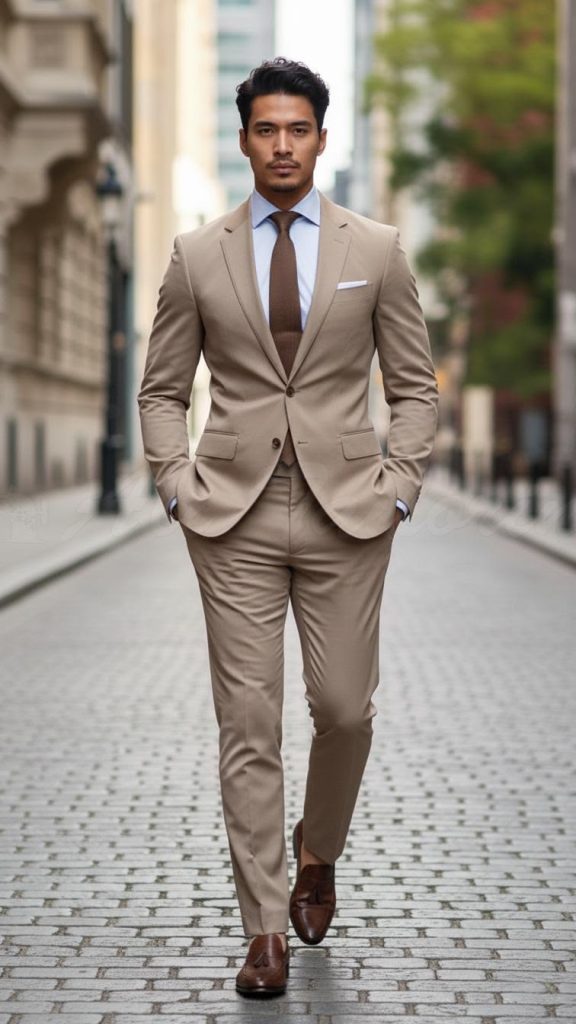
A tan suit with a light blue shirt and a brown knit tie is the kind of look that rewards attention to detail. Knit ties have texture, which stops the outfit from looking flat, and the tan-blue-brown palette is naturally harmonious without being boring.
This is a stylish man’s suit — not the loudest in the room, but often the most interesting once you get close. It works well for spring and early fall, for creative industries, and for men who want their style to be noticed by people who actually know clothes. Brown leather loafers or monk straps complete it. Black shoes would kill it immediately.
10. The Brown Suit — The New Navy
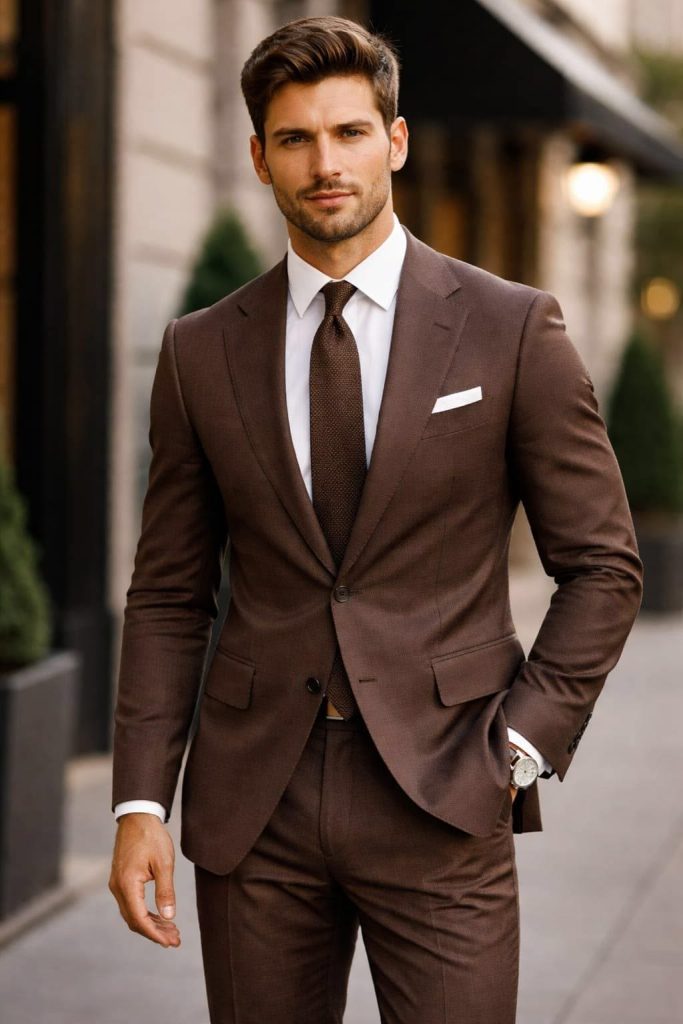
Brown used to be considered risky. It isn’t anymore. A well-tailored brown suit in a rich chocolate or chestnut tone is one of the most sophisticated choices a man can make right now — warmer than charcoal, more unique than navy, and surprisingly versatile once you own one.
The trick with brown is commitment. A cheap brown suit looks cheap faster than a cheap navy suit does, because the color has less room to hide poor fabric. If you’re going to invest in brown, invest properly. Pair with a crisp white shirt, a brown or deep-red patterned tie, and brown leather. It becomes a suit people remember — which, for anyone building a brand around themselves, matters more than fitting in.
Final Thought: A Suit Is a Tool, Not a Costume
The best-dressed men don’t own the most suits — they own the right suits for the situations they actually show up in. Before buying your next one, ask a simple question: what rooms am I walking into, and how do I want to be read when I walk in?
A charcoal suit in a creative agency signals overdressed. A beige blazer in a bank boardroom signals underdressed. Neither is wrong in isolation — they’re wrong for the room. The ten men suits above are a vocabulary. Learning when to use each one is what separates men who wear clothes from men who use them.
Pick with intent, invest in fit over brand, and remember: at this level, tailoring matters more than price tag.
Related Post