

Having thick hair is genuinely one of the best problems you can have as a man.
But only if you know what to do with it.
Left unmanaged, thick hair can look heavy, shapeless, or like it belongs in a decade that has already passed. But with the right cut? Thick hair becomes one of the most powerful style assets you own. Volume, texture, weight, density — you have all of it. You just need a haircut that knows how to use it.
These 12 professional haircuts are designed specifically for thick hair. Each one works with your natural density rather than fighting it. Sharp, polished, and built to hold up through a full workday.
What Makes a Haircut Work for Thick Hair?
Not every haircut works for thick hair. Some cuts that look great on thinner hair just add more bulk where you don’t want it.
The cuts that work for you do one of two things: they remove weight from the sides and back (where bulk creates problems) while keeping length on top, or they use your natural density as a deliberate feature — building shape, volume, and presence from it.
Every cut on this list does one or both of those things.
1. The Classic Taper
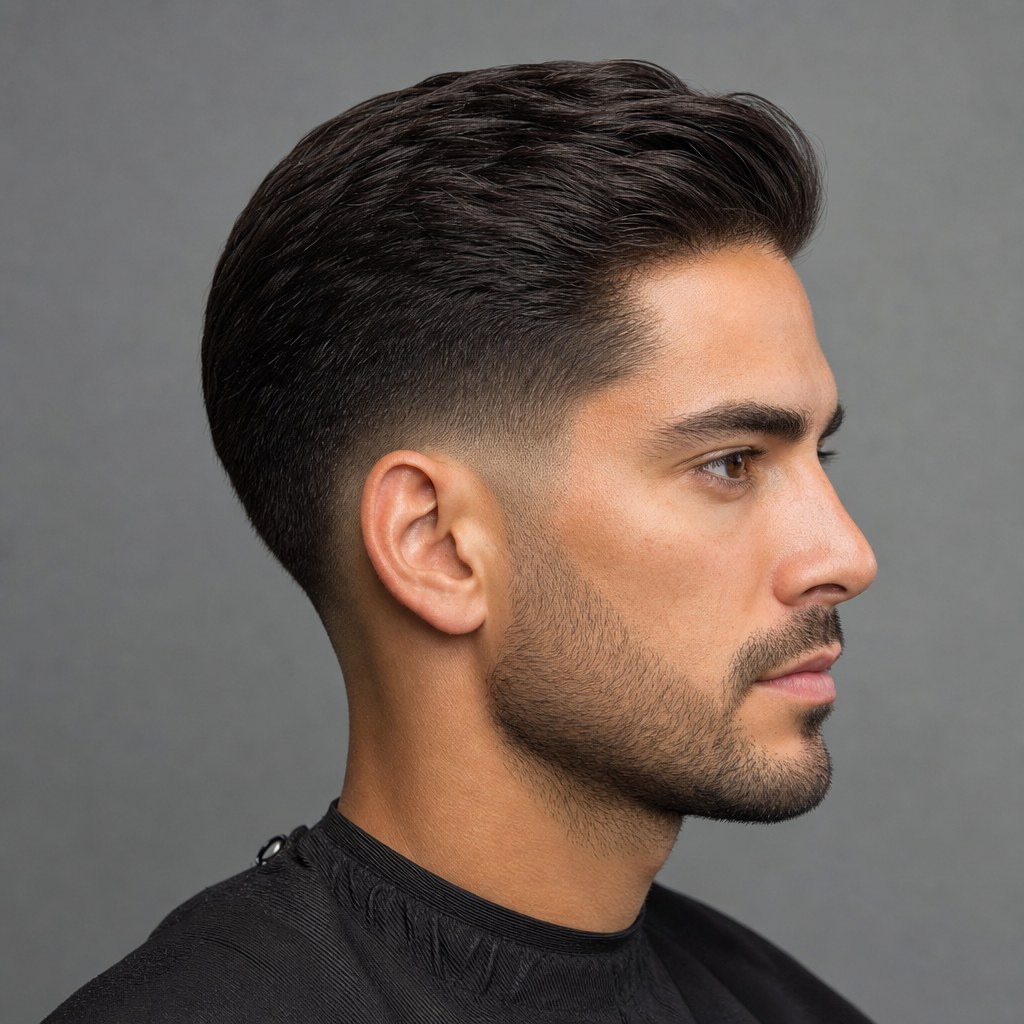
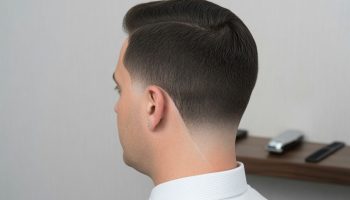
The taper is the foundational thick hair haircut. Sides and back are gradually cut shorter toward the neckline. The top retains length and volume. The result is a controlled, professional shape that manages bulk without stripping it entirely.
Why it works for thick hair
The taper removes weight exactly where it creates problems — at the sides and back — while preserving natural fullness on top where it looks intentional and polished. Your hair works for you, not against you.
What to tell your barber
“Classic taper on the sides, leave length on top, skin fade or 1 guard at the neckline.” That’s it. Your barber can work from there.
2. The Side Part
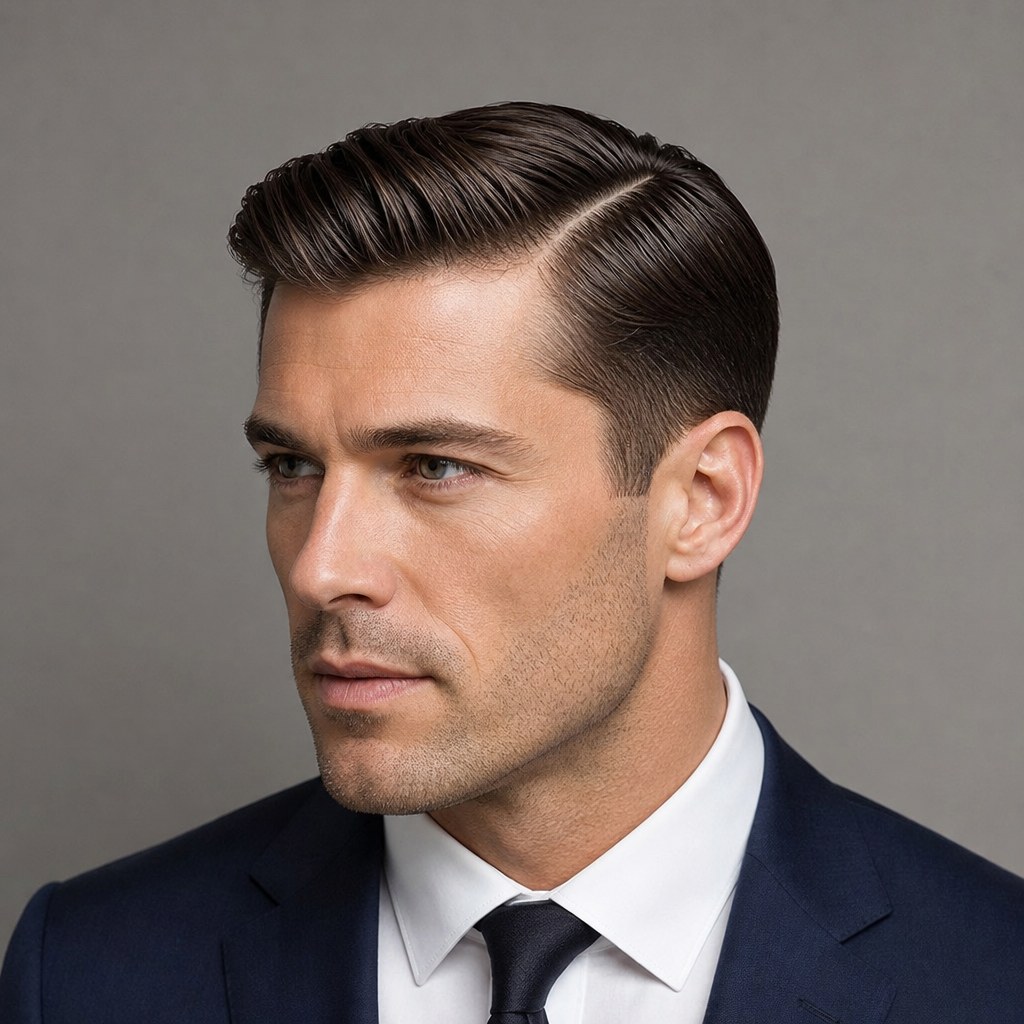
The side part is one of the most classically professional men’s haircuts in existence. And it looks particularly outstanding on thick hair. Your natural density gives the side part real volume and presence that fine hair simply can’t replicate.
A defined side part creates a clean, deliberate line that reads as put-together before you’ve said a word. It’s been the haircut of choice for executives and professionals for decades — and it holds up because it works.
Best environments for this cut
Finance, law, corporate, executive roles. This is the most formally professional cut on the list. If you work in a conservative environment and want your hair to signal authority, start here.
What to tell your barber
“Side part, tapered sides, medium length on top — 3 to 4 inches.”
3. The Textured Crop
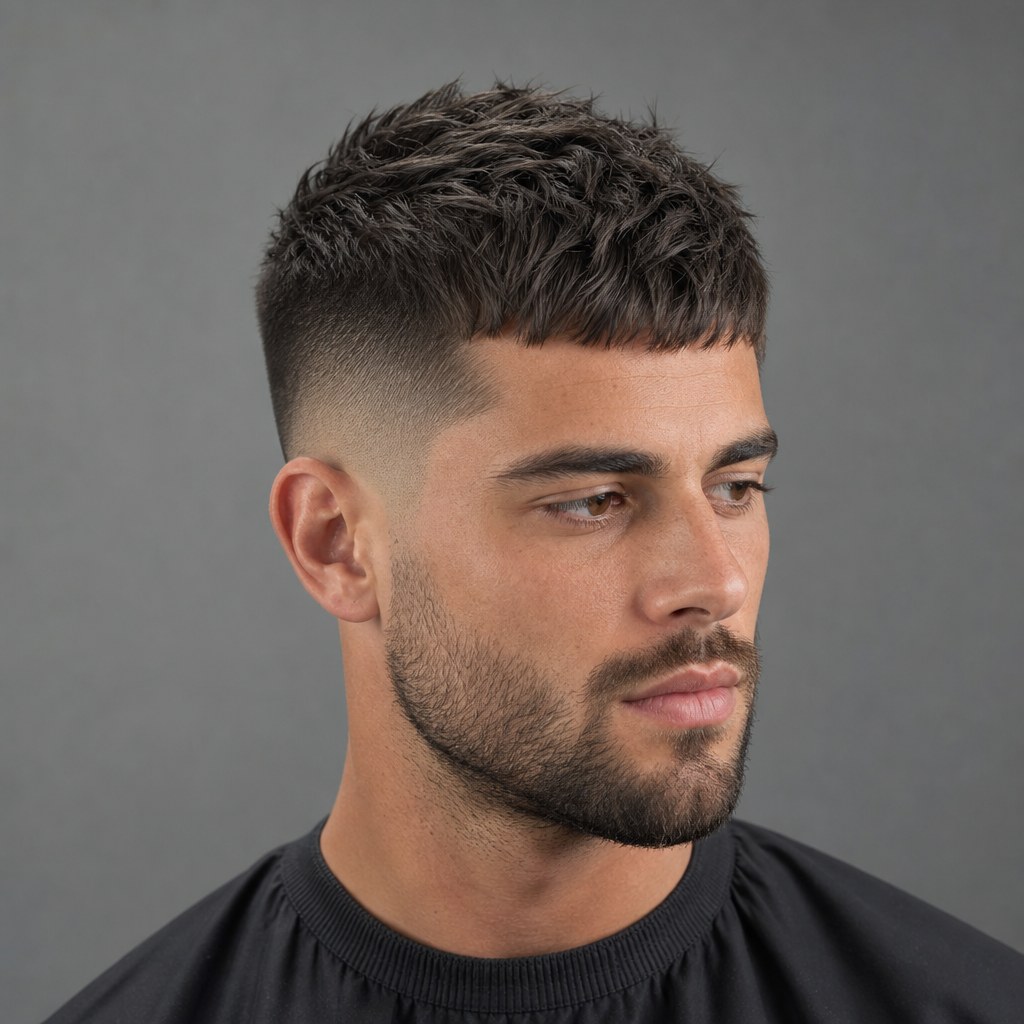
The textured crop has become the defining professional haircut of the last few years. Short, structured, deliberately piece-y on top. Cropped sides with textured length that looks modern and intentional.
For thick hair, the textured crop is ideal because it removes weight without making your hair look flat. The texture on top creates movement — which is exactly what dense hair needs to look alive rather than just heavy.
Best environments for this cut
Creative industries, tech, marketing, advertising, business casual environments. If your office leans modern, this is your version of a professional haircut.
What to tell your barber
“Textured crop — tight on the sides, textured length on top, about 1.5 to 2 inches. You can disconnect or blend depending on the look.”
4. The Undercut
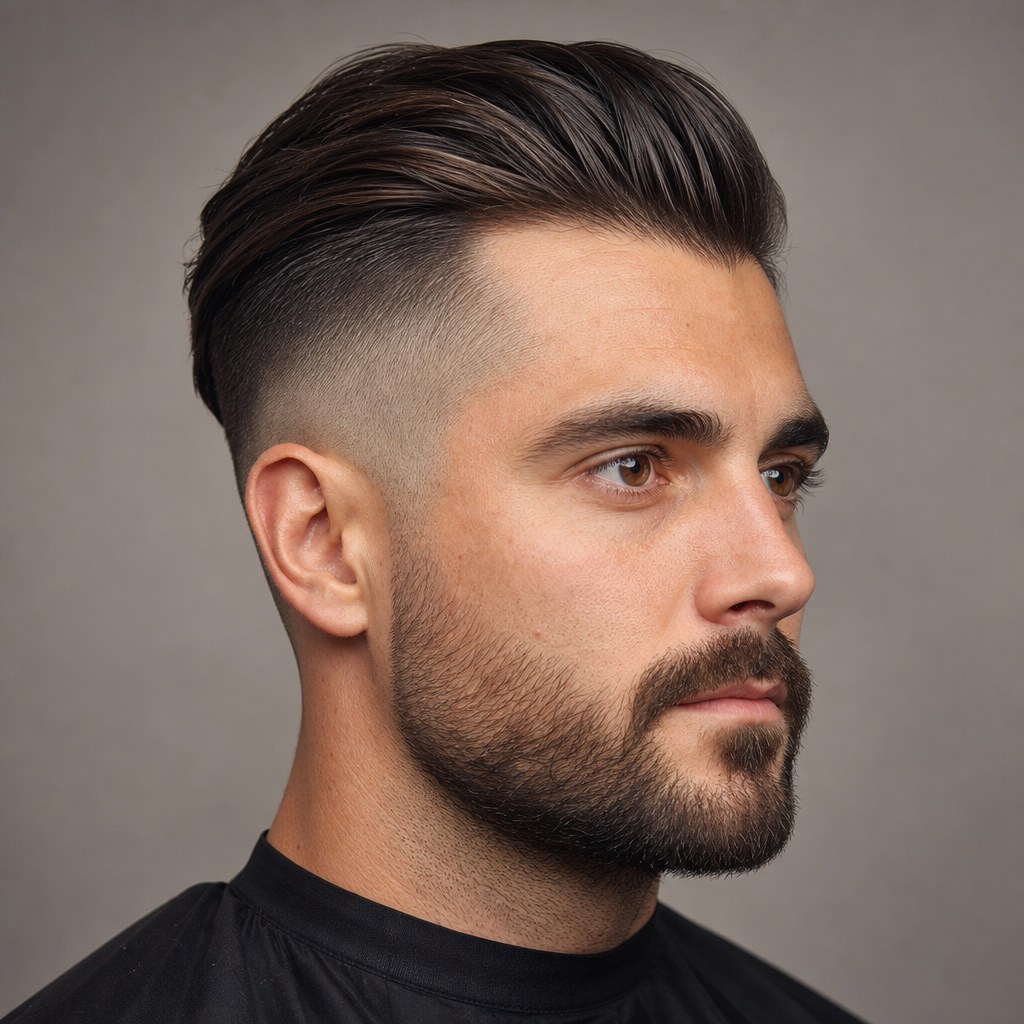
The sides and back are clipped very short — or shaved — while the top keeps significant length. The contrast is dramatic. The silhouette is bold and modern.
For thick hair, the undercut is particularly effective because the volume on top is genuinely impressive. It has real weight and presence. That density becomes the statement.
Best environments for this cut
Creative industries, tech companies, startups. More progressive professional environments where personal style is valued and expected.
What to tell your barber
“Disconnected undercut — skin fade or 1 guard on the sides, leave the top long for styling.”
5. The Crew Cut
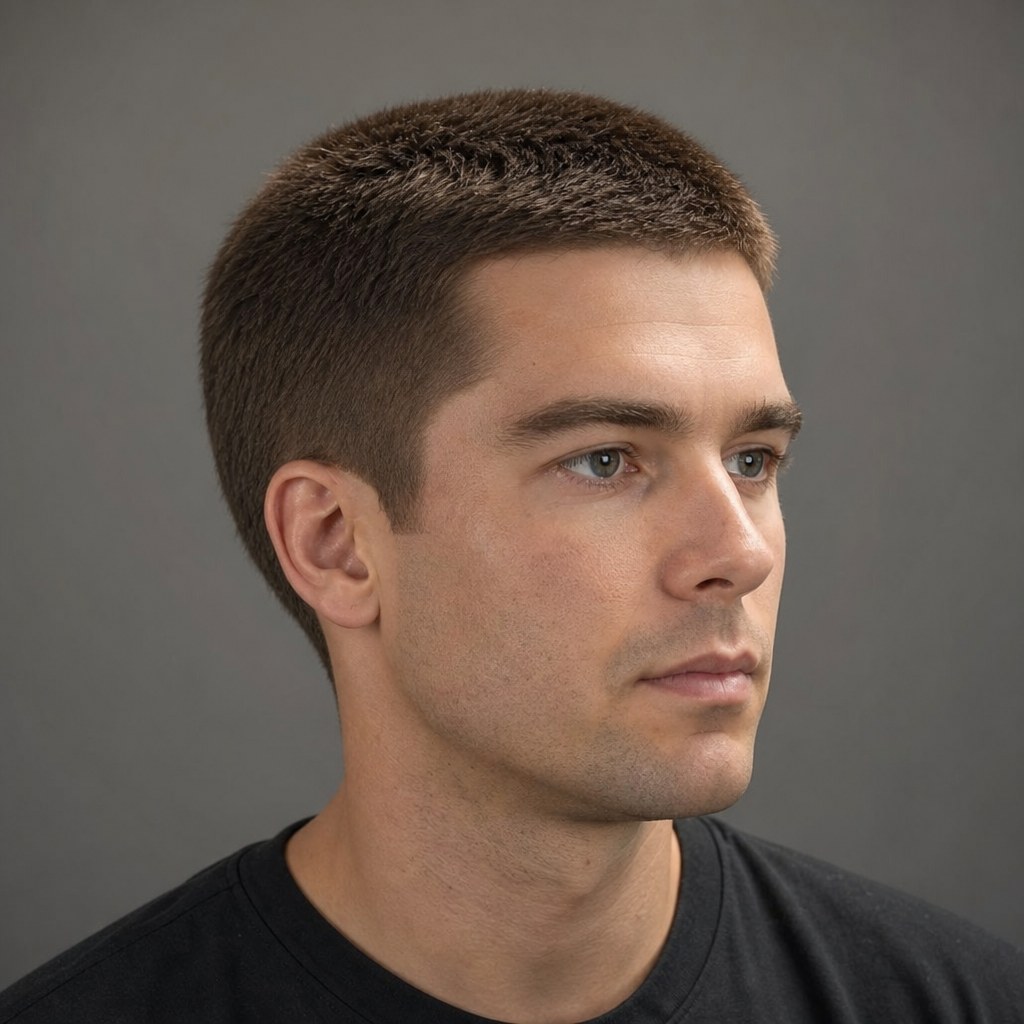
Short all over. The top slightly longer than the sides. A clean, rounded shape. This is the simplest thick hair haircut — and it works because thick hair makes even a simple crew cut look substantial. There’s a presence to it that fine hair can’t match.
Why it’s worth considering
Minimal styling. Maximum polish. Works in every professional environment without exception. If you want a haircut that requires essentially no effort and still looks sharp, this is it.
What to tell your barber
“Crew cut — shorter on the sides with a taper, about half an inch to an inch on top.”
6. The Modern Pompadour
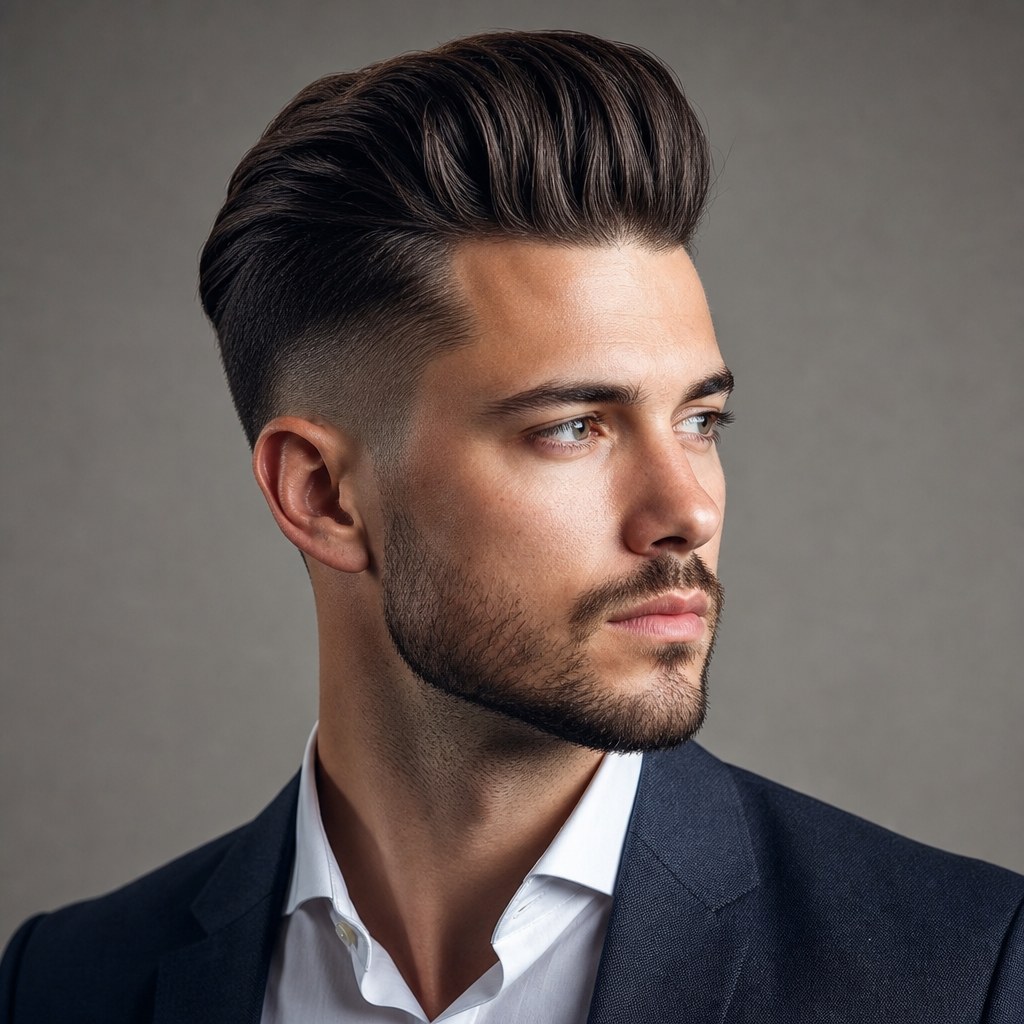
Tapered sides, with the top styled upward and slightly back. For thick hair, the pompadour is exceptional — your natural density creates the volume needed without heavy product buildup. The shape holds all day without constant attention.
How to style it
Apply a medium-hold pomade or wax to damp hair. Blow-dry upward while combing the top back. A light-hold spray sets the shape. You’re done in under five minutes once you have the technique down.
7. The Fade with Length on Top
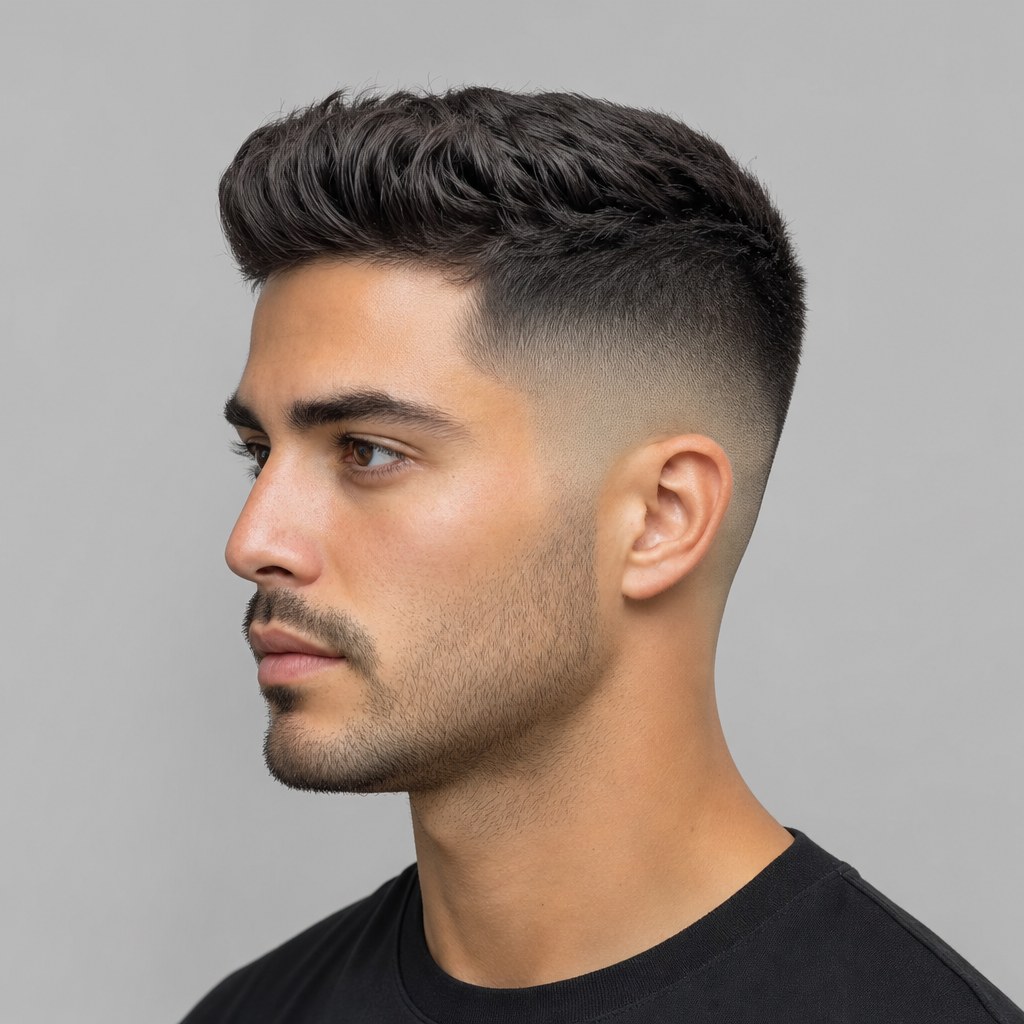
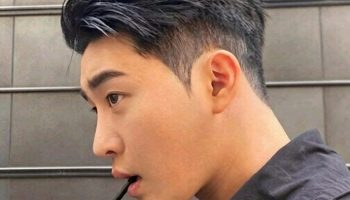
The fade cuts the sides from very short at the bottom to progressively longer as it reaches the top — a smooth gradient. Combined with 2 to 4 inches of length on top, it’s one of the most versatile modern professional haircuts available.
For thick hair, a high or mid fade is particularly effective. It removes the bulk that causes problems at the sides while keeping the natural density on top where it looks best.
What to tell your barber
“High fade — or mid fade — with 2 to 3 inches on top. Taper the back.”
8. The Quiff
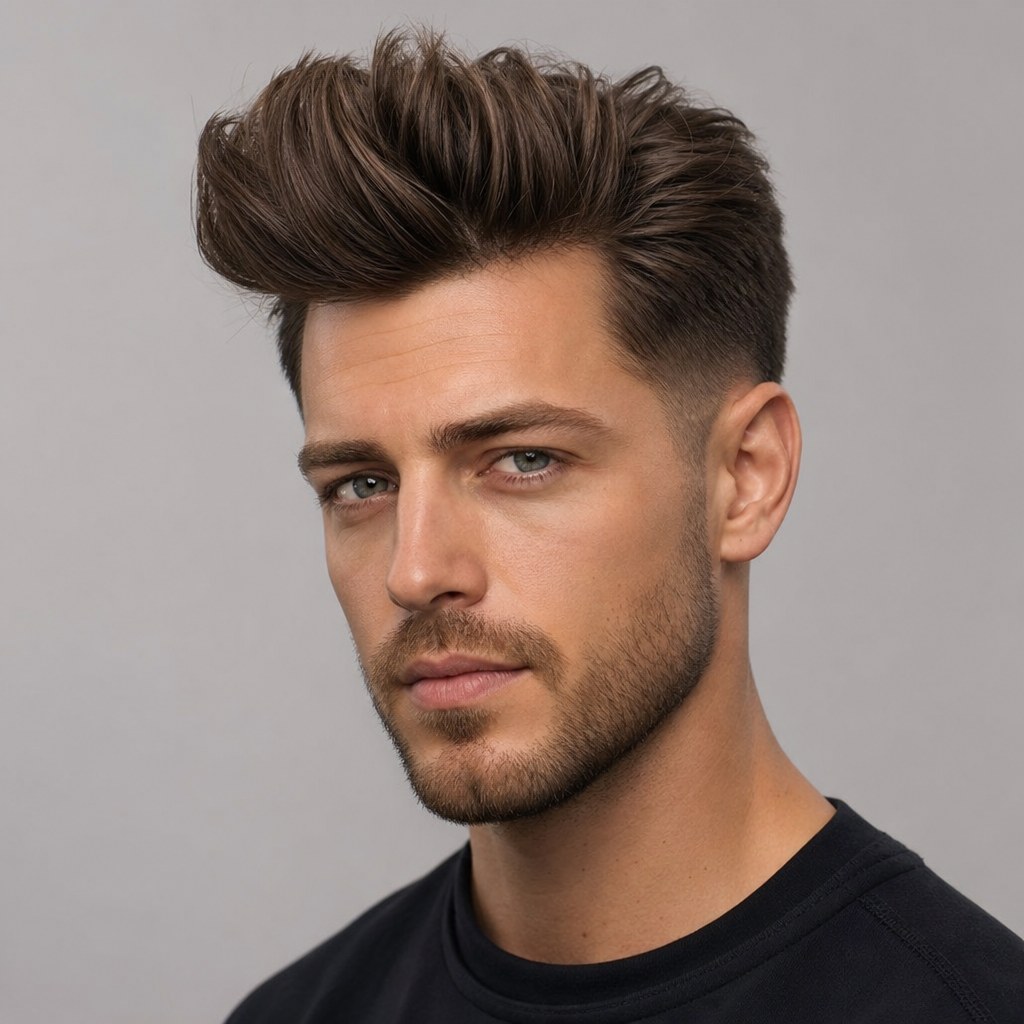
The top swept upward and slightly forward, creating a full, rounded shape. Softer than a pompadour, slightly less structured — it reads as stylish without looking overly groomed. For thick hair, the quiff is one of the most natural choices: the volume is already there. The cut channels it into an intentional shape.
How to style it
Apply light to medium-hold pomade or styling cream. Blow-dry upward and forward. Let it cool before touching — that’s how the shape sets. Rush this step and the quiff falls flat within an hour.
9. The Classic Slick Back
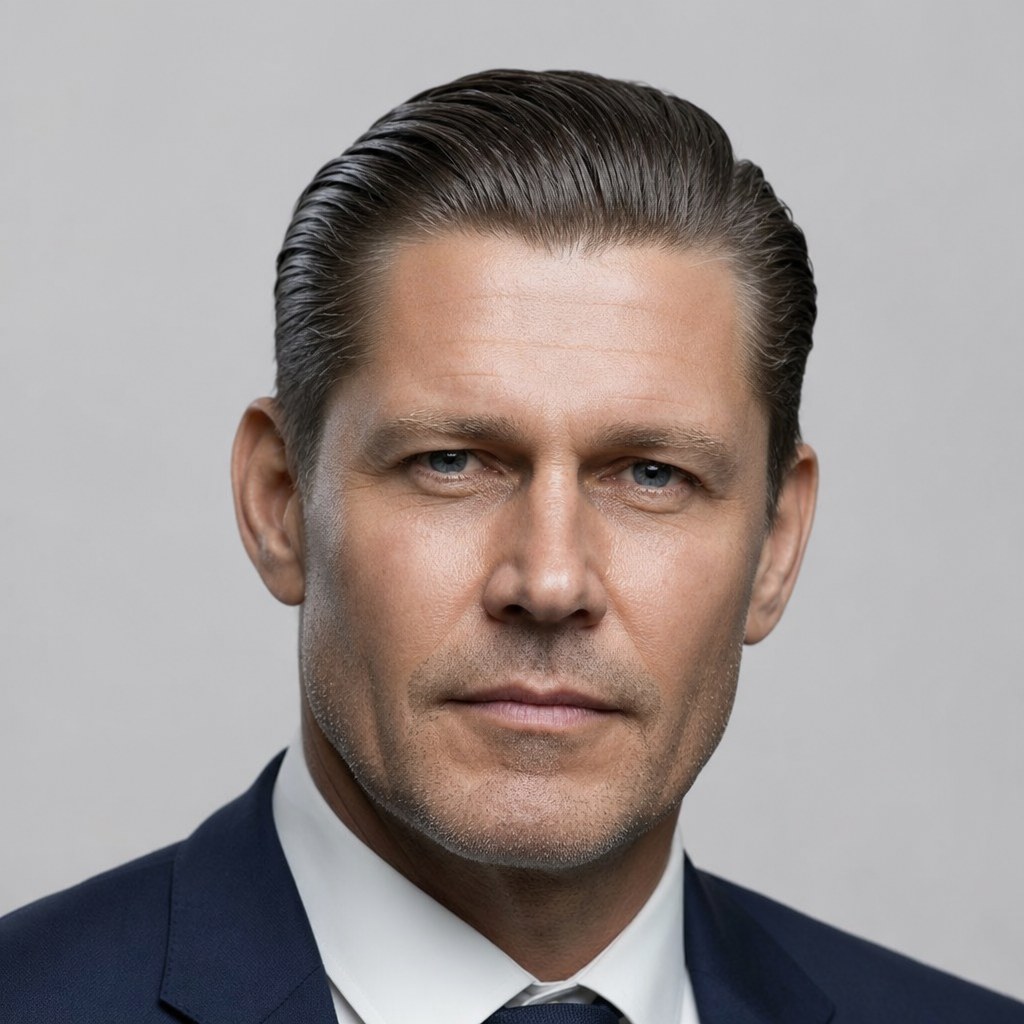
All hair combed straight back from the forehead. Smooth and sleek. For thick hair, this creates a powerful, authoritative look — your density gives the slick back real substance that thinner hair cannot replicate.
This is a style for men who want to make a strong impression. It reads as confident, decisive, and deliberate. Wear it to the meeting you need to dominate.
Best environments for this cut
Executive roles, finance, law, formal corporate environments. Strong, formal professional settings where authority matters.
10. The Ivy League
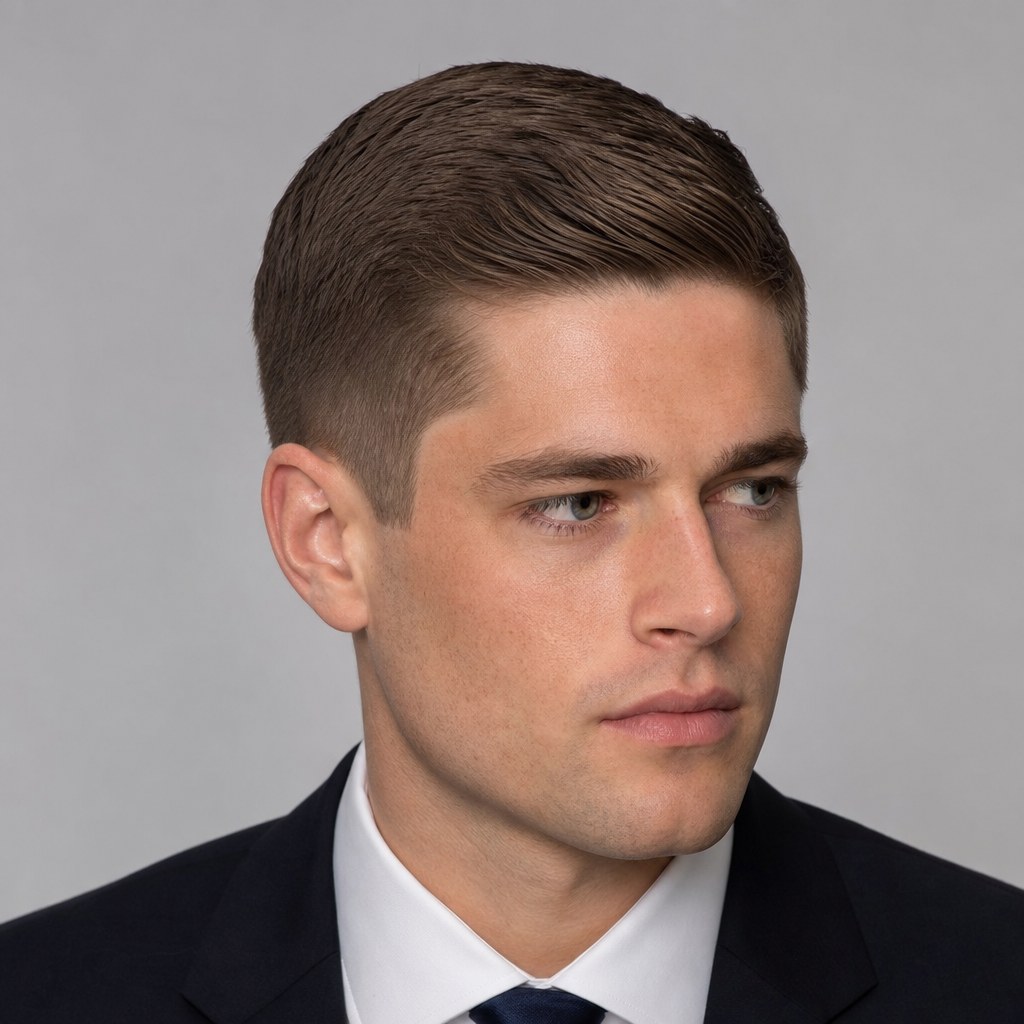
The Ivy League — also called the Princeton or Harvard clip — is a longer version of the crew cut. Approximately 1.5 to 2.5 inches on top, allowing for a soft side part or forward styling. It’s been a standard in conservative professional environments for decades, and it earns that status every day.
For thick hair, the Ivy League is particularly flattering. The additional length allows your natural density to show its volume — full, substantial, holding shape without effort.
What to tell your barber
“Ivy League — tapered sides, 1.5 to 2 inches on top, clean and professional.”
11. The Disconnected Undercut with Hard Part
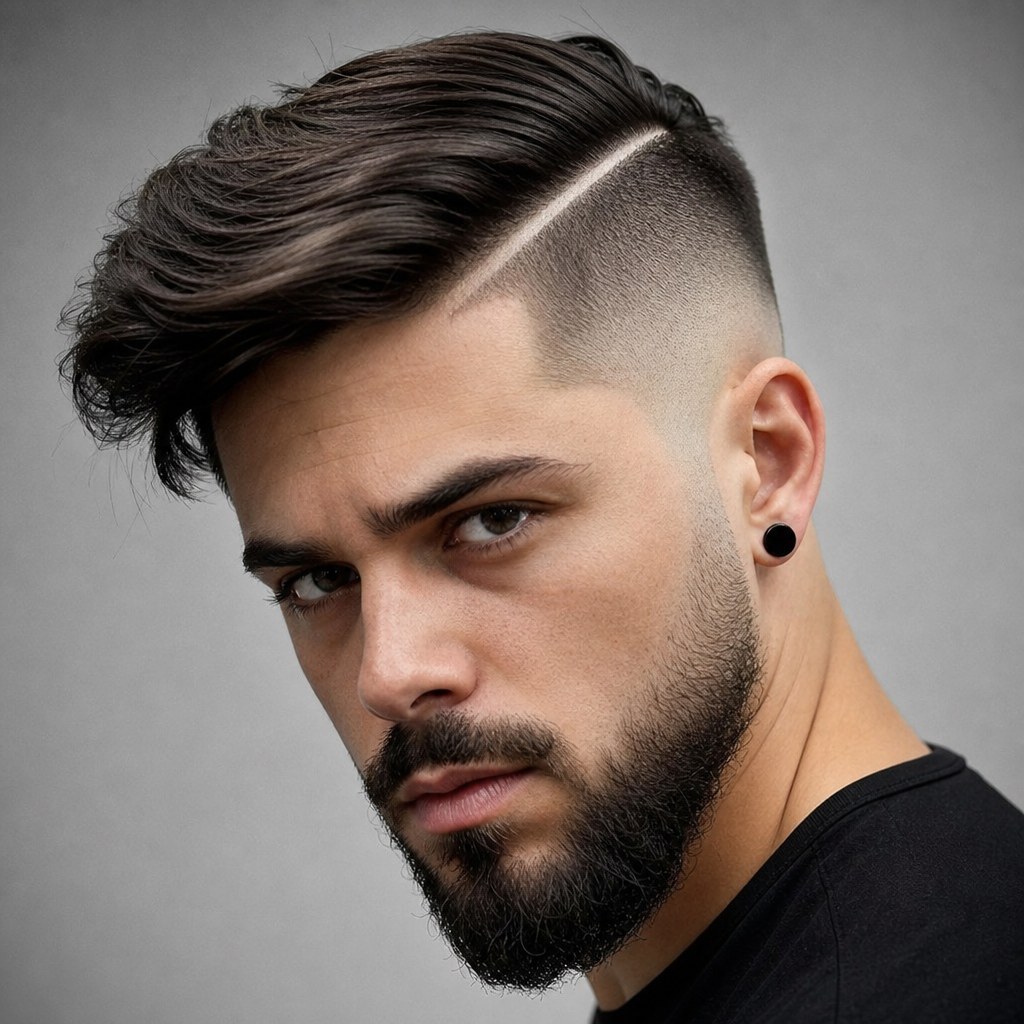
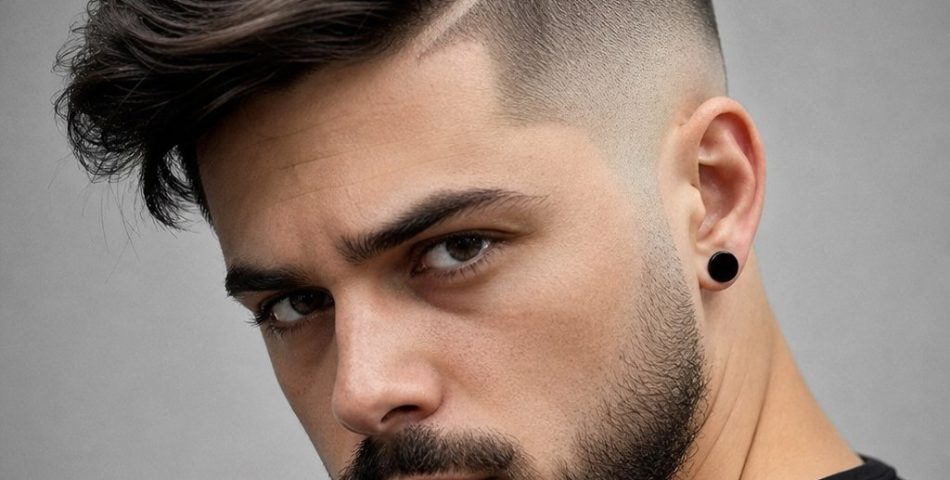
A hard part is a razor-etched line that creates a precise, graphic parting — much more defined than a natural comb part. Combined with a disconnected undercut, it creates a bold, architectural look that’s genuinely striking.
This works best in industries where personal style is valued: fashion, tech, creative agencies, entertainment. The etched part is most dramatic on dense hair, where the contrast between the part line and the surrounding fullness is most visible.
12. The Textured Fringe
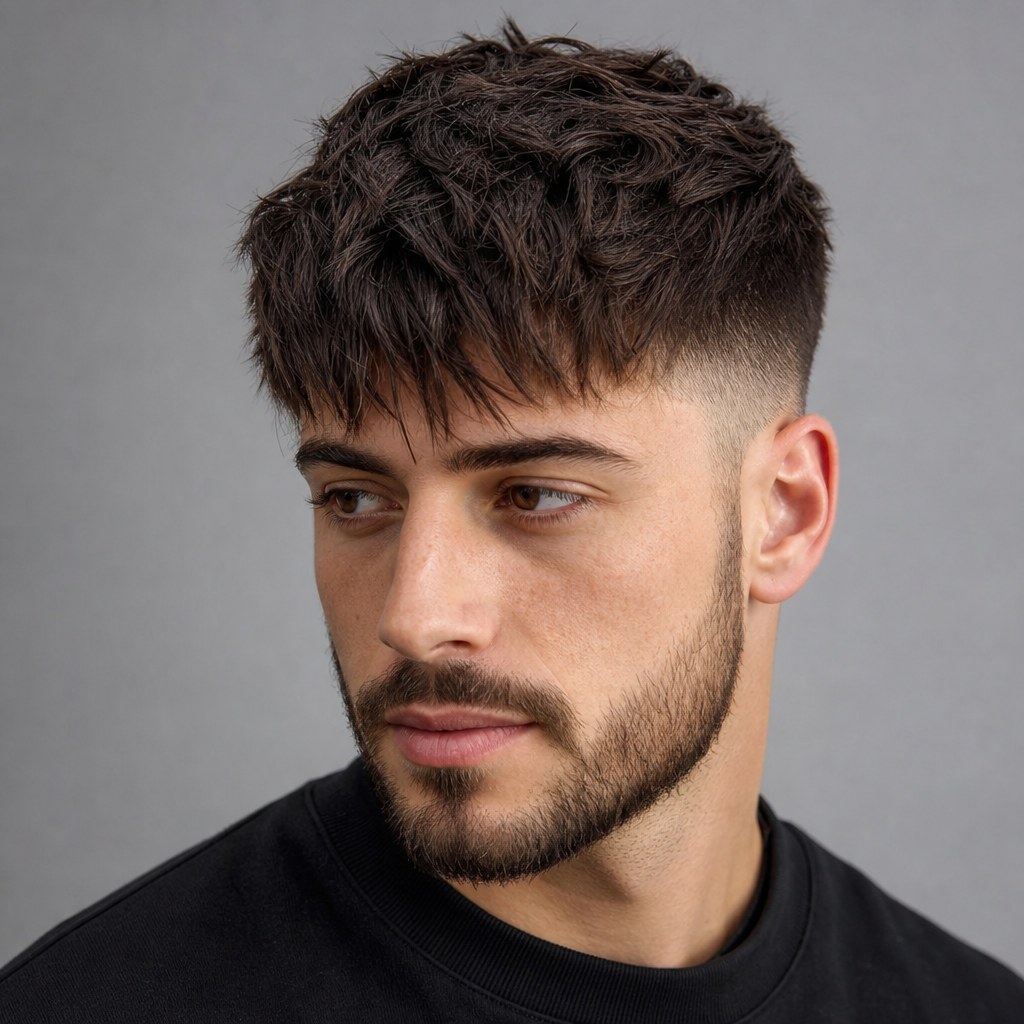
Length on top that falls forward toward the forehead. A textured, slightly undone finish that reads as modern and intentional. Sides are faded or tapered to keep the balance right.
For thick hair, the forward fringe looks full and deliberate rather than limp or thin. It falls naturally and holds its position without much effort.
What to tell your barber
“Textured fringe — faded or tapered sides, length on top falling forward. Texturize with scissors for a piece-y finish.”
What to Tell Your Barber (and Why It Matters)
Having thick hair is an advantage in a barbershop — you have more options and more margin for error than someone with fine hair. But communicating clearly makes the difference between a good haircut and a great one.
Mention your texture upfront
“My hair is quite thick and tends to puff out if there’s too much weight left in it.” That one sentence tells your barber everything they need to know to adjust the approach.
Ask for point cutting or texturizing
These techniques remove bulk without shortening the length. For thick hair, this is often the single most important service request you can make.
Bring a reference photo
Barbers work visually. A photo of the style you want is worth more than any verbal description. Find someone with similar hair texture and density, take a screenshot, and show it at your appointment.
Be honest about your styling routine
If you spend two minutes on your hair in the morning, tell your barber. They’ll adjust the cut so it works without significant effort. A great haircut is one that fits your actual life — not just the reference photo.
Frequently Asked Questions
Should thick hair be layered?
Often, yes. Layers and texturizing techniques remove bulk and add movement without reducing length. Ask your barber specifically about point cutting or texturizing the top section.
What products work best for thick hair?
Medium-hold matte paste or clay for most styles. Pomade for slick backs and side parts. Avoid heavy waxes that add more weight and make thick hair feel stiff rather than styled.
How often should thick hair be cut?
Every 4-6 weeks to maintain the shape. Thick hair grows faster and loses its shape more quickly than finer hair. If you’re between appointments and your hair is starting to look heavy, a small amount of product can buy you another week.
Use What You Have
Thick hair is a genuine advantage at work. The cuts above are specifically designed to use your density as a feature — building shape, volume, and presence rather than fighting it into submission.
Pick the style that fits your workplace and your morning routine. Get it cut well. Style it with intention. Your hair will do the rest.
Related Post