

Summer suits are not all created equal — and humidity is the proof.
You can spend a lot of money on a suit that looks great on a hanger and turns into a wrinkled, sweat-soaked disaster by 10am. The difference between that suit and one that holds up through a full day in the heat comes down almost entirely to fabric.
Not fit. Not color. Fabric. Get the fabric right and everything else gets easier.
Here are the seven fabrics worth knowing about — what each one does well, where it falls short, and who it’s actually right for.
What Makes a Fabric Actually Work in Humidity
Before you start comparing fabrics, it helps to understand what you’re actually looking for. Humidity does two things to a suit: it traps heat against your body, and it saturates the fabric with moisture. A good summer fabric fights both of those problems.
The qualities that matter most are breathability (how well air moves through the weave), moisture management (how quickly the fabric wicks and releases sweat), and recovery (whether it bounces back from wrinkles after a long day). Some fabrics are exceptional at one of these things but weak at the others. A few do all three well.
That’s the framework. Now, the fabrics.
1. Linen — The Most Breathable Option, With One Trade-Off
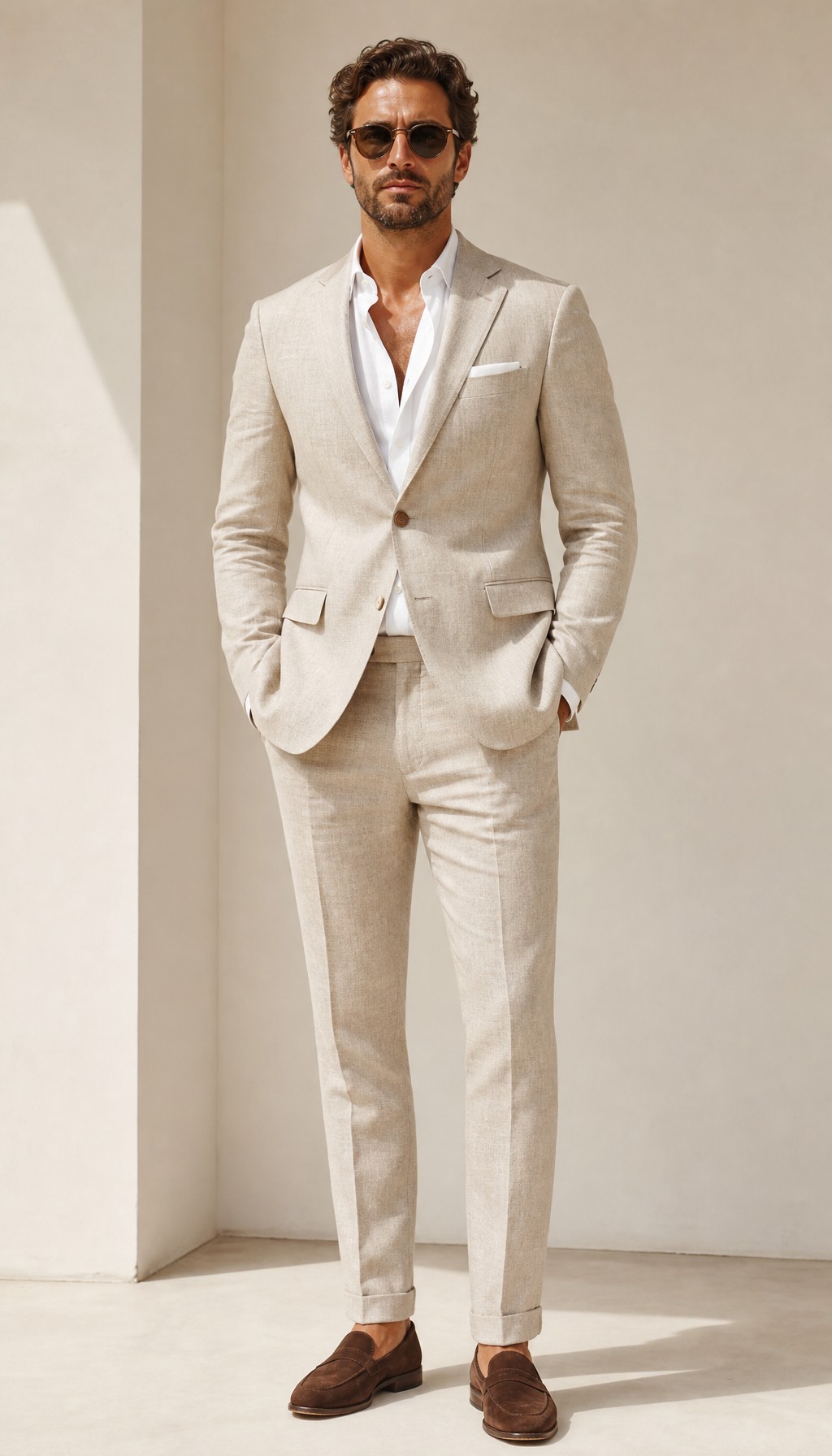
If you want the most breathable summer suit fabric in existence, linen is it. The open weave allows maximum airflow and moisture release. You will feel the difference the moment you put it on in July heat — it genuinely keeps you cooler than any alternative.
The trade-off is wrinkling. Linen creases easily and visibly. By midday, a linen suit will show evidence of being worn. Some men see this as character. Others find it unprofessional. Know which camp you’re in before you buy.
Best for
Outdoor events, destination weddings, creative industries, casual business environments where a relaxed look is acceptable. Not ideal for corporate board meetings or formal presentations where a sharper silhouette is expected.
What to look for
Go for lighter colors — beige, stone, cream, pale blue. They absorb less heat and handle the inevitable wrinkle better visually than dark linen. A linen-blend (with cotton or a small amount of synthetic) will wrinkle slightly less if that concerns you.
2. Tropical Wool — The Professional’s Choice
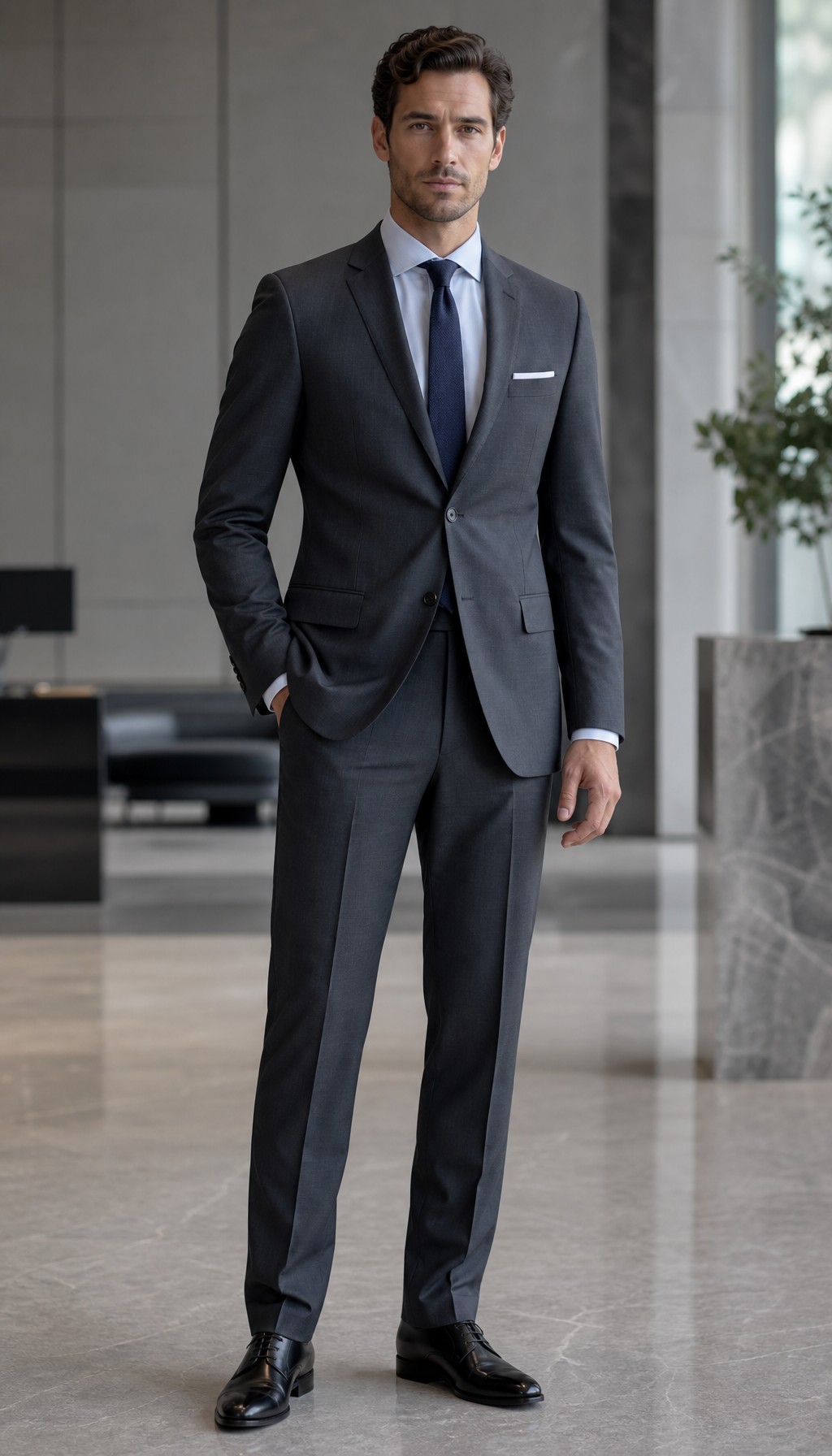
Tropical wool is a loosely woven, lightweight wool specifically engineered for warm weather. It’s considerably lighter than standard suiting wool and allows significantly more airflow. In air-conditioned professional environments with occasional outdoor exposure, it is the most versatile fabric on this list.
It drapes sharply, resists wrinkles far better than linen, and maintains a structured, professional silhouette through a full workday. If you need to look polished in a formal office environment and still survive the commute in summer heat, tropical wool is your answer.
Best for
Finance, law, consulting, corporate environments. Any setting where you need to look like you mean business and can’t afford to look rumpled by noon.
What to look for
Look for a Super 100s or Super 120s weight at around 7–9 oz per yard. Lighter than that and you start losing structure. Heavier and you lose the breathability benefit.
3. Seersucker — Built for Heat, Loud About It
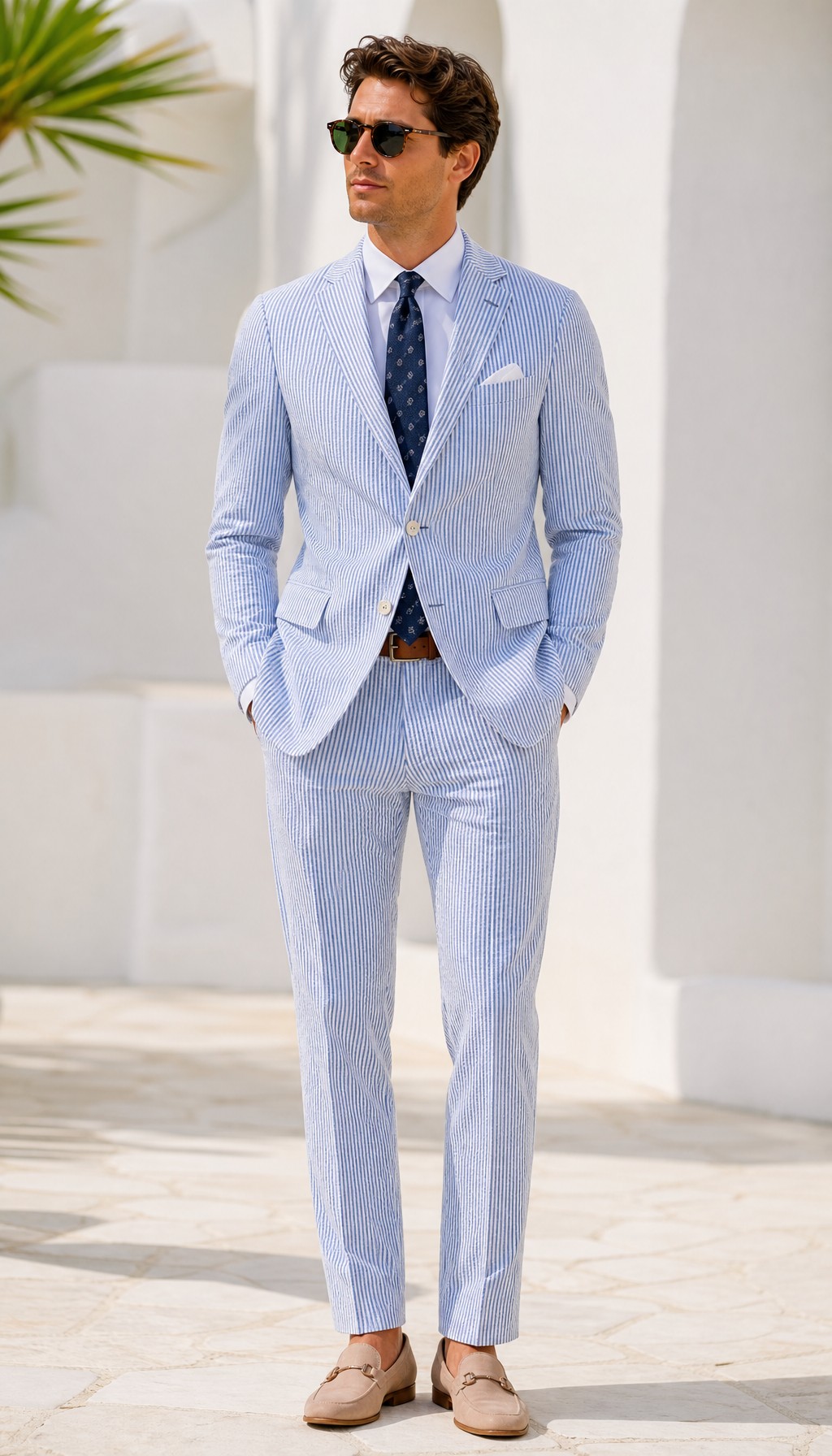
Seersucker has a puckered, crinkled texture that creates tiny air channels between the fabric and your skin. That texture is doing real thermodynamic work — it keeps the suit from lying flat against your body, which dramatically improves airflow and reduces heat buildup.
It also happens to be one of the most recognizable summer suit fabrics in existence. The classic blue-and-white stripe is practically a cultural institution in the American South. Wear seersucker and people know exactly what you’re doing — and in the right context, that confidence reads very well.
Best for
Garden parties, outdoor weddings, summer social events, coastal environments. Less suitable for conservative corporate settings — seersucker is inherently casual-leaning and should be worn accordingly.
What to look for
100% cotton seersucker for maximum breathability. The puckered texture means wrinkles are essentially invisible — it’s already meant to look crinkled. Pair with a white dress shirt and loafers for the full effect.
4. Cotton — The Versatile Middle Ground
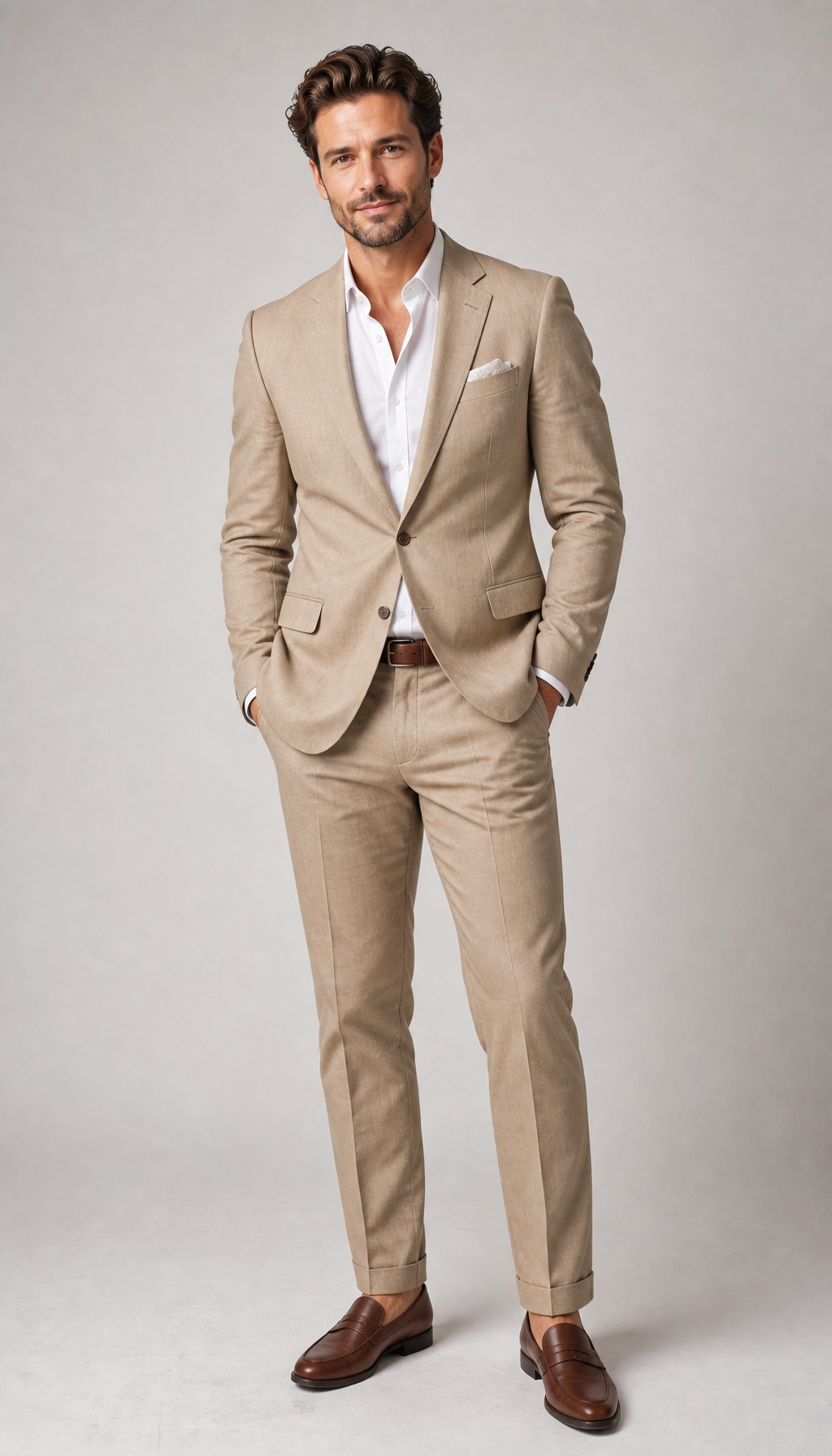
A well-made cotton suit is one of the most underrated options for summer. Cotton is breathable, absorbs moisture, and softens beautifully with wear. It doesn’t perform at linen’s extreme breathability level, but it wrinkles significantly less — and that compromise works well for most men in most situations.
The key is fabric weight. A lightweight cotton poplin or chino-weight suit will perform meaningfully better in heat than a heavier cotton canvas. If you’re buying cotton for summer, pay attention to the oz weight — you want to be under 9 oz per yard.
Best for
Business casual environments, travel, days with mixed indoor/outdoor exposure. A good navy or tan cotton suit covers a wide range of occasions and handles humid conditions better than most men expect.
What to look for
Avoid cotton blended with polyester — it traps heat and negates most of the breathability benefits. 100% cotton, lightweight, structured lining if any lining at all (half-lined or unlined is better in heat).
5. Linen-Cotton Blend — Best of Both
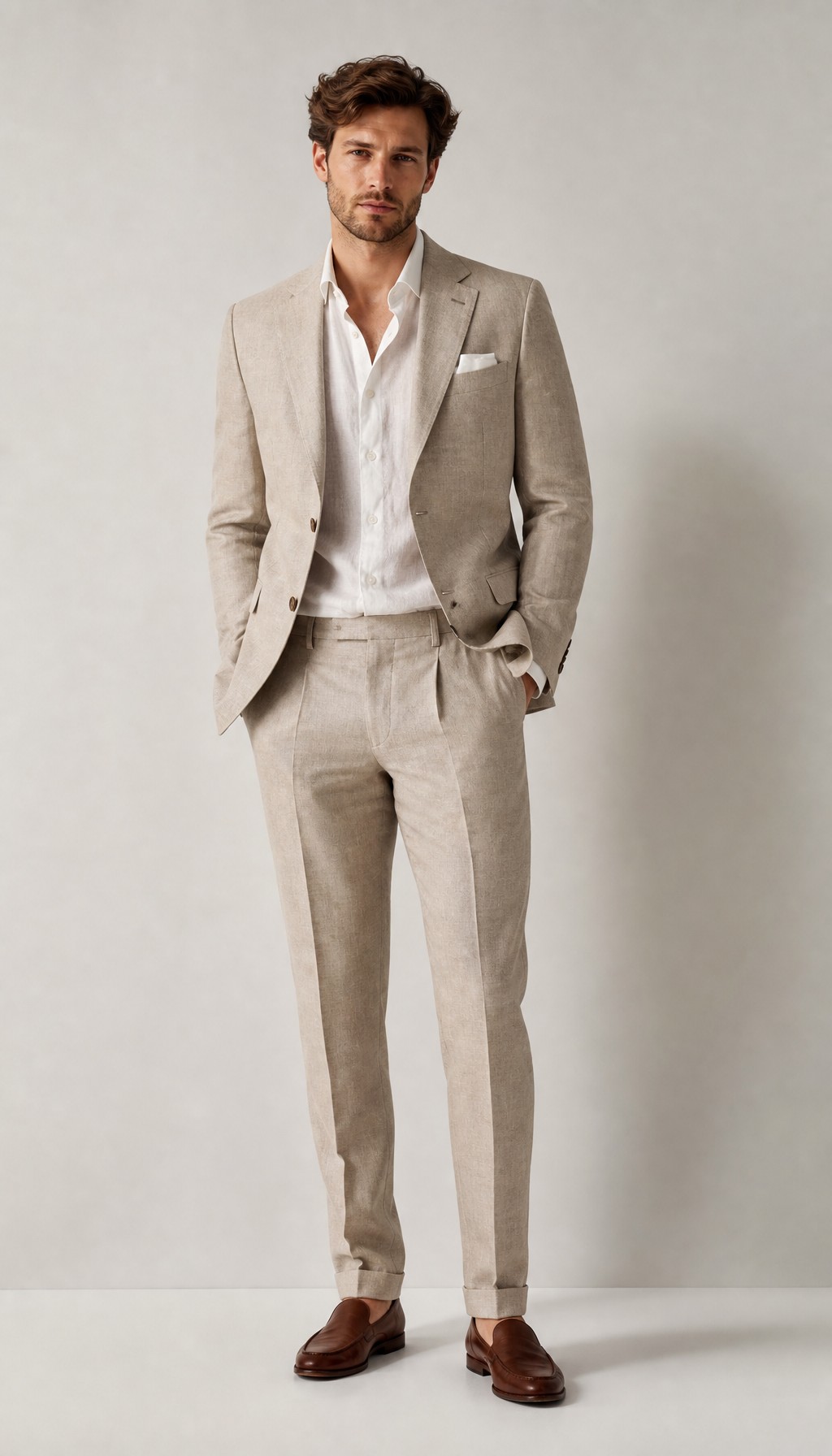
If pure linen’s wrinkling bothers you but you want to get as close to linen’s breathability as possible, a linen-cotton blend is the practical solution. The cotton component adds structure and reduces wrinkling noticeably. The linen component keeps the breathability significantly above what plain cotton delivers.
A 55/45 or 60/40 linen-cotton blend hits a genuine sweet spot. You lose a small amount of the extreme breathability of pure linen, but you gain a suit that looks respectable by the end of the day rather than looking like you slept in it.
Best for
Men who want a versatile summer suit that moves between casual and smart-casual occasions without looking too rumpled. Good for travel and extended outdoor time.
6. Silk Blend — The Premium Option
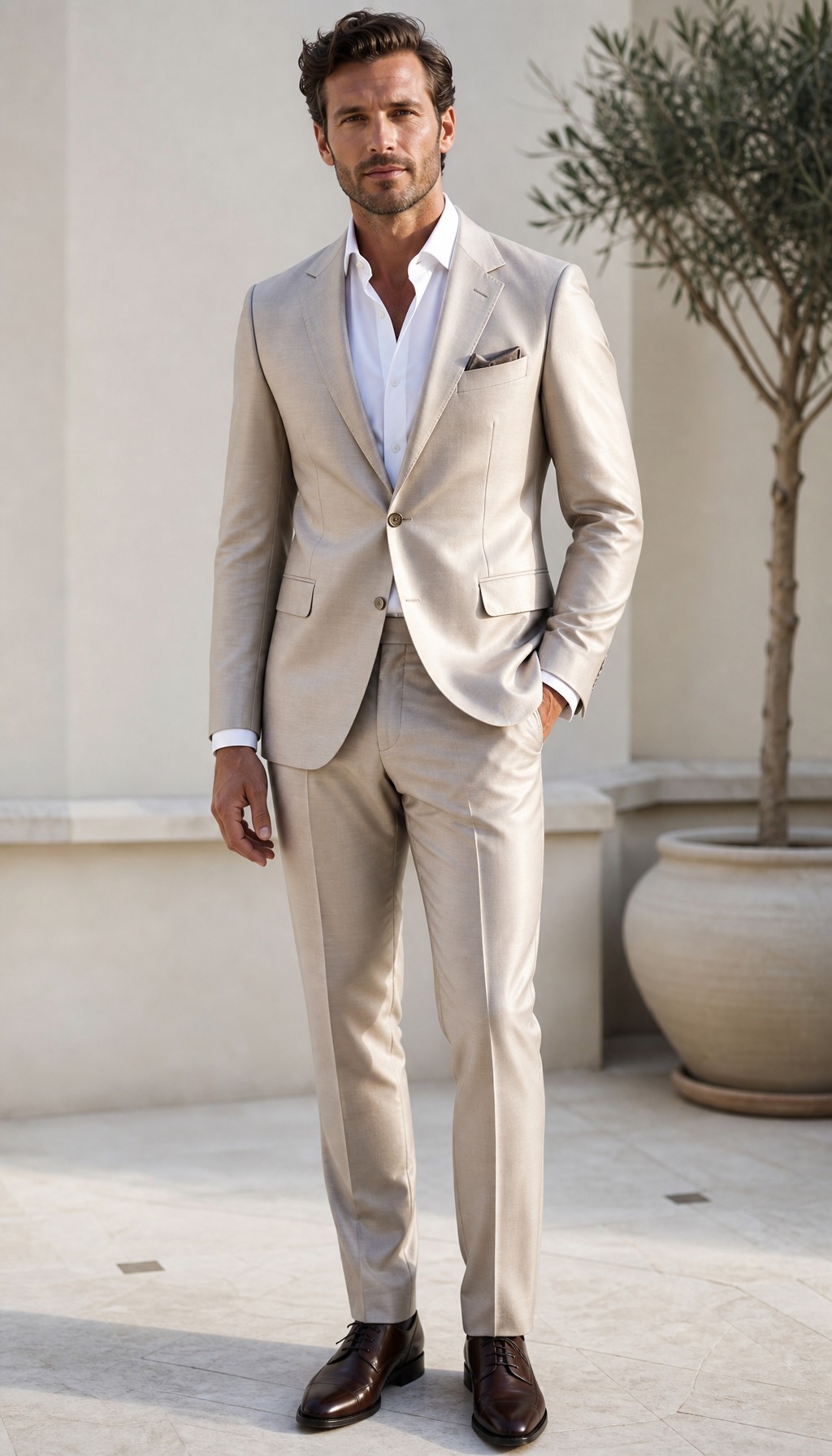
A silk-blend suit — typically silk mixed with wool or linen — is naturally temperature-regulating. Silk is one of the few fabrics that genuinely adapts to body temperature: it keeps you cool when it’s hot and retains warmth when it’s cool. In a summer context, that means less sweating overall.
Silk blends also have a subtle sheen and drape that looks genuinely luxurious. The trade-off is price — a quality silk-blend suit costs more than most comparable options — and care requirements. Silk requires more careful handling than cotton or linen.
Best for
Formal summer events, destination occasions, men who want a premium option and are willing to care for it properly. Not a daily-wear fabric for most people, but exceptional when you need it.
7. Performance Fabric — The Modern Solution
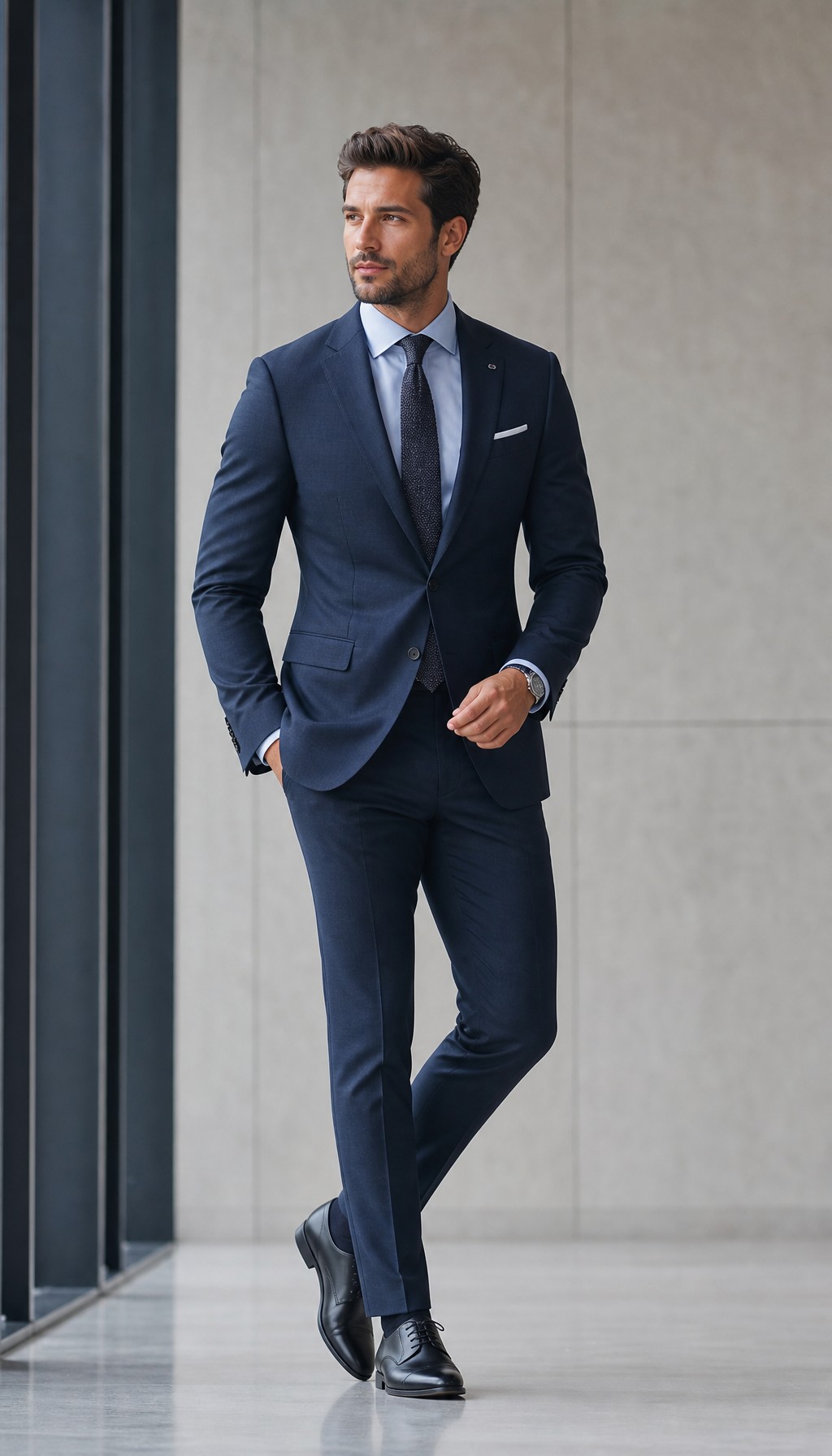
Over the last several years, performance suit fabrics — often wool-synthetic blends or purpose-built technical textiles — have become genuinely good. Brands like Loro Piana, Reda, and several fast-fashion performance lines now produce fabrics that are moisture-wicking, wrinkle-resistant, and significantly more breathable than traditional suiting wool.
If you travel frequently for work, wear a suit daily, or simply want minimum maintenance, a performance fabric suit is worth considering. The visual difference from traditional fabric is minimal at the distances you’re viewed from in professional settings. The practical difference is significant.
Best for
Frequent travelers, commuters, men who need a suit to perform across varying conditions without constant care. Also excellent as a second suit if your primary is a more traditional fabric.
What to look for
Look for labels that say “travel,” “performance,” or “stretch” wool. Brands like Suitsupply, Ministry of Supply, and Indochino all offer credible options at different price points. Check the blend — ideally wool with a small percentage of elastane (2–4%) for stretch and recovery.
What to Avoid: Fabrics That Make Humidity Worse
Knowing what to avoid is just as useful as knowing what to buy.
100% polyester suits trap heat and moisture against your body. They don’t breathe. They don’t wick. They make hot days dramatically worse and they hold odor. Avoid them entirely for summer.
Heavy wool — anything above 11 oz per yard — is a winter fabric. It doesn’t belong in summer heat regardless of how well it fits. Standard canvas-lined suits in heavier wool weights are similarly wrong for the season.
Thick linings are a problem in any fabric. If you’re buying a summer suit, look for unlined or half-lined construction. A full canvas lining adds warmth and reduces breathability across every fabric type.
How to Choose: A Practical Framework
The right fabric depends on three things: where you’re wearing the suit, how long you’re wearing it, and how much wrinkling you can tolerate.
If you’re in a formal corporate environment all day with air conditioning: tropical wool or performance fabric. If you’re at an outdoor summer event and comfort is the priority: linen or seersucker. If you want a single suit that handles most summer situations without looking terrible by the end of the day: cotton or a linen-cotton blend.
Color also affects heat absorption. Lighter colors — beige, stone, tan, pale grey, cream — reflect more heat than navy or charcoal. In extreme heat, color is not a trivial choice.
Frequently Asked Questions
What is the coolest fabric for a summer suit?
Linen is the most breathable and coolest option in high heat. If wrinkling is a concern, a linen-cotton blend or tropical wool is the next best choice.
Is a wool suit OK for summer?
Lightweight tropical wool — typically 7–9 oz per yard — is actually a strong summer choice. It’s breathable, wrinkle-resistant, and maintains a sharp professional look. Heavy wool (11+ oz) is not suitable for summer.
Should a summer suit be lined?
For maximum breathability: unlined or half-lined. A full lining traps heat regardless of the outer fabric. Most good summer suits are sold with minimal or no lining for exactly this reason.
Does linen wrinkle badly?
Yes — pure linen wrinkles noticeably with wear. This is an inherent property of the fiber. If wrinkling is a concern, opt for a linen-cotton blend or choose a fabric like tropical wool that holds its shape better.
The Right Fabric Makes Summer Bearable
You don’t have to choose between looking professional and surviving the heat. The fabrics on this list exist specifically because both are possible at the same time. Buy the right fabric for your environment, your occasion, and your tolerance for wrinkles — and your summer suit will work for you instead of against you.
Related Post