

Few careers demand as much from a wardrobe as the law. You need to look authoritative in front of a judge, approachable across the desk from a nervous client, and pulled-together at a bar-association happy hour, sometimes all in the same day. The pressure to look credible is real, and getting dressed at 6 a.m. should not add to it.
The good news: a smart, mix-and-match wardrobe built on a few strong pieces handles all of it. Here are outfit ideas for women in law that take you from courtroom to coffee with confidence, organized by setting, plus a simple capsule approach so you always know what to reach for.
What Makes a Great Lawyer Outfit
In law, your clothes are part of your credibility. The goal is to look competent, trustworthy, and appropriate for the setting without letting your outfit distract from your argument. That means well-fitted, well-made pieces in a controlled palette, nothing too tight, too trendy, or too loud for the room you are walking into.
Fit and quality matter more than quantity. A few tailored, durable pieces in navy, charcoal, black, and grey will out-perform a closet full of fast fashion. And because your days shift between formal and less formal, versatility is everything: pieces that layer up for court and down for the office earn their place.
Courtroom-Ready Outfits
1. The Classic Tailored Suit
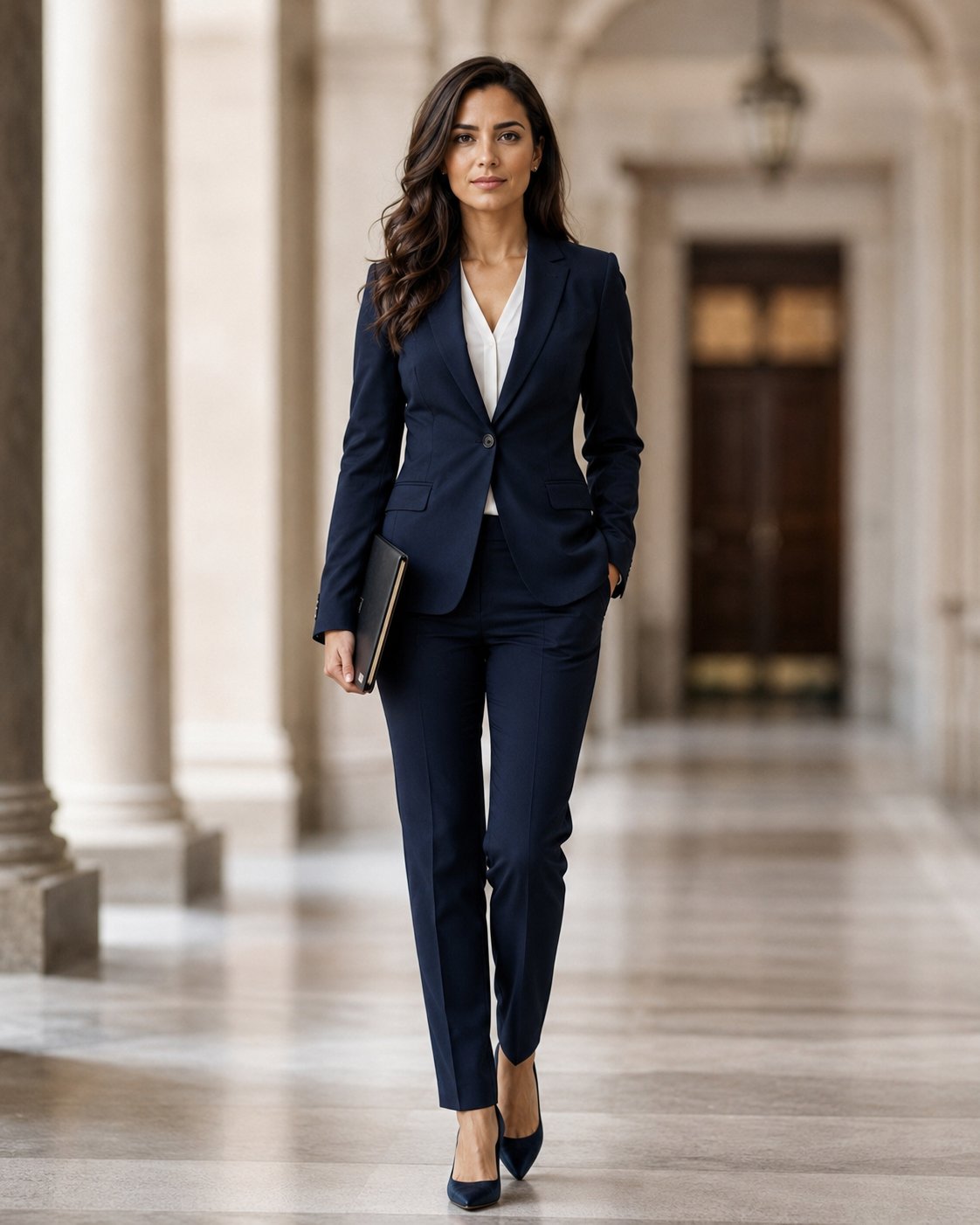
Nothing says courtroom authority like a well-cut matching suit in navy or charcoal. Pair it with a simple blouse and closed-toe pumps. This is your armor for trials, hearings, and any high-stakes appearance; invest in one excellent version and have it properly tailored.
2. Skirt Suit with a Silk Shell
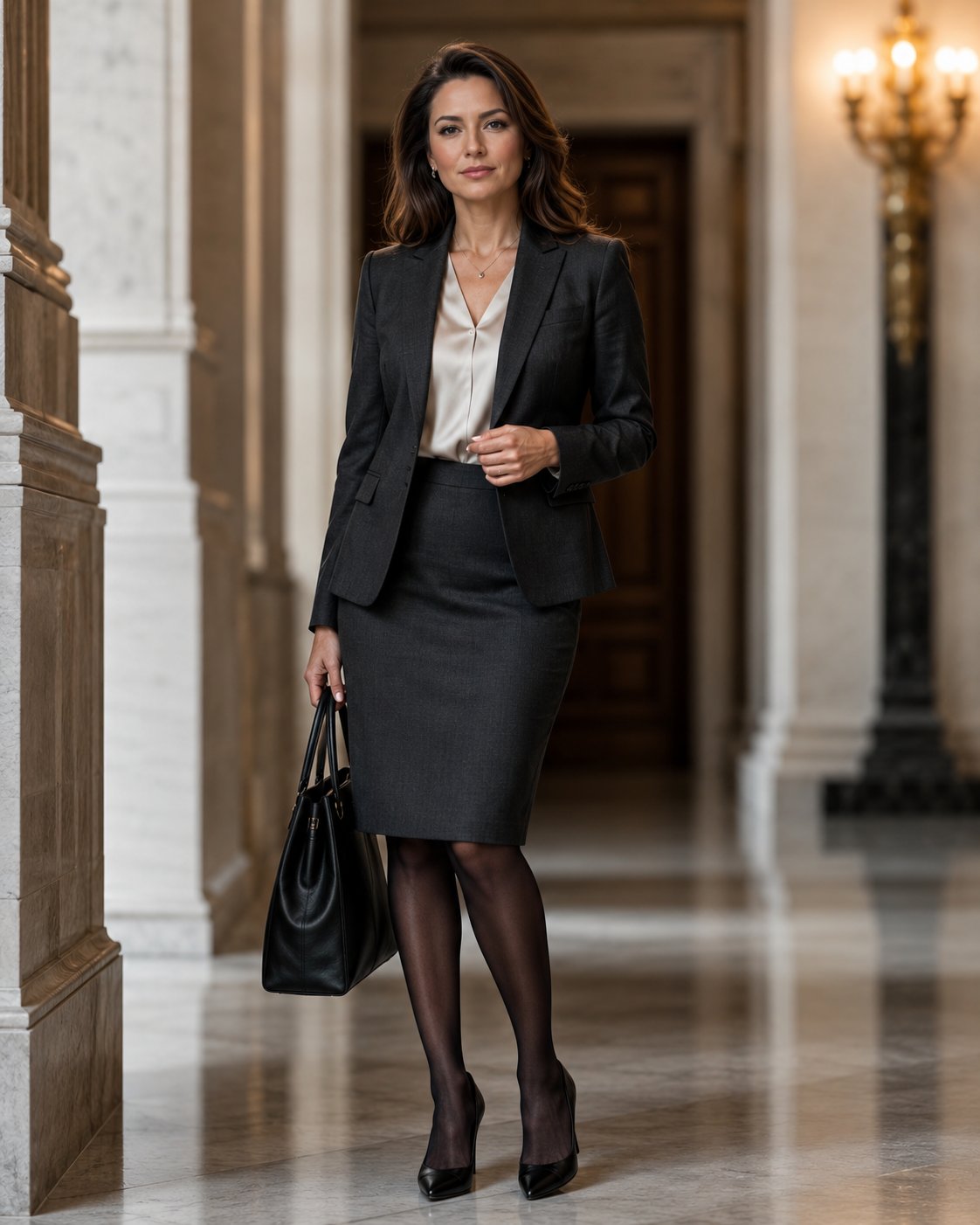
A knee-length pencil skirt suit with a smooth silk shell underneath is polished and traditional, ideal for more conservative courtrooms. Keep the skirt at or just below the knee and add sheer or opaque tights. It reads formal and respectful without feeling stiff.
3. Sheath Dress and Structured Blazer
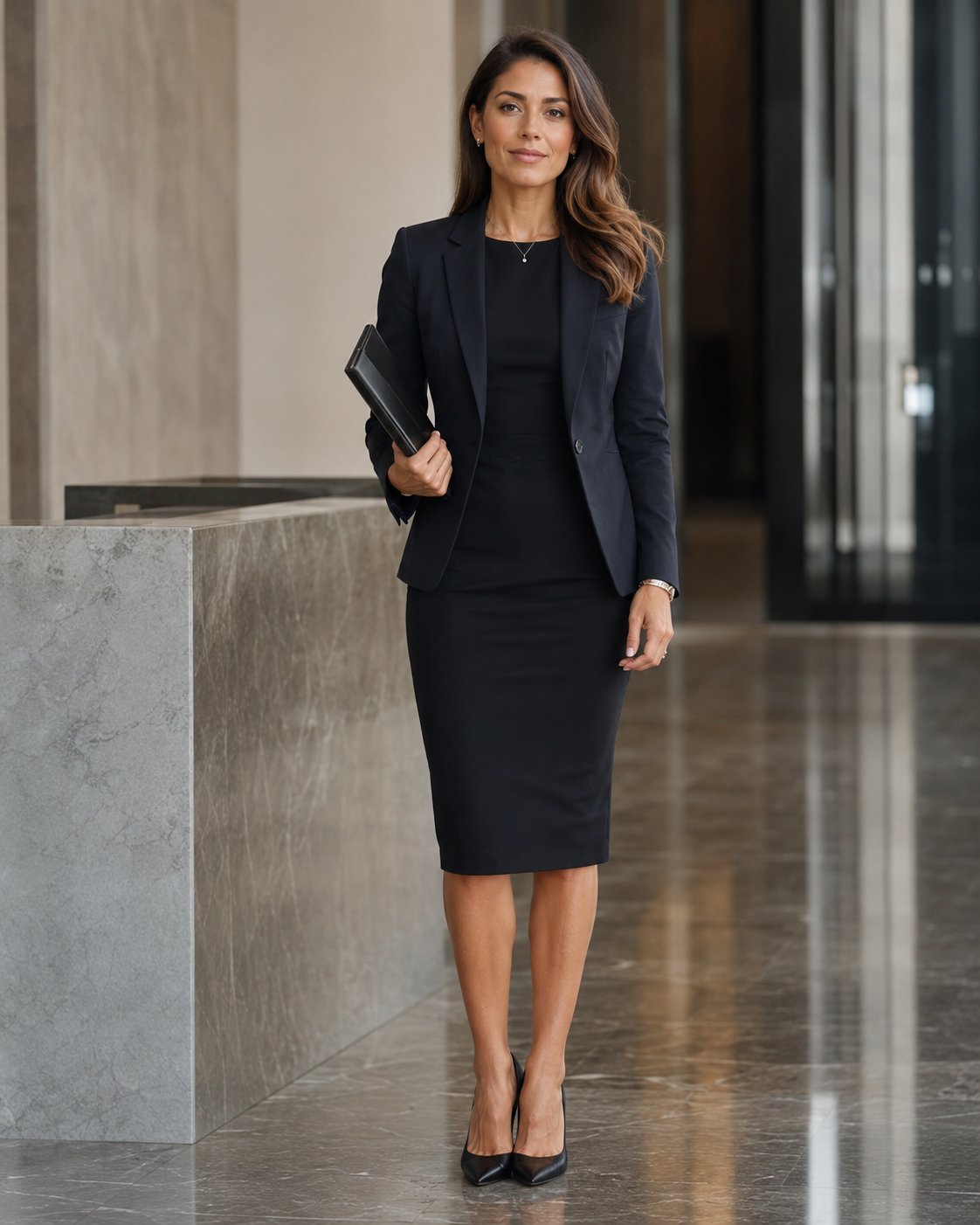
A tailored sheath dress under a structured blazer gives you suit-level formality with a little more ease. In a solid dark color, it is courtroom-appropriate and doubles for client meetings once you remove the jacket. It is the most versatile formal look you can own.
4. Trouser Suit in a Statement Neutral
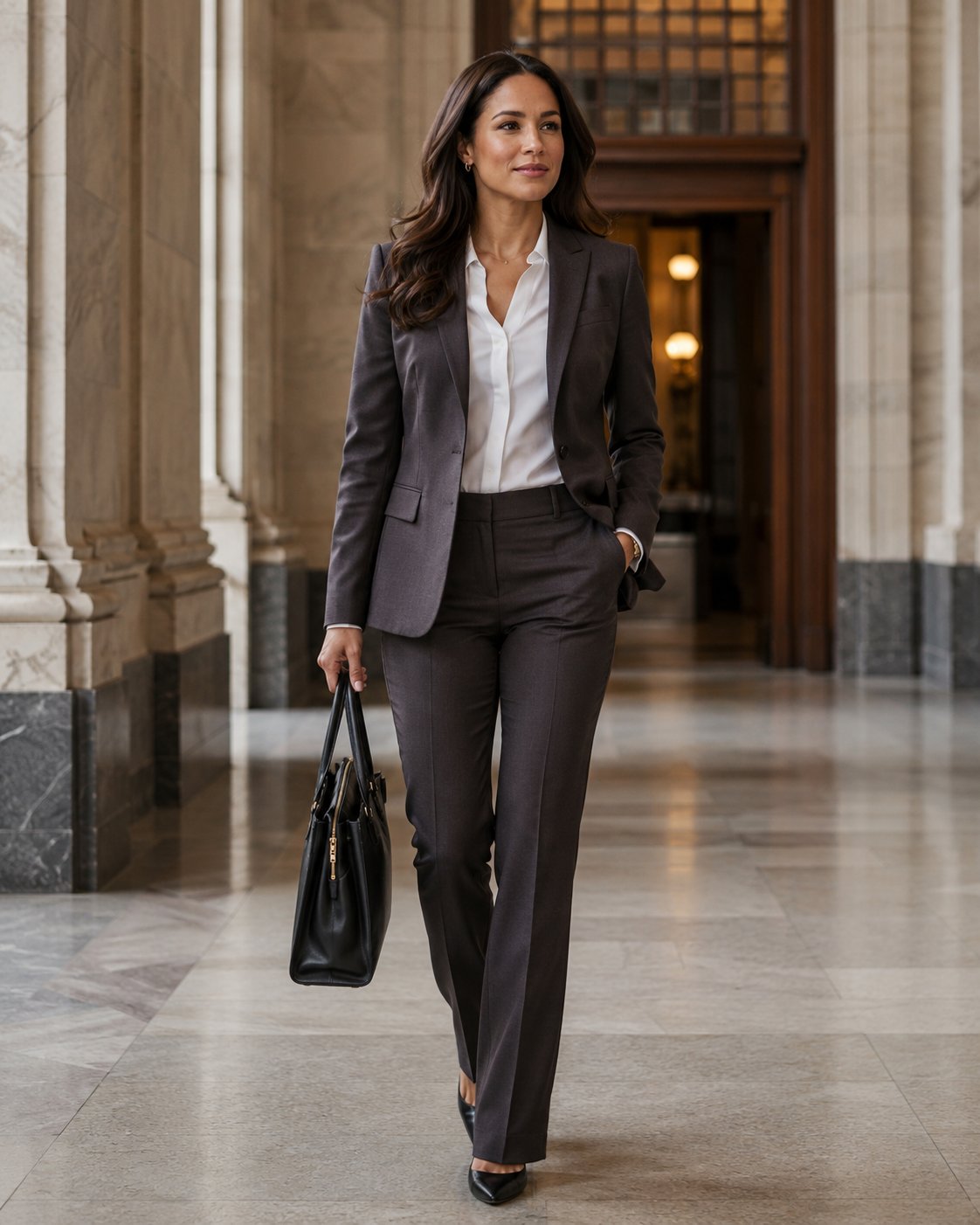
A sharp trouser suit in a rich neutral like deep grey or a muted burgundy lets you stand out subtly while staying authoritative. Tailored trousers with a matching blazer and a crisp blouse project confidence and modernity, perfect for the lawyer who wants presence without flash.
Office and Client-Meeting Outfits
5. Blazer, Blouse, and Tailored Trousers

The everyday workhorse. A blazer over a blouse with tailored trousers is polished enough for client meetings and comfortable enough for a full day at your desk. Mix and match colors within your neutral palette and this single formula covers most of your week.
6. Knit Top and Pencil Skirt
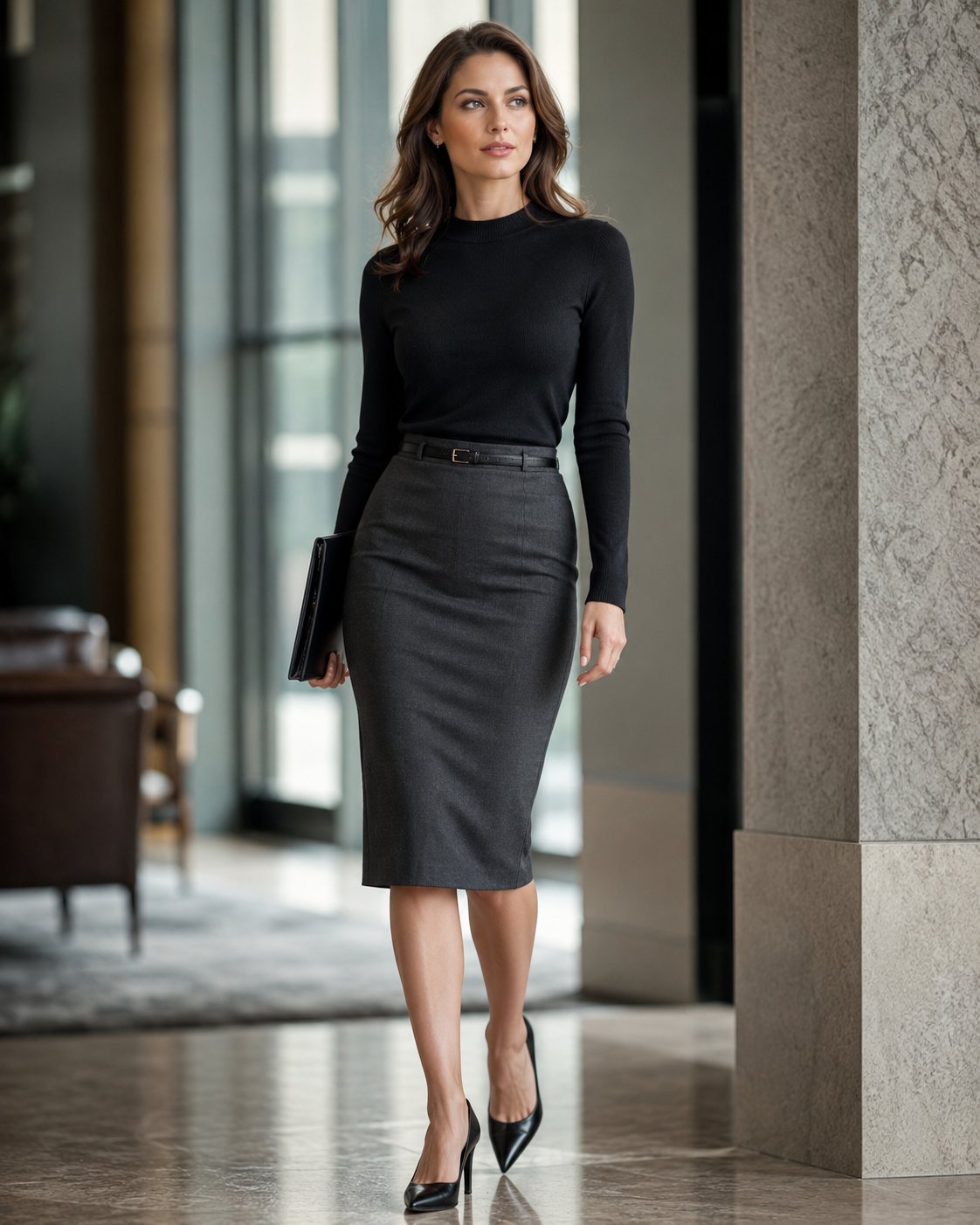
A fine-gauge knit tucked into a pencil skirt is refined and comfortable for office days without court. Add a blazer on your chair for unexpected meetings. It looks intentional and put-together while feeling far easier to wear than a full suit.
7. Wrap Dress with a Blazer
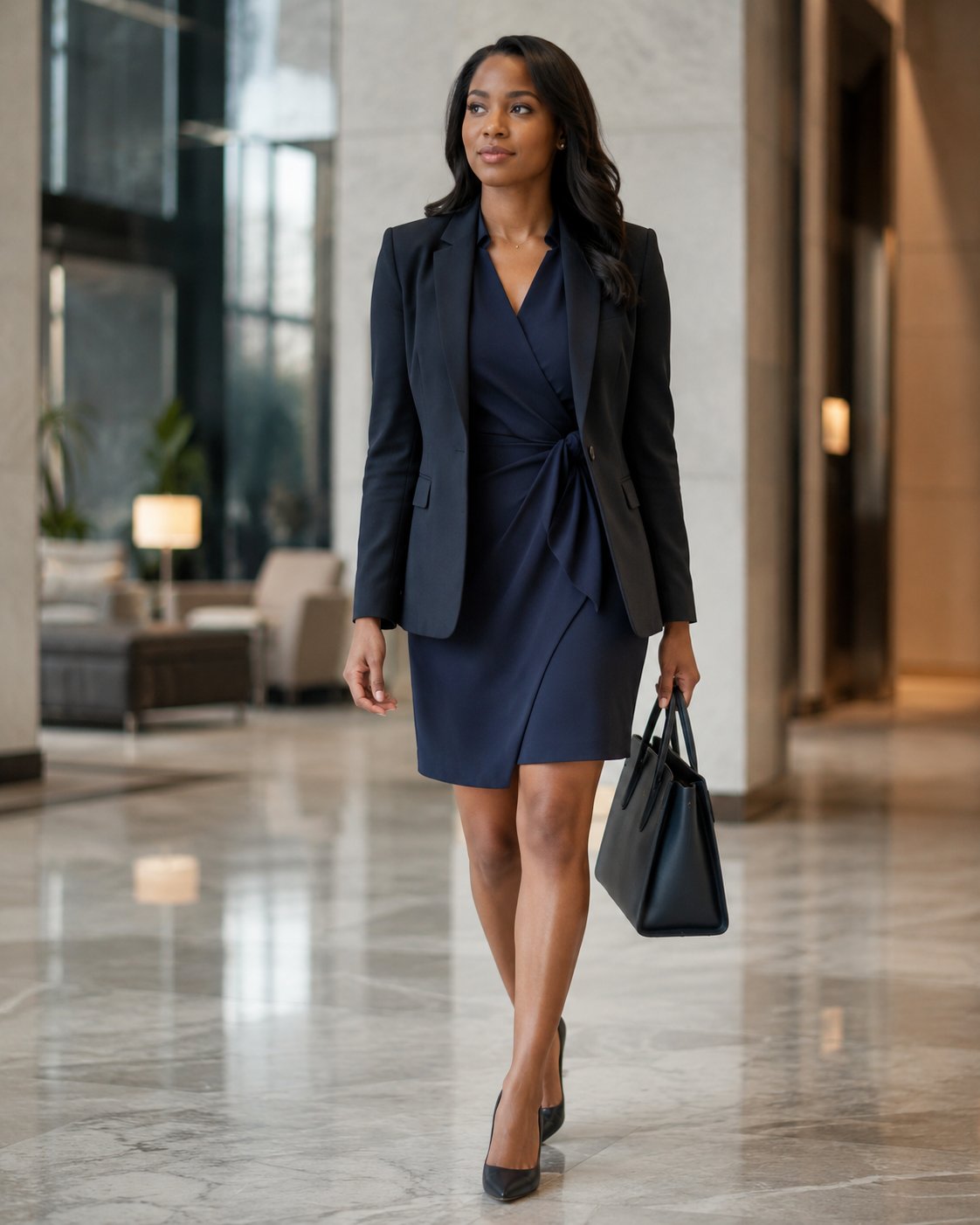
A quality wrap or A-line dress in a solid color is flattering, professional, and instantly ready. Layer a blazer for client-facing days and take it off at your desk. Choose a modest neckline and hem so it works in any professional setting.
8. Tailored Trousers and a Fitted Turtleneck
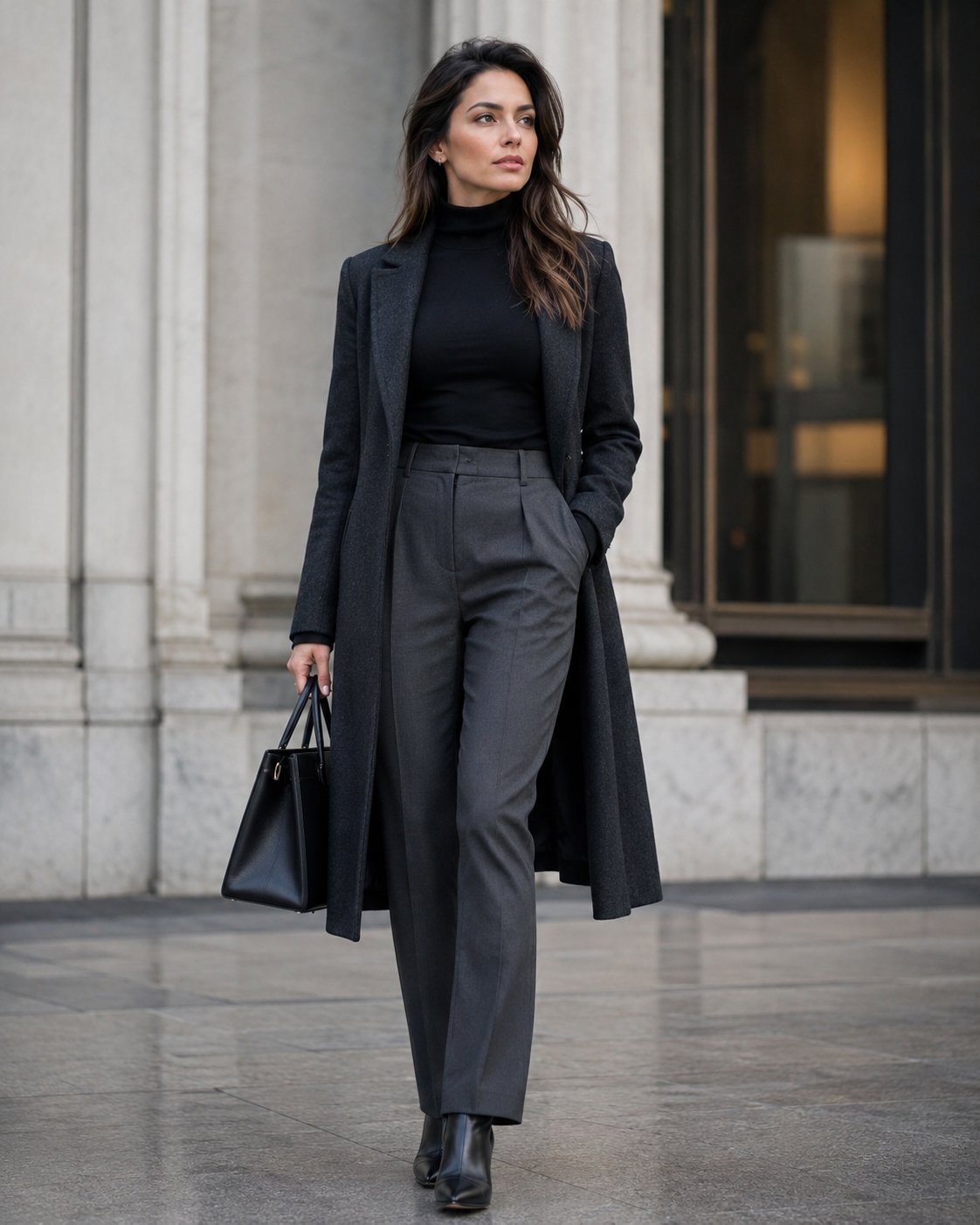
For cooler months, a fitted turtleneck with tailored trousers is sleek and modern. Add a longline coat or blazer over the top. This look is comfortable and warm while still reading as sharp and professional, ideal for office days and casual client calls.
Courtroom-to-Coffee: After-Hours and Networking
9. Suit Softened for Evening
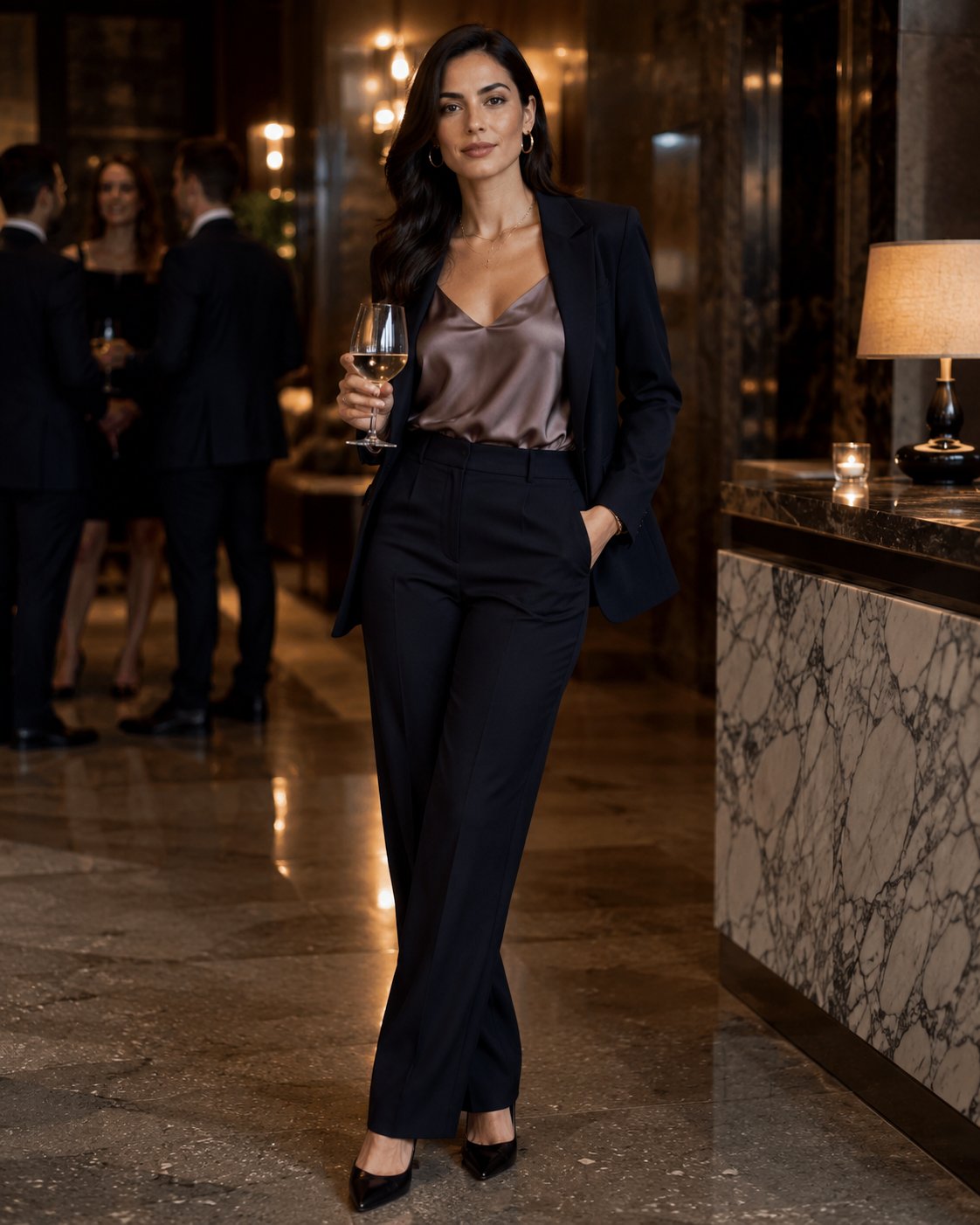
The magic of a good suit is how easily it transitions. Swap the courtroom blouse for a silky camisole, lose the blazer or drape it over your shoulders, add a bolder lip and a delicate necklace, and your daytime armor becomes evening-appropriate for a networking event or dinner.
10. Sheath Dress with Statement Accessories
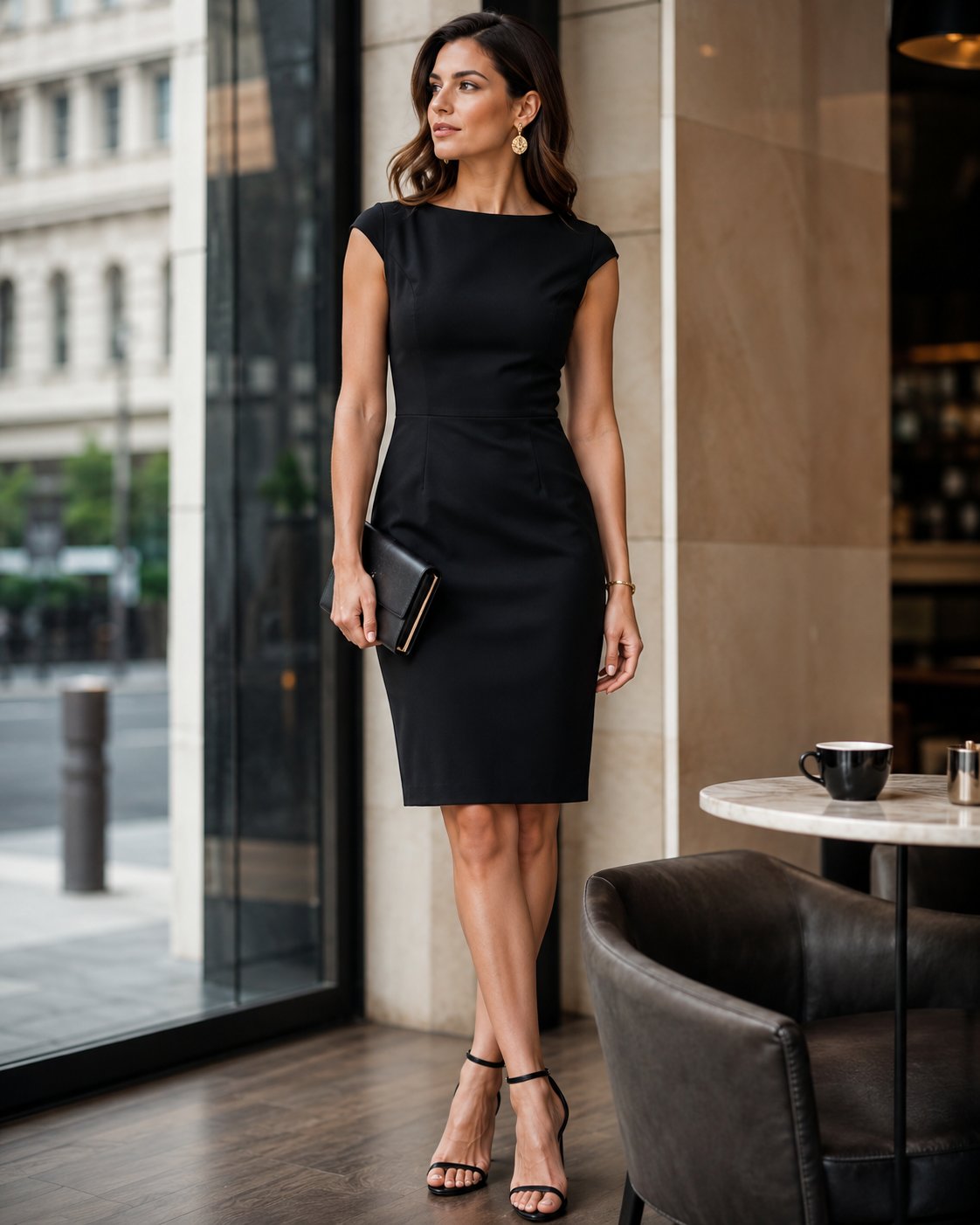
Your work sheath dress becomes a networking outfit with nothing more than accessories. Add a statement earring, a heeled sandal, and a structured clutch, and the same dress that carried you through client meetings now works for coffee, drinks, or a firm event. This is the heart of a courtroom-to-coffee wardrobe.
Shoes That Work as Hard as You Do
You are on your feet, in and out of buildings, and often walking long courthouse corridors, so your shoes have to be both professional and survivable. A closed-toe pump with a low-to-mid block heel is the safest courtroom choice; pointed leather flats and loafers cover long office days.
Stick to classic colors, black, nude, and deep brown, so everything coordinates, and prioritize comfort you can actually stand in for hours. Two or three excellent, comfortable pairs will serve you far better than a closet of shoes you dread wearing.
Build a Law Capsule Wardrobe
The lawyers who always look sharp are not shopping constantly; they built a coordinated capsule. Start with two suits (one navy, one charcoal or black), a few tailored trousers and a pencil skirt, two or three professional dresses, and four or five blouses and knits that all work together. Add a couple of blazers and your reliable shoes.
Because everything coordinates, a dozen pieces quietly become weeks of outfits, and your mornings get dramatically simpler. Building that wardrobe on a young-associate budget takes planning, and if you are looking to boost your income to invest in quality pieces, our guide to realistic side hustles that actually pay has practical options.
Dress for Your Corner of the Law
“Lawyer style” is not one thing; it flexes with your practice area and workplace, and reading the room is half the skill.
Big firms and corporate law
Large firms and corporate settings lean the most conservative and formal. Invest in high-quality suits and classic pieces, keep everything polished, and err toward traditional. Here, understated and impeccably tailored beats fashionable every time.
Government, nonprofit, and public interest
Public defenders, prosecutors, and nonprofit lawyers usually work in more relaxed offices, though courtroom days still demand a suit. You can lean more on separates, blazers, and dresses day to day, keeping one solid court-ready suit on standby for appearances.
Solo, boutique, and modern firms
Smaller and newer firms often allow more personality and business-casual days. You still want to look credible to clients, but you have room for color, modern cuts, and smart separates. Match your client base: corporate clients expect formality, while creative or startup clients may not.
Fabrics and Fit That Read as Expensive
In law, looking expensive is really about looking precise. Choose structured, natural-fiber fabrics like wool blends, ponte, and quality cotton that hold their shape through a long day and resist wrinkling. Cheap, shiny fabrics undercut even a good design, so let the material do some of the work.
Fit is the real luxury signal. A modest suit that is tailored to your body looks far more expensive than a designer piece that does not fit. Build a relationship with a good tailor and have your suits, blazers, and trousers adjusted to you. It is the single highest-return investment in a professional wardrobe.
Accessories and Grooming
Keep accessories minimal and intentional. A quality structured bag that fits a laptop and files, a classic watch, and simple stud or small drop earrings signal polish without noise. Avoid anything that jangles, glints, or draws the eye away from your face when you are speaking.
The same restraint applies to grooming: neat hair, natural or understated makeup, and short, clean nails keep the focus on your competence. A polished, low-maintenance hairstyle you can rely on saves precious morning minutes. The overall message you want to send is control and attention to detail, which is exactly what clients want in a lawyer.
What to Avoid
A few things quietly undercut credibility in a legal setting. Skip anything too revealing, too tight, or too short; hemlines and necklines should be conservative, especially in court. Avoid loud prints, neon colors, and overly trendy pieces that date fast and pull focus.
Steer clear of noisy or oversized jewelry, uncomfortable shoes you cannot walk in, and anything wrinkled or ill-fitting, since a rumpled suit reads as unprepared. The safest rule in law is that your appearance should never be the most memorable thing about you in the room; your argument should be.
A Week of Outfits From One Capsule
Here is how a small capsule stretches across a real week. On a trial Monday, wear the full navy suit with a silk blouse and pumps. On a client-meeting Tuesday, pair the charcoal blazer with tailored trousers and a knit. On a desk-heavy Wednesday, go with the knit top and pencil skirt, blazer on your chair for surprises.
On a Thursday hearing, reach for the skirt suit with tights and closed-toe heels. And on a casual-but-client-facing Friday, wear the wrap dress with flats, ready to add a blazer if someone drops by. Same handful of pieces, five distinct, appropriate looks, and a networking event any evening is just an accessory swap away. That is the entire point of dressing smart in law: maximum credibility, minimum daily decision-making.
The Bottom Line
Dressing for a career in law is less about following trends and more about building a reliable system: quality over quantity, fit over labels, and a tight neutral palette that coordinates with itself. Nail a small capsule of tailored suits, versatile dresses, and comfortable classic shoes, and you will look authoritative in court, approachable with clients, and polished at every event, without ever staring into your closet wondering what to wear. Let your wardrobe be the quiet foundation, and let your work be the thing everyone remembers.
Do Not Overlook Outerwear
Your coat is often the first thing a client or opposing counsel sees, so it deserves as much thought as the suit underneath. A well-cut wool overcoat in camel, navy, black, or grey elevates everything it covers and reads as instantly professional. For rain and commuting, a structured trench in a neutral shade keeps you polished when the weather is not.
Keep the silhouette clean and the length at least to mid-thigh so it works over both trousers and dresses. One or two quality coats will carry your entire cold-weather wardrobe and last for years, making them some of the best value pieces a working lawyer can buy.
Frequently Asked Questions
What should a female lawyer wear to court?
A tailored suit (trouser or skirt) in navy, charcoal, or black with a simple blouse and closed-toe pumps is the safest, most authoritative choice. Keep colors muted, hems at or near the knee, and accessories minimal so nothing distracts from your case.
Can women wear pantsuits in the courtroom?
Absolutely. A well-tailored pantsuit is completely courtroom-appropriate and often more comfortable and practical than a skirt suit. Choose a conservative color and a proper fit, and it projects just as much authority.
How can I look professional on a junior-lawyer budget?
Buy fewer, better pieces in coordinating neutrals and have them tailored, since fit reads as expensive. Prioritize one great suit and quality shoes, then fill in with mix-and-match blouses and trousers. Secondhand and outlet shopping stretch the budget further.
What colors are best for a lawyer’s wardrobe?
Navy, charcoal, black, and grey form the professional core because they read as authoritative and coordinate effortlessly. Add interest with muted tones like burgundy, deep green, or soft white blouses rather than bright, attention-grabbing colors.
How do I take a work outfit into the evening?
Swap a structured blouse for a silky top, remove or drape the blazer, and add statement accessories and a bolder lip. A work sheath dress or suit transitions to networking or dinner with just those small changes.
You might also like: Cute and Comfortable Teacher Outfits for Every Season · 11 Realistic Side Hustles for Women That Actually Pay
Related Post