


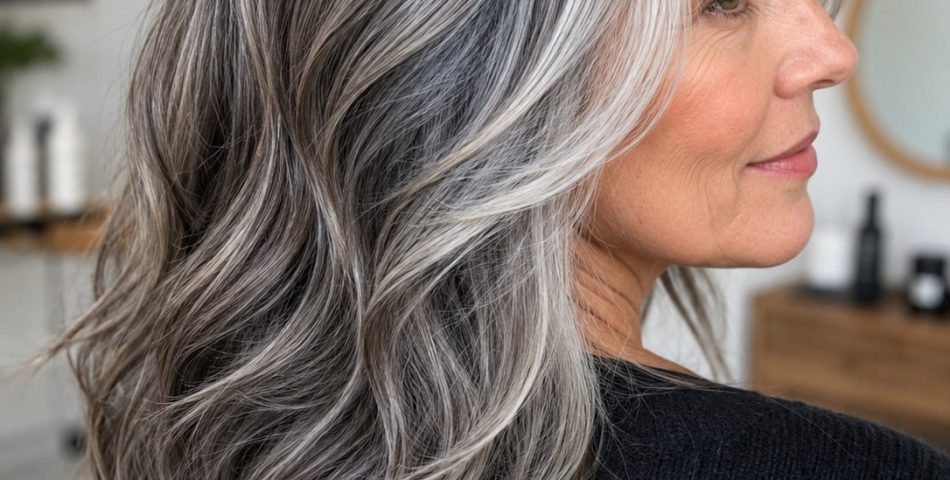
There is a moment many women reach where the every-four-weeks root touch-up stops feeling worth it, but going fully silver feels like too big a leap. The happy middle ground, blending your grey rather than fighting it or fully embracing it, has quietly become the most modern, low-maintenance way to handle greys in 2026.
Blending means weaving your natural grey into your colour with highlights, lowlights, and clever toning so the regrowth line softens and the grey reads as dimension instead of roots. The result looks expensive and intentional, stretches your salon visits, and lets you transition on your own timeline.
This guide covers the most modern ways to blend grey hair without committing to full silver, how to choose the right approach for your hair, and how to keep it looking fresh between appointments. Whether you have a few greys or a lot, there is a flattering, lower-maintenance option here.
Why Blending Beats Covering or Going Full Silver
Constantly covering grey means a harsh regrowth line every few weeks and an endless maintenance cycle, while going fully silver is a beautiful but bold commitment with a long, sometimes awkward transition. Blending sidesteps both: it disguises the regrowth line, so growing-out greys look like deliberate dimension rather than neglect.
It is also the lower-maintenance, more flattering choice for most women. Because blended colour grows out softly instead of with a stark line, you can stretch appointments to every couple of months, and the woven tones add brightness around the face that often looks more youthful than a single flat all-over colour.
Modern Ways to Blend Grey Hair
Babylights
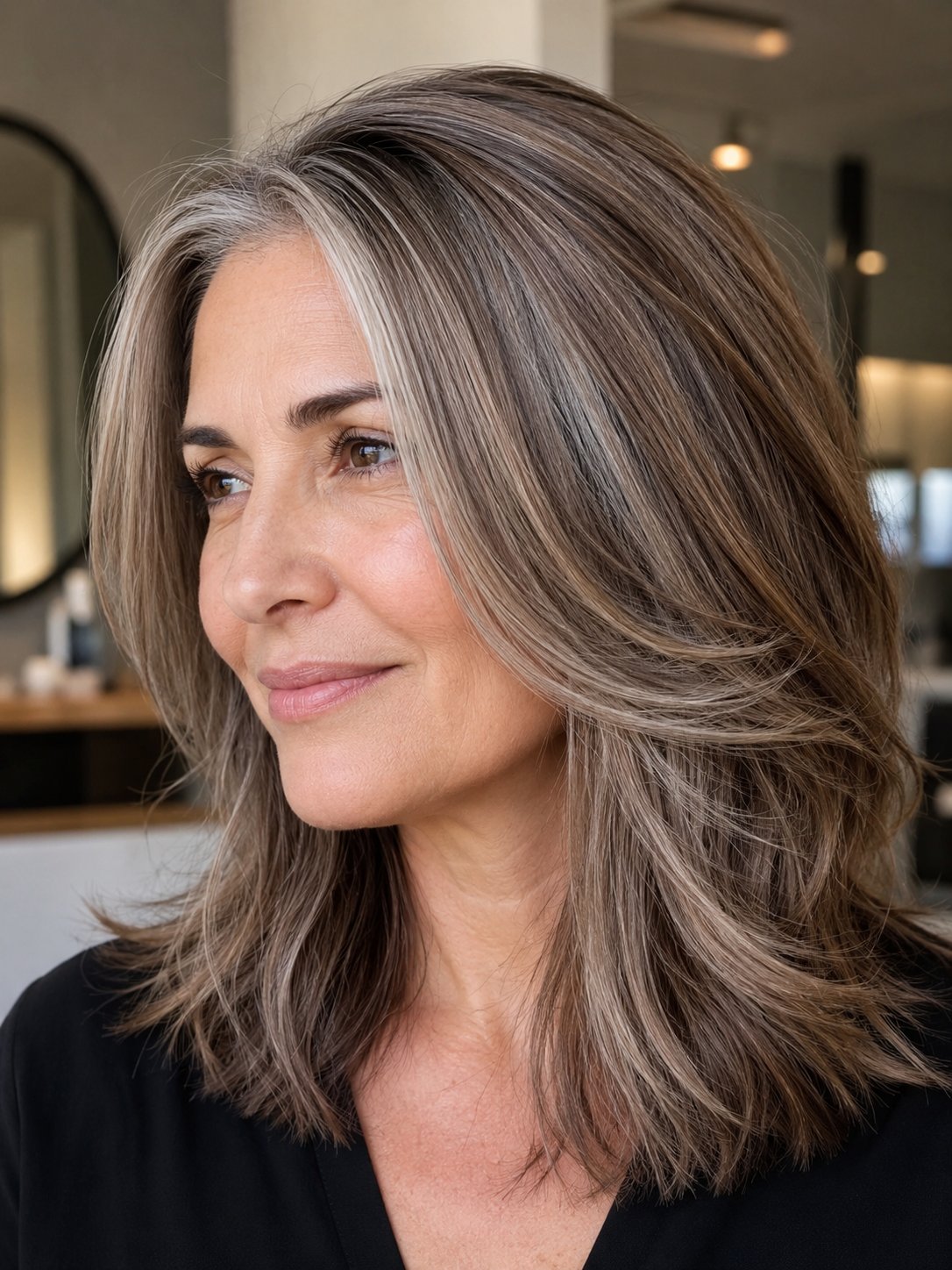
Babylights are very fine, delicate highlights painted throughout the hair to mimic natural variation. Because they are so subtle and close to your base, they blend greys seamlessly and grow out without an obvious line, which makes them ideal for hair with a scattering of greys.
They add soft brightness and dimension without a dramatic change, so the effect is natural and expensive-looking. Babylights are one of the most popular blending techniques precisely because they are so low-maintenance as they grow.
Balayage
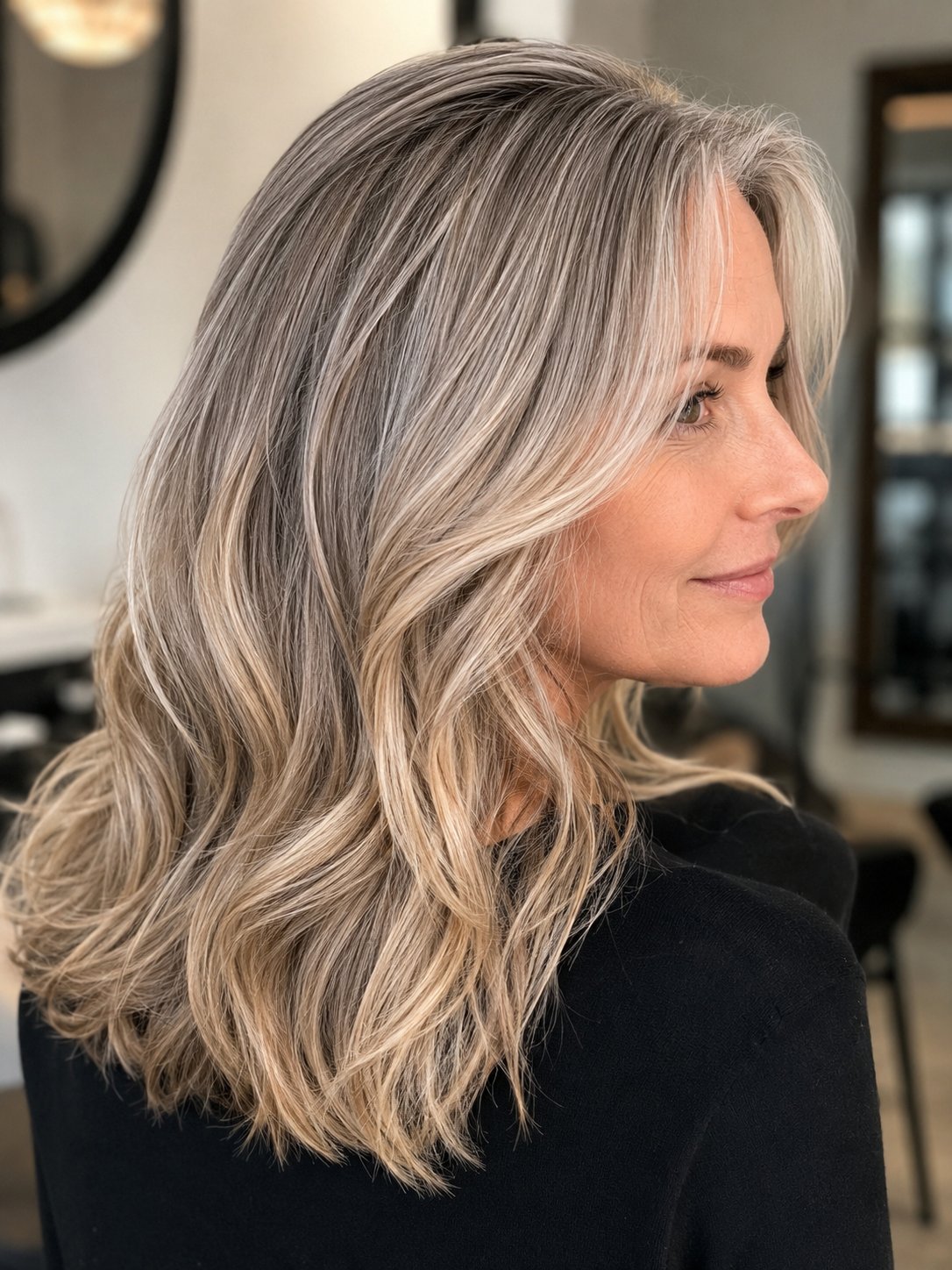
Balayage is hand-painted colour that is denser toward the ends and softer at the roots, creating a lived-in, gradual effect. For grey blending, it breaks up the solid regrowth line and lets greys melt into highlighted pieces, so new growth is far less noticeable.
Because there is no harsh demarcation, balayage is wonderfully low-maintenance and can stretch for months between salon visits. It suits women who want a sun-kissed, dimensional look rather than uniform coverage.
Lowlights for Dimension
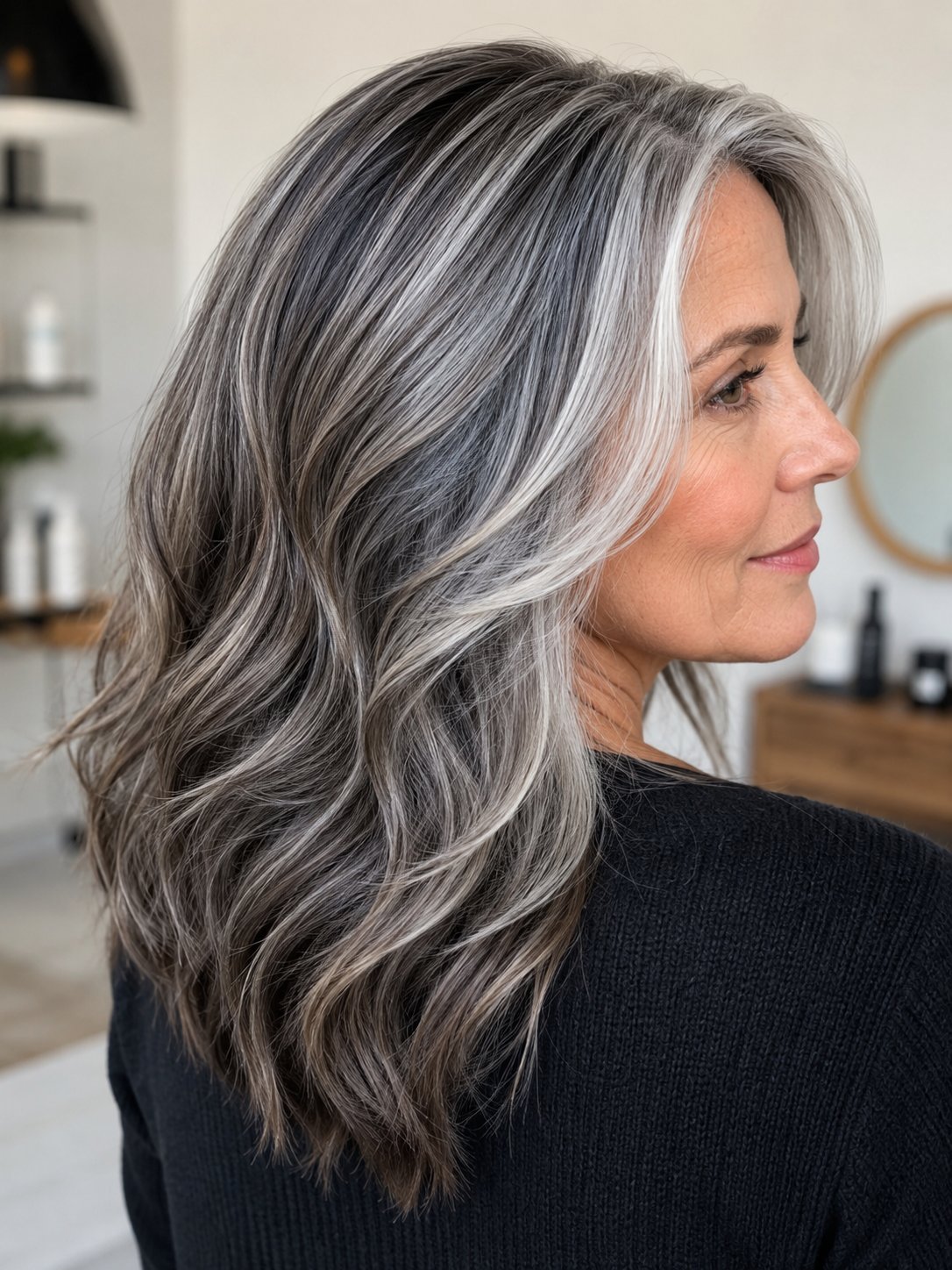
If your hair has become quite grey, adding lowlights, darker woven strands, restores depth and dimension that all-over grey or all-over colour can lack. Lowlights make the grey read as one intentional tone among several rather than as roots, which instantly looks more polished.
They are often combined with highlights to create a rich, multi-tonal finish. This approach is especially effective for women with more salt-and-pepper coverage who want their colour to look designed rather than faded.
Root Smudge or Shadow Root
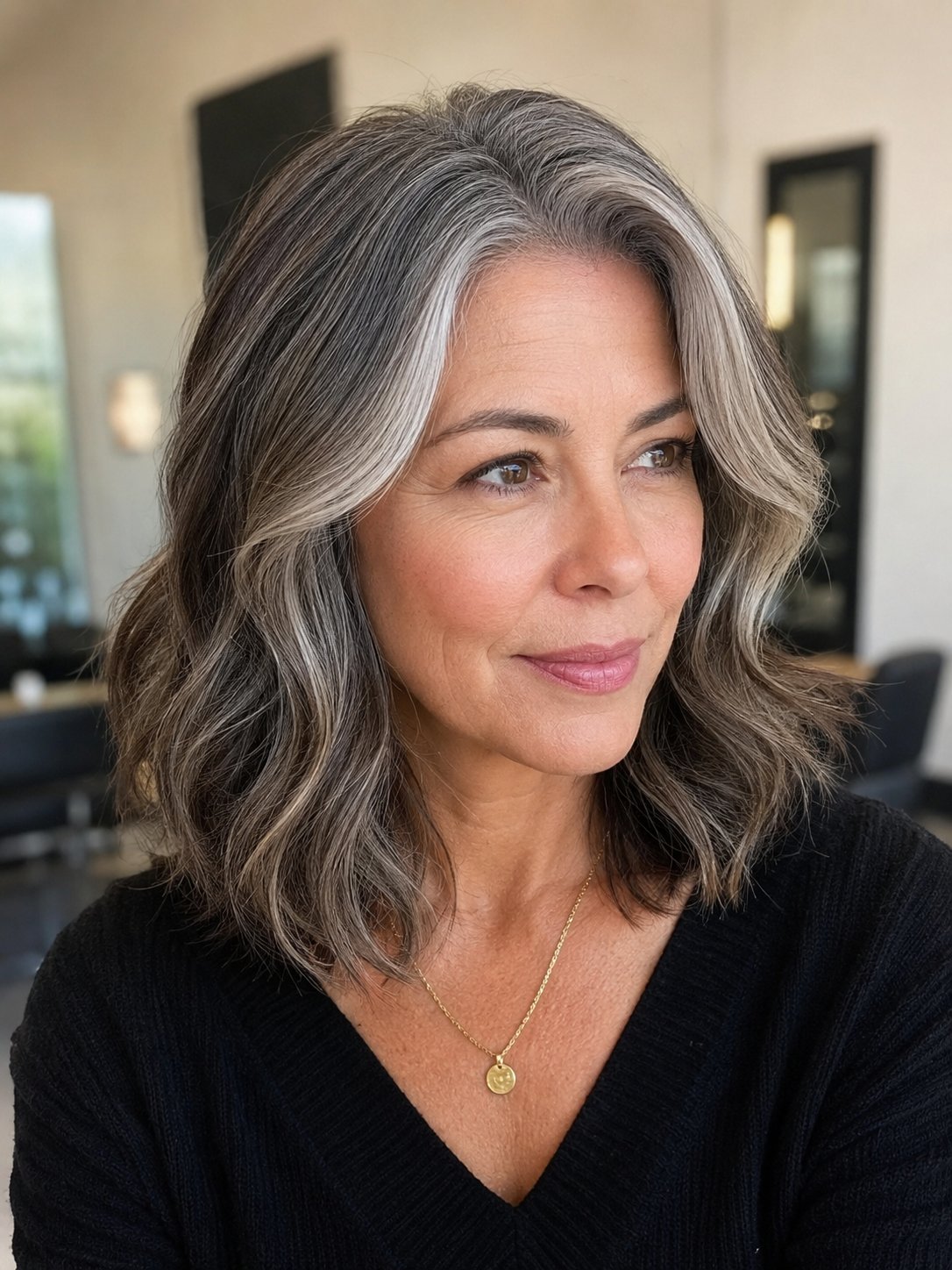
A root smudge (or shadow root) is a soft, blended application of colour at the roots that diffuses the line between your regrowth and the rest of your hair. Instead of a sharp band of grey, you get a gentle gradient that grows out gracefully.
It is a quick, affordable add-on that dramatically extends the life of your colour, which is why so many colourists recommend it for grey blending. It pairs perfectly with highlights or balayage for a seamless, low-maintenance result.
Going a Few Shades Lighter
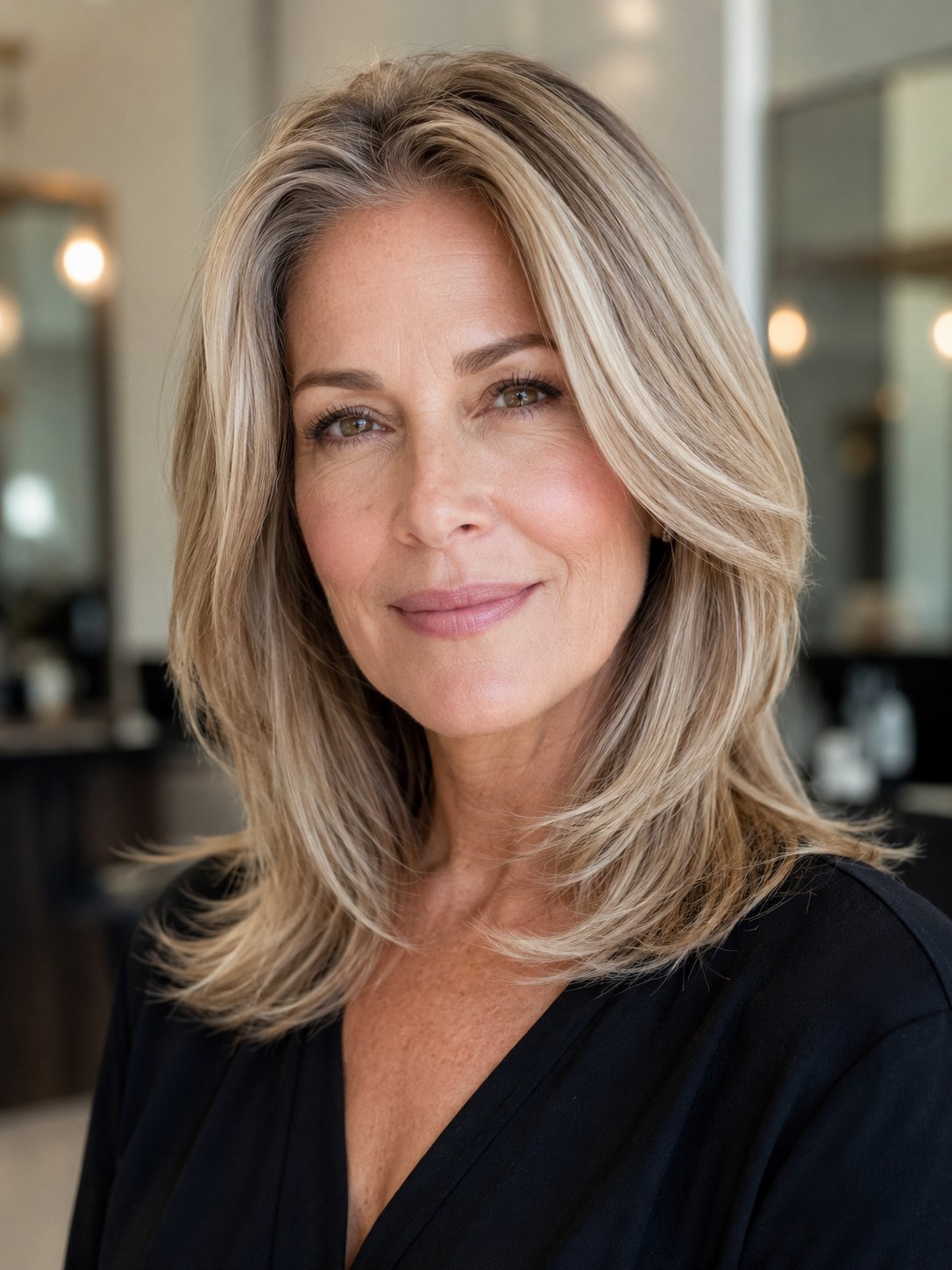
One of the simplest tricks is to take your overall colour a little lighter and warmer. Grey is far less obvious against lighter blonde or soft bronde hair than against dark colour, so lightening your base makes regrowth blend in almost automatically.
This is why so many women lighten as they grey. A softer, lighter palette hides greys with minimal effort and tends to be flattering against changing skin tone, making it a genuinely low-maintenance long-term strategy.
A Gloss or Toner
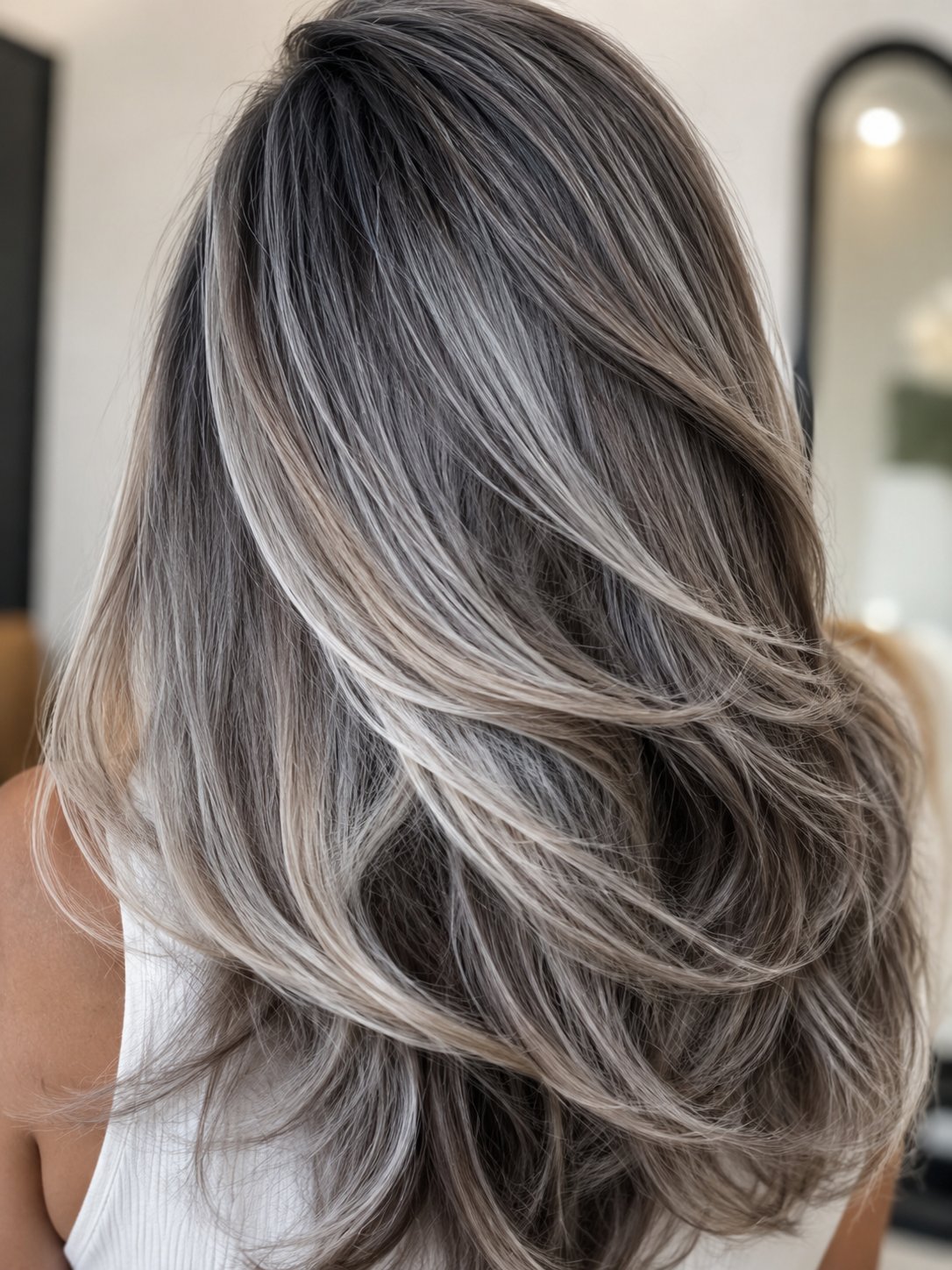
A glossing or toning treatment can transform how grey reads, blending brassy or stark greys into a soft, even, expensive-looking tone. A gloss adds shine and melts the greys into your overall colour without full coverage, refreshing the whole look in one quick salon step.
Glosses are gentle, affordable, and fade softly, so they are a great low-commitment way to keep blended grey looking polished. Many women book a gloss between bigger colour appointments to stay fresh.
Face-Framing Highlights
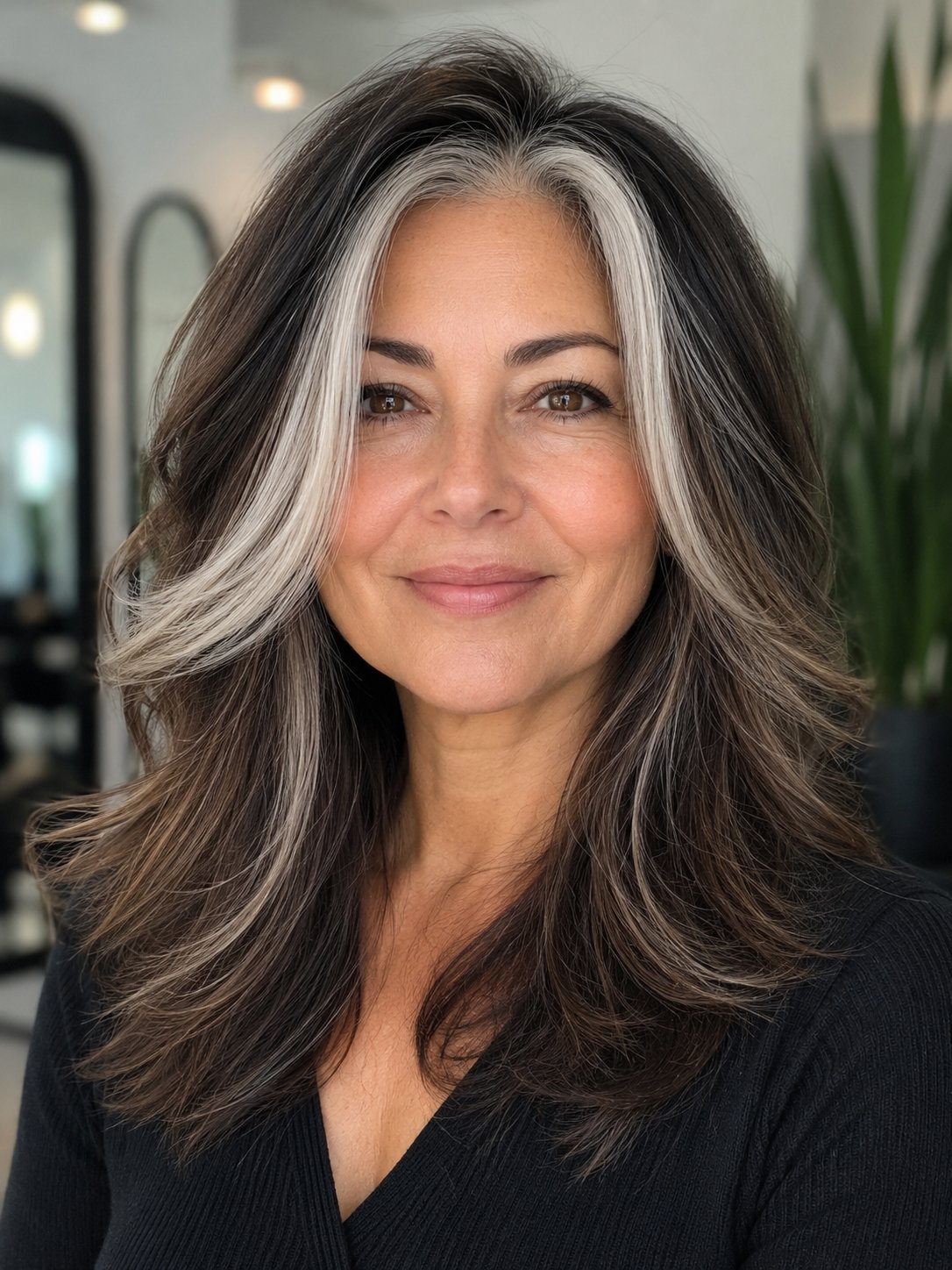
Concentrating brightness around the face, money pieces and face-framing highlights, draws the eye and disguises the greys that are usually most noticeable at the hairline and temples. It is a high-impact, lower-commitment way to blend grey where it shows most.
This technique flatters the face, adds a youthful glow, and requires less overall colour than a full head of highlights. It is ideal if your greys are concentrated around your face or you want maximum effect for minimum maintenance.
The Gradual Grow-Out (Grombre)
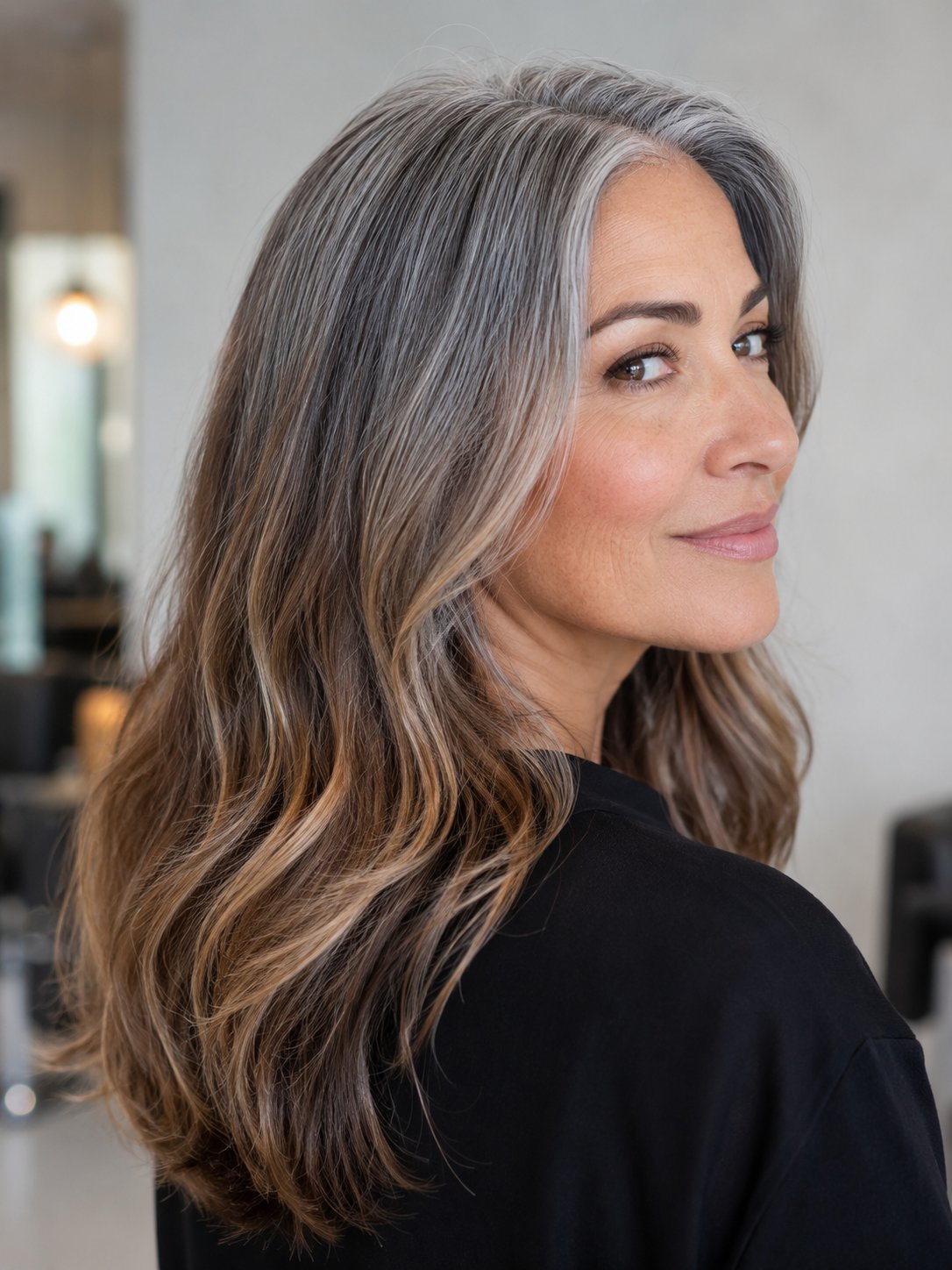
If you suspect you may eventually want to go fully natural, blending can be the bridge. A gradual transition, sometimes called grombre, uses highlights and lowlights to weave your natural grey in over time so there is never a harsh line, letting you grow out the colour comfortably.
This approach gives you the option to keep blending indefinitely or to eventually arrive at your natural silver with no awkward stage. It is the gentlest path for women who are grey-curious but not ready to commit.
Choosing the Right Approach for Your Hair
The best technique depends on how much grey you have and the look you want. For a scattering of greys, babylights or a root smudge blend them invisibly. For more salt-and-pepper, balayage with lowlights restores dimension. If you want the lowest maintenance, going lighter overall or focusing on face-framing pieces hides regrowth with the least upkeep.
Your natural base colour and skin tone matter too, so bring photos to your colourist and be honest about how often you realistically want to visit the salon. A good colourist will tailor the blend to your hair and your maintenance appetite, which is what keeps the result looking effortless.
Keeping Blended Grey Fresh Between Visits
Blended grey is low-maintenance, but a few habits keep it looking its best. Use a purple or silver shampoo once a week to stop greys and highlights turning brassy or yellow, and a hydrating mask regularly, since grey hair tends to be drier and coarser and shine is what makes it look healthy.
Protect your colour from fading with heat protectant and gentle, sulphate-free products, and book a quick gloss or root smudge between full appointments if you want to refresh. A flattering cut helps too; see our guide to the executive bob and other low-effort styles for busy women.
What to Avoid
Avoid trying to cover heavy grey with a single flat box dye, which tends to look harsh, create a stark regrowth line, and read as obviously dyed, the opposite of blended. Be wary too of going too dark, since dark colour against grey regrowth creates the most noticeable line of all.
Skip harsh at-home highlighting kits on already-grey hair, which can turn brassy and uneven; blending techniques really are best left to a colourist. And do not neglect toning and hydration, because dull, brassy, dry hair undermines even the best blend. On no-wash days, a quick five-minute updo keeps you polished while protecting your colour.
What Grey Blending Costs and How Long It Takes
Costs vary widely by salon, location, and how much work your hair needs, but blending is generally a worthwhile investment because it stretches so far. A full balayage or highlight-and-lowlight session is more than a simple root touch-up, yet because you only return every two to three months rather than every few weeks, the yearly cost often works out similar or lower, with far less hassle.
Time-wise, expect a blending appointment to take a few hours, especially the first session where your colourist designs the placement. Quick refreshers like a gloss or root smudge are much faster and cheaper, and booking those between bigger appointments keeps the look fresh without a full sitting. Always ask your colourist for a maintenance plan up front so there are no surprises.
Products Worth Keeping at Home
A few key products protect your investment and keep blended grey looking salon-fresh. A quality purple or silver shampoo, used roughly once a week, neutralises the brassy or yellow tones grey and highlights are prone to. A rich hydrating mask is essential because grey hair is naturally drier and coarser, and shine is what makes blended colour read as healthy and intentional.
Round it out with a sulphate-free, colour-safe shampoo and conditioner to slow fading, a heat protectant for any styling, and a lightweight oil or serum for shine on the ends. None of this is complicated or expensive, but together these basics are the difference between blended grey that looks luminous and blended grey that looks dull and washed out between appointments.
Frequently Asked Questions
What is the best way to blend grey hair without going fully silver?
For most women, balayage or babylights combined with a root smudge is the best blend: they weave grey into highlighted, dimensional colour and grow out without a harsh line. If you have a lot of grey, adding lowlights restores depth. Going a few shades lighter overall also hides regrowth with minimal upkeep. The right choice depends on how much grey you have and how often you want to visit the salon.
Is blending grey lower maintenance than covering it?
Yes, significantly. Covering grey means a harsh regrowth line and touch-ups every few weeks, while blended colour grows out softly with no obvious line, so you can stretch appointments to every couple of months. Techniques like balayage, babylights, and root smudges are specifically designed to disguise regrowth, which is what makes blending the more low-maintenance, modern choice.
Can I blend grey hair at home?
Light upkeep yes, the blending itself no. At home you can maintain blended grey with purple or silver shampoo to control brassiness, hydrating masks for shine, and gentle colour-safe products. But the actual blending, balayage, babylights, lowlights, and root smudges, is best done by a professional colourist, since at-home kits on grey hair often turn brassy or uneven and can create the harsh line you are trying to avoid.
Does blending grey look more youthful than full coverage?
Often, yes. Flat, all-over colour can look harsh and obviously dyed, while blended highlights and lowlights add dimension and brightness, especially around the face, that tends to read as more natural and youthful. Blended grey also avoids the stark regrowth line that makes full coverage look dated between appointments. The dimensional, lived-in finish is generally more flattering as hair and skin tone change.
How often will I need to visit the salon if I blend my grey?
That is the big advantage: usually every two to three months rather than every few weeks, because blended colour grows out softly with no obvious line. You can stretch it further with a quick gloss or root smudge in between, and good at-home care like purple shampoo and hydrating masks. The exact timing depends on the technique and how much grey you have, but blending is designed to minimise salon trips.
You might also like: The Executive Bob • Best Hairstyles for Female Entrepreneurs in Summer • 10 Five-Minute Updos for Busy Professional Women
Related Post