


Let us start by throwing out the premise that curly hair needs to be tamed to look professional.
It does not. It needs to look intentional — which is a completely different thing, and a much easier bar to clear.
Straight hair gets to be messy and nobody comments. Curly hair gets held to a stricter standard, which is unfair and also just the reality most of us are working with. So the goal here is styles that look deliberate and polished while still being genuinely your texture.
Twelve of them, plus the care routine that makes any of them work.
What Makes Curly Hair Read as Polished
Three things, and none of them involve straightening.
Defined curls, not fluffy ones. Definition is what separates “styled” from “slept on it.” Frizz is not a moral failing, but a defined curl pattern reads as effort.
A clean hairline. Whatever is happening with the length, tidy edges make the whole look intentional.
Shape that suits your face. Curly hair has volume, and where that volume sits changes everything. Width at the jaw versus width at the cheekbone are very different looks.
Get those three right and almost any style below works.
12 Professional Hairstyles for Curly Hair
1. The Defined Wash-and-Go

The everyday workhorse. Curls worn down, defined, shaped.
The trick is applying product to soaking wet hair — not damp, actually dripping. Rake through, scrunch, then leave it alone completely while it dries.
Touching curls while they dry is the number one cause of frizz. Hands off.
Once fully dry, scrunch out the cast — that crunchy gel shell — and you get soft, defined curls that hold all day.
2. The Low Curly Bun

The safest formal option in the list. Interviews, presentations, board meetings.
Gather at the nape, twist loosely, secure with a scrunchie or spin pins rather than a tight elastic that dents your curl pattern.
Leave it slightly soft at the crown. Pulled bone-tight ages the face and strains your hairline.
3. The Half-Up Puff
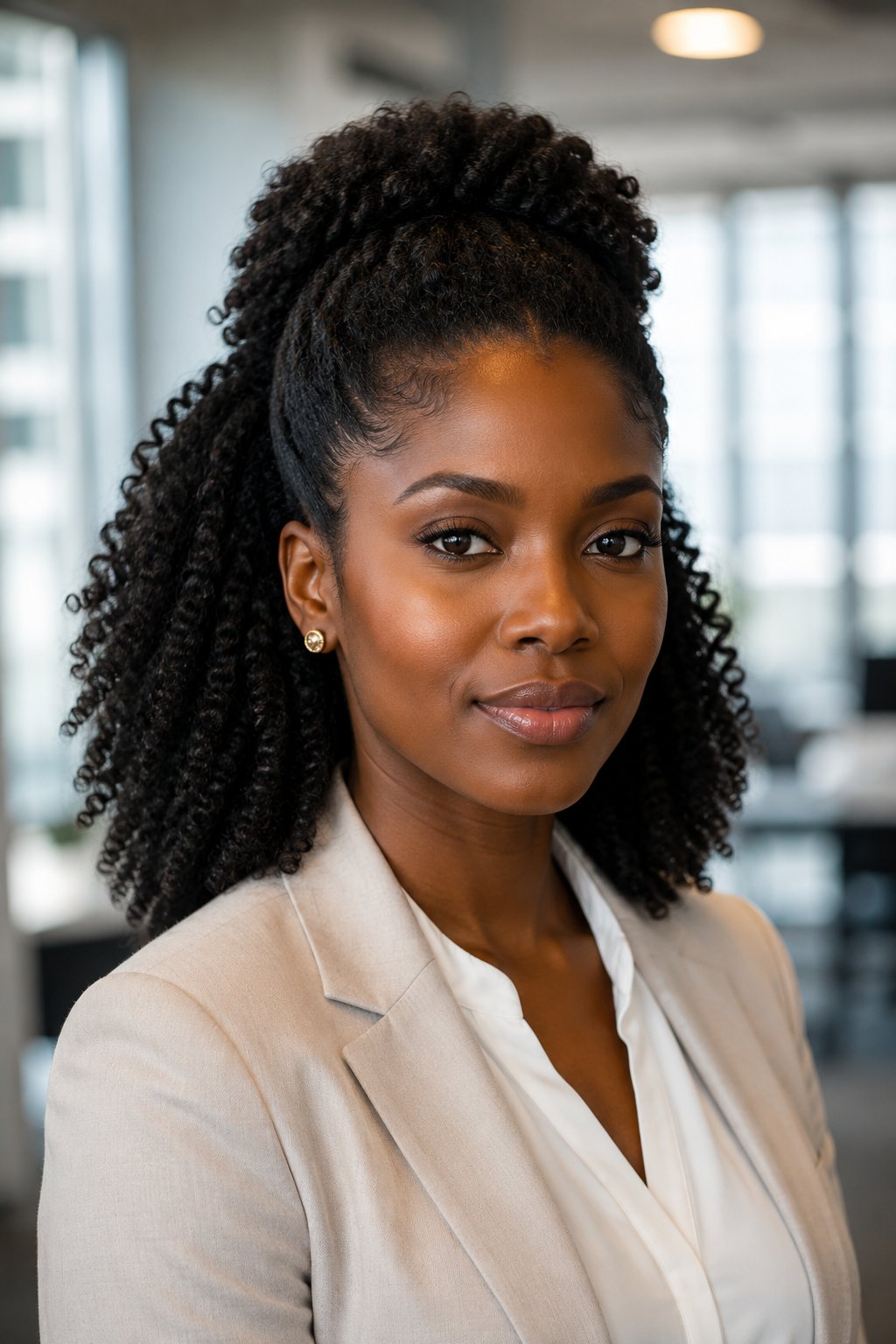
Front section pulled back, length left loose. It keeps hair off your face for calls and screens while still showing your texture.
Genuinely takes about ninety seconds, which is why it becomes a default for a lot of people.
4. The Curly Low Ponytail

Clean, simple, appropriate everywhere.
Smooth the front with a little gel or a light brush, gather at the nape, secure. Leaving two soft pieces at the front keeps it from looking severe.
Use a fabric-covered elastic. Regular ones snag curls badly and cause breakage over time.
5. The Shoulder-Length Curly Lob

A cut rather than a style, and one of the most flattering options for curly hair in a professional setting.
Length sits at or just below the shoulder, which puts the volume around the collarbone instead of the ears — avoiding the triangle shape that shorter curly cuts can create.
Ask for it to be cut dry, curl by curl, if your stylist offers that. It makes an enormous difference to how it falls.
6. The Twist-Out
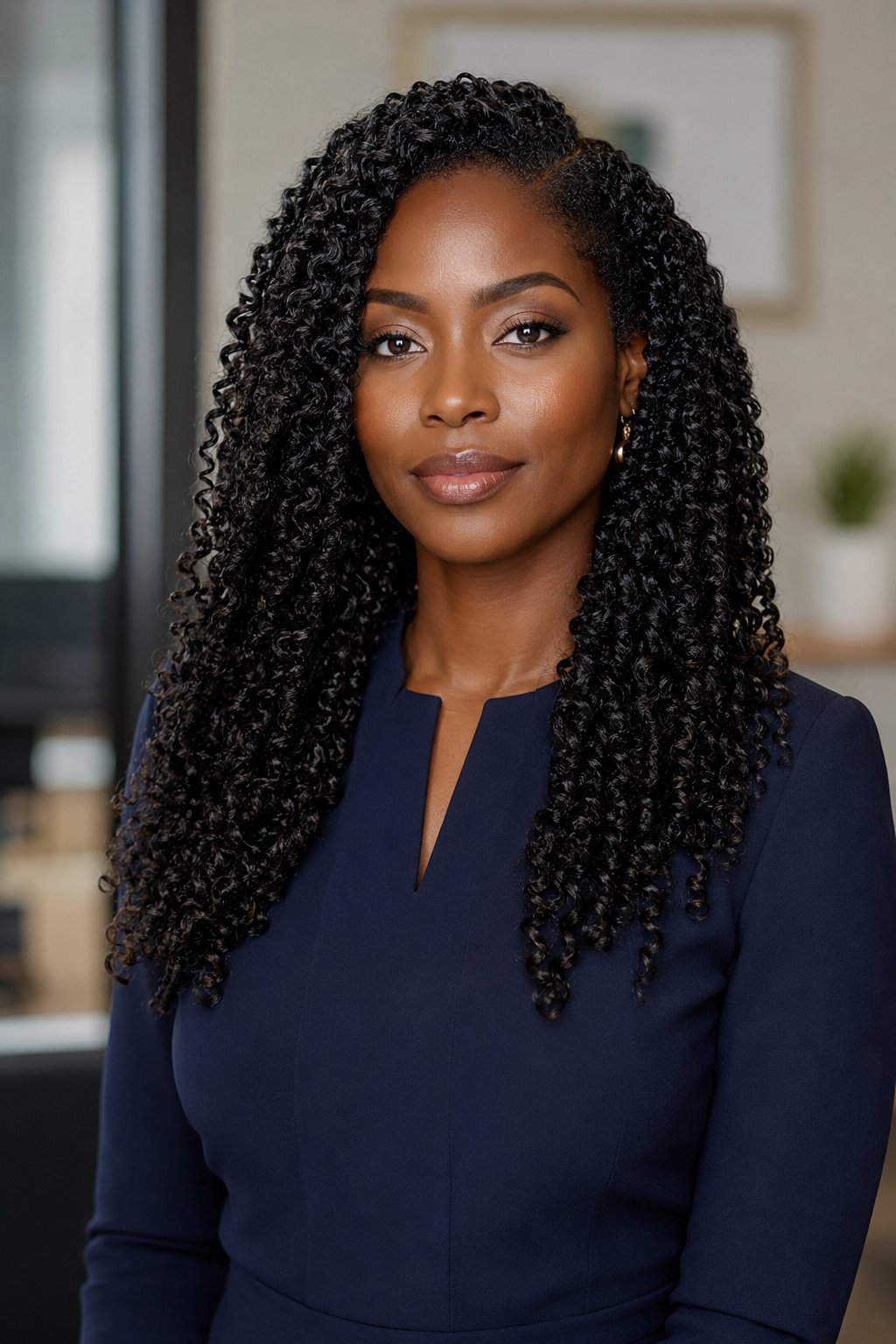
Damp hair twisted in sections at night, unravelled in the morning. The result is elongated, uniform, glossy definition.
Fewer, larger twists give looser waves. More, smaller twists give tighter definition.
Separate gently at the root when you unravel, and use a little oil on your fingers to avoid frizzing the whole thing at the final step.
7. The Sleek Curly Chignon

The dressed-up version of the low bun, for client dinners and formal events.
Smooth the top and sides properly, then let the bun itself stay textured. That contrast between sleek surface and visible curl is what makes it look expensive rather than stiff.
8. Flat Twists Into a Bun

Two or three flat twists along the scalp, gathered into a bun at the back.
Structured, protective, and it holds for several days — which makes it a genuinely practical choice during a heavy week.
9. The Curly Pixie or Tapered Cut
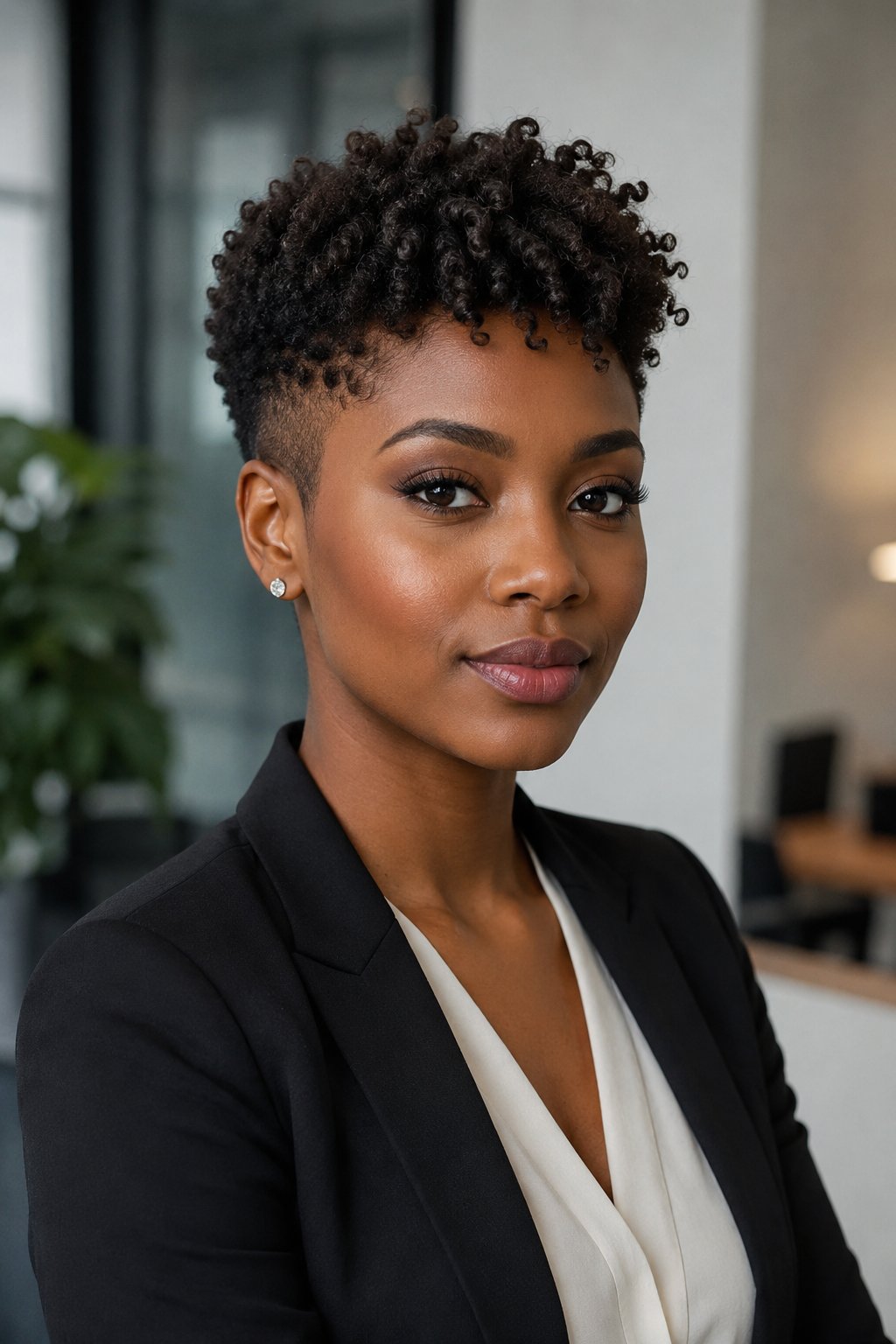
Short, sharp, and low-effort in the mornings — but only if the shape is right, so this one lives or dies on your stylist.
A tapered cut keeps volume on top and close at the sides, which reads as modern and deliberate.
Budget for trims every six to eight weeks. Short curly cuts lose their shape quickly.
10. The Side-Parted Blowout With Curl Left In

Not straightened — stretched. A diffuser and a deep side part elongate the curl while keeping texture and movement.
Use heat protectant, keep the diffuser on low heat and low speed, and cup sections upward toward the scalp rather than blasting from a distance.
11. The Curly Updo With Face-Framing Pieces

Everything pinned up loosely, with two curls left free at the temples.
Those two pieces do a lot of work. They soften the whole look and stop an updo from feeling austere.
12. Protective Braids or Locs, Styled Up
Box braids, knotless braids, and locs are entirely professional, full stop. Gathered into a bun or half-up style, they are as polished as any option here.
Worth knowing your rights: the CROWN Act, now law in a majority of US states, prohibits discrimination based on hair texture and protective hairstyles. If anyone suggests your natural or protective style is unprofessional, that is a them problem with a legal dimension in many places.
The Care Routine That Makes All of This Work
None of these styles hold up on damaged, dehydrated hair. The routine matters more than the styling.
Wash less than you think. Once or twice a week for most curl types. Curly hair is drier by nature because the oil cannot travel down a coiled strand.
Condition seriously. A deep conditioner weekly, not occasionally. This is the highest-return habit in curly hair care.
Never brush it dry. Detangle wet, with conditioner in, using fingers or a wide-tooth comb. Dry brushing destroys the curl pattern and creates frizz that lasts until your next wash.
Sleep on silk or satin. Pillowcase or bonnet. Cotton absorbs moisture and roughs up the cuticle overnight, which is why you wake up frizzy.
Refresh instead of rewashing. Water and a little leave-in in a spray bottle revives day-three curls in two minutes.
Trim every ten to twelve weeks. Split ends travel up the strand and wreck definition at the ends first.
Styling by Curl Type
Not all curly hair behaves the same way, and a lot of frustration comes from following advice written for a different texture.
Here is roughly how the styles above translate.
Loose waves (2A to 2C)
Your enemy is weight. Heavy creams and butters flatten waves into limp strands that look greasy rather than defined.
Use lightweight mousse or a light gel, and apply less than you think. Scrunch upward, never rake downward.
The half-up puff and the side-parted diffused look are your strongest options. Wash-and-gos work well too, but skip the heavy leave-in.
Classic curls (3A to 3C)
This is the texture most curly hair advice is written for, so almost everything in the list applies directly.
You have the most flexibility. Wash-and-gos, twist-outs, lobs, and buns all work with minimal adaptation.
Your main watch-out is the triangle shape — volume widening at the ears rather than falling. Length below the shoulder and a layered cut solve it.
Coils and tight curls (4A to 4C)
Moisture retention is the whole game. Tighter coils are the driest texture because natural oils simply cannot travel down the strand.
Layer your products rather than picking one. Leave-in first, then cream, then a sealing oil or gel. This is often called the LOC or LCO method, and the order matters less than the layering itself.
Twist-outs, flat twists, protective braids, and locs are your strongest professional options — they hold for days, protect your ends, and look genuinely polished.
Shrinkage is normal and not something you need to fight. Stretching with twists or banding gives length without heat.
What to Actually Buy
The curly hair aisle is overwhelming and most of it is unnecessary. You need four things.
A gentle cleanser. Sulphate-free, or a co-wash if your hair is very dry. Harsh detergents strip curls and leave them frizzy for days.
A slippery conditioner. The test is whether you can finger-detangle in it easily. If you are still fighting knots, it is not slippery enough.
A leave-in. This is your moisture base and the step most people skip.
Something with hold. Gel, mousse, or a curl cream with real hold. Without it, definition collapses within hours.
Two ingredients worth watching. Drying alcohols high in the ingredient list will dehydrate curls. Non-water-soluble silicones build up over time and need clarifying to remove, which is fine if you clarify and a problem if you do not.
Protein is worth understanding too. It strengthens damaged hair, but too much makes curls stiff and brittle. If your hair feels straw-like after a new product, that is usually protein overload — switch to a moisture-focused conditioner for a few washes.
Your Rights at Work
This deserves more than a passing mention.
The CROWN Act — Creating a Respectful and Open World for Natural Hair — prohibits discrimination based on hair texture and protective styles including braids, locs, twists, and knots. It has been enacted in a majority of US states, with more considering it.
What that means practically: a dress code that bans locs or braids is legally vulnerable in states that have adopted it, and increasingly indefensible everywhere else.
If you are told your natural hair is unprofessional, document it. Note the date, who said it, and the exact wording. Check whether your state has adopted the CROWN Act, and take it to HR with that context.
You should not have to do this. But knowing the ground you are standing on changes how the conversation goes.
Building the Rest of the Look
Hair does not exist in isolation. A defined wash-and-go reads very differently with a crisp blazer than with a wrinkled shirt.
Volume is the thing to think about. Curly hair adds width at the head, so heavily structured shoulders can make a silhouette feel top-heavy. Softer tailoring and a clean neckline balance it well.
Necklines matter more than people expect. A V-neck or open collar creates vertical line that offsets the roundness of curls. High crew necks can shorten the neck when your hair is worn down and full.
Earrings are worth a thought too. Small studs disappear entirely into voluminous curls. If you want jewellery to register, go slightly larger than you would with straight hair, or wear your hair up.
If you are putting together a wider workwear rotation, our winter work capsule wardrobe and carry-on capsule for work trips both pair well with the low-maintenance styles above.
Frequently Asked Questions
Is curly hair unprofessional?
No. Well-maintained curls are as professional as any other texture, and the CROWN Act protects natural and protective hairstyles from workplace discrimination across a majority of US states. Definition and a clean shape are what read as polished — not straightness.
How do I stop frizz by midday?
Usually it is one of three things: not enough moisture, touching your hair while it dried, or skipping a hold product. Apply product to soaking wet hair, use a gel with real hold, and do not touch it until it is completely dry. A silk pillowcase handles the overnight half.
Which style works best for a job interview?
A low curly bun or a defined wash-and-go with clean edges. Both look considered without looking like you fought your hair. Our guide to heat-proof professional hairstyles is useful if your interview lands in humid weather.
Can I get a professional look without heat?
Absolutely — most styles here are heat-free. Twist-outs, buns, flat twists, and wash-and-gos all rely on technique and product rather than temperature, which is better for your hair long term anyway.
How do I find a stylist who understands curly hair?
Look for someone who cuts curly hair dry and specifically markets curl expertise. Check their portfolio for texture like yours, not just any curls. A stylist who wants to straighten your hair before cutting it is not the right stylist.
The Bottom Line
You do not need to change your texture to look put together at work. You need definition, a clean shape, and two or three styles you can do reliably without thinking.
Pick one everyday option and one formal option from this list. Practise them on a quiet weekend rather than at 7am before something important.
That is the whole system. Your curls were never the problem.
Related Post