


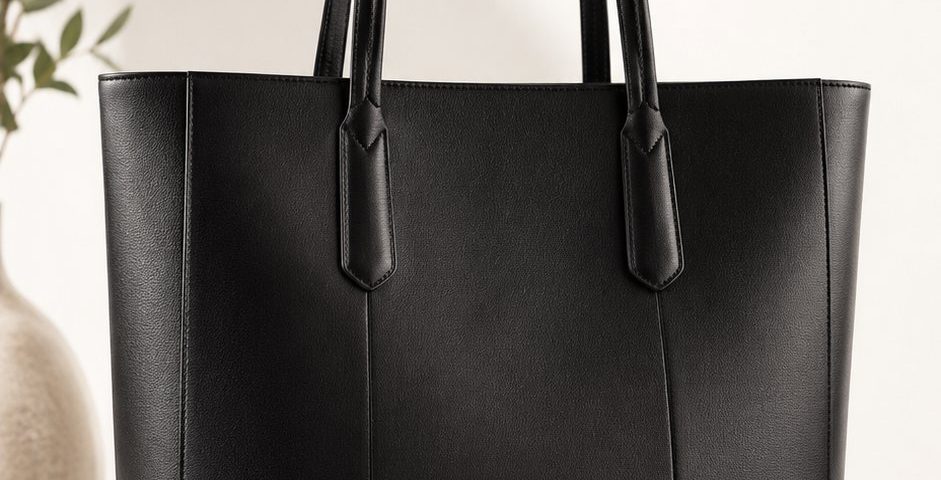
A work bag is the one accessory you use every single day, carry in front of clients, and set down on a boardroom table.
It is also the one most people buy badly — usually by choosing something beautiful that turns out to be structurally useless.
Too small for a laptop. No internal organisation, so everything sinks to the bottom. A thin strap that carves into your shoulder by the second commute.
Here is how to pick one that actually works, plus the styles worth your money.
Get the Size Right First
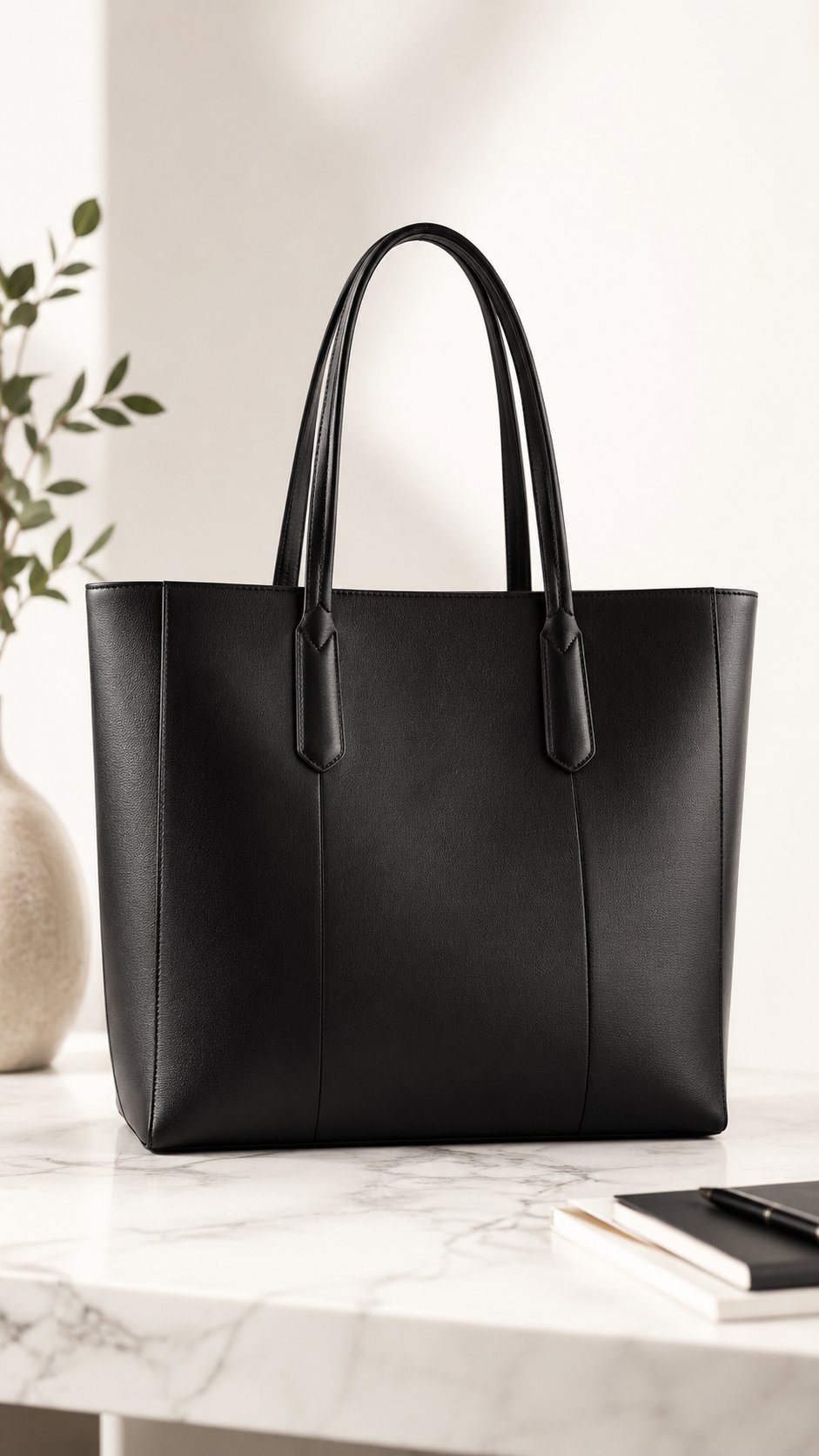
Almost every work bag disappointment is a sizing mistake, and it is entirely avoidable.
Measure your laptop. Not the screen size — the actual physical dimensions. A 14-inch laptop from one brand can be noticeably wider than another.
Then add roughly an inch to each dimension. A bag that fits your laptop exactly is a bag you will fight with every morning.
Check the opening, not just the capacity. Plenty of bags are roomy inside but have a narrow top that makes getting a laptop in and out genuinely irritating.
Be honest about what you carry. If your day includes a laptop, charger, water bottle, lunch, and gym shoes, you need a real tote. If it is a slim laptop and a notebook, a smaller structured bag will look sharper and weigh less.
Buying bigger than you need is its own mistake. Large bags fill up regardless, and then you are hauling four kilos of things you never open.
What Separates a Good Bag From a Pretty One
Five details do most of the work. None of them are visible in a product photo, which is exactly why people miss them.
A padded laptop compartment. Ideally separate, and ideally suspended so the base does not sit flat against the ground when you set the bag down.
A flat base. A bag that stands up on its own is dramatically more usable than one that flops sideways every time you put it down.
Wide, reinforced straps. The single biggest comfort factor. Thin straps concentrate weight into one point on your shoulder — fine empty, painful loaded.
A proper closure. A full zip beats a magnetic snap beats an open top. Open totes spill in a rush and make anything valuable feel exposed.
Real internal organisation. At minimum, a zip pocket for keys and cards, plus slip pockets for a phone and pen. Without structure, a bag is just a bucket you excavate.
One more that people forget: a luggage sleeve on the back that slides over a suitcase handle. If you travel for work at all, you will use it constantly. Our carry-on capsule for work trips covers packing around it.
The Styles Worth Considering
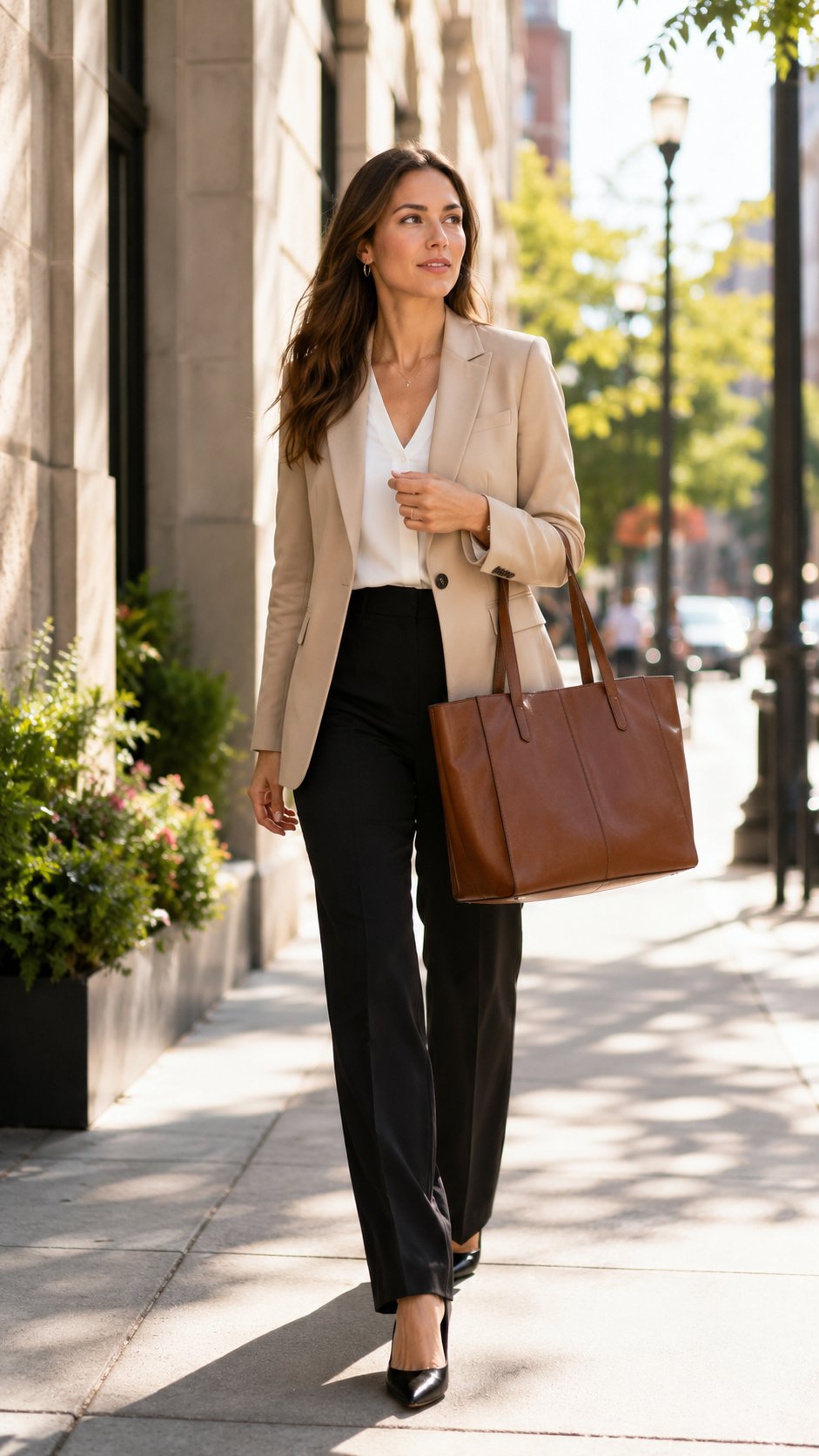
1. The Structured Leather Tote
The safe, correct answer for most offices. Holds a laptop, looks appropriate in any professional setting, ages well.
Look for one with a flat base and some structure to the sides. Unstructured leather totes sag into a shapeless heap within a year.
In black, tan, or a deep neutral, this is the bag that quietly goes with your entire wardrobe.
2. The Convertible Backpack
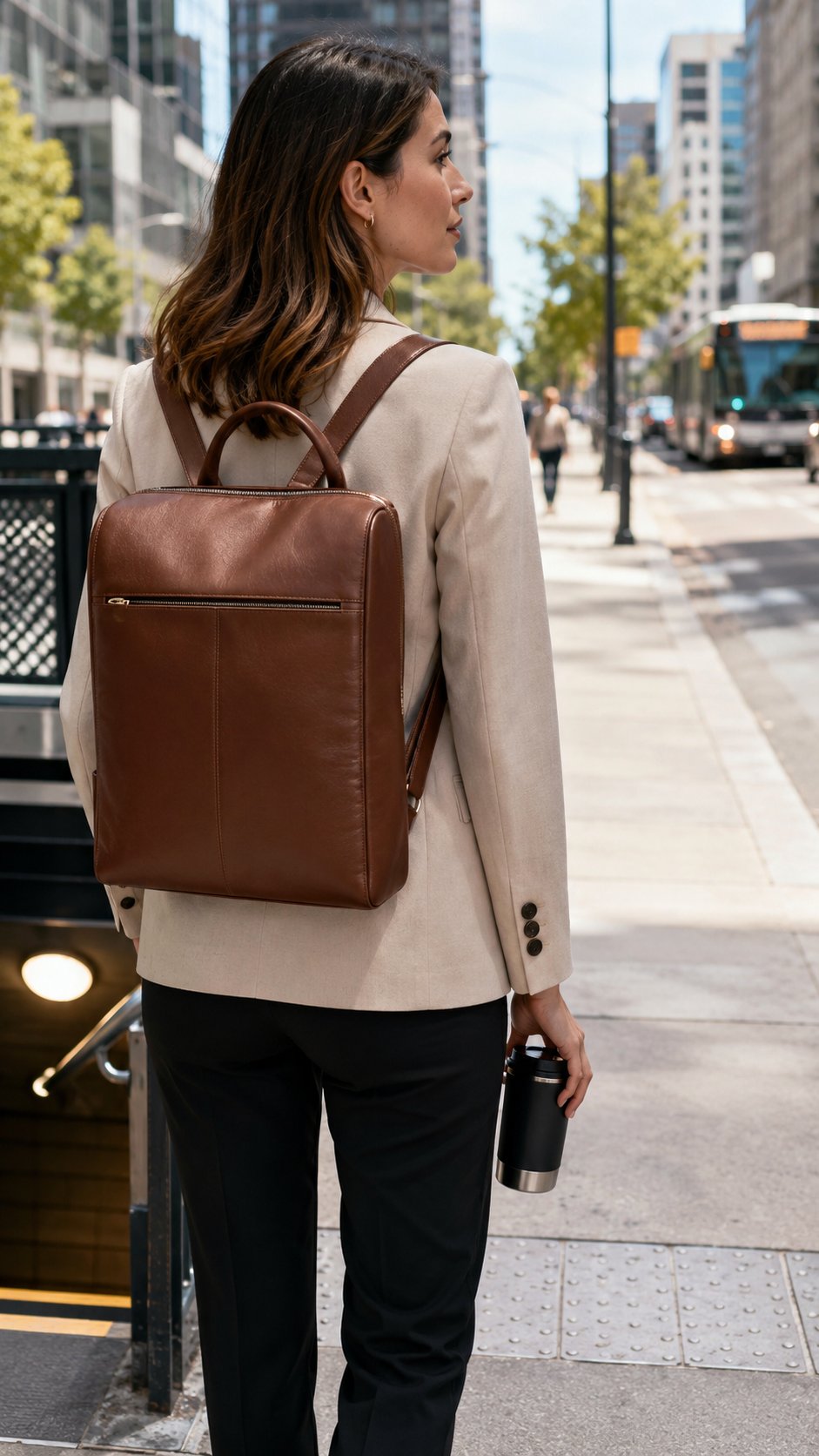
The genuine problem-solver if you commute on foot, by bike, or on public transport.
Backpack straps tuck away so it reads as a tote when you arrive. You get spine-friendly weight distribution on the journey and a professional silhouette in the building.
Worth being picky about how well the straps hide. On cheaper versions they bulge awkwardly and the disguise fails.
3. The Structured Satchel or Briefcase
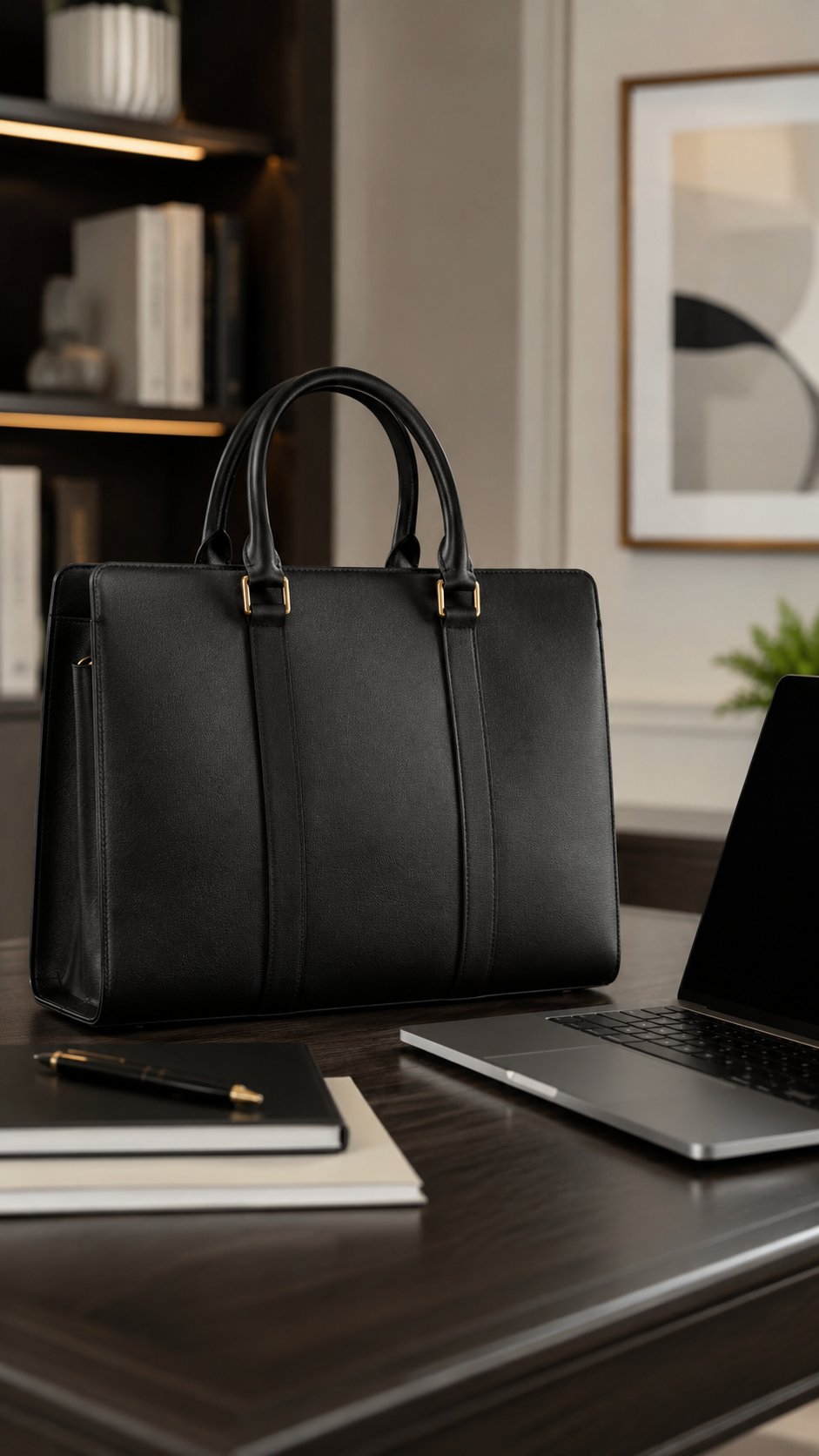
The most formal option, and the sharpest in conservative environments — law, finance, consulting.
Rigid frame, top handle, usually a detachable crossbody strap. Holds its shape permanently.
The trade-off is capacity. Excellent for a laptop and documents, poor for a laptop plus gym kit plus lunch.
Pairs naturally with the kind of tailoring in our guide to outfits for women in law.
4. The Nylon or Technical Tote
Lighter, water-resistant, and far more forgiving of weather and daily abuse than leather.
Modern technical fabrics look considerably more polished than they used to, and the weight difference is real once the bag is loaded.
Best for heavy commutes, rainy climates, and anyone whose bag takes genuine punishment.
5. The Large Crossbody
For lighter days, or when you want your hands free — commuting with coffee, running between sites, travelling through a station.
Most will not take a full laptop, though some fit a tablet or a very slim one. Think of it as your second bag rather than your only one.
6. The Weekender That Works for Monday
Larger, softer, with a luggage sleeve. Genuinely useful if your week involves overnight trips, client site visits, or a gym bag you cannot avoid.
Choose a restrained colour and clean hardware and it will not look like luggage in a meeting.
Colour, Material, and What Lasts
Black is the most versatile and hides wear best. Tan and cognac soften a formal outfit and develop nice patina, but show scuffs. Navy, grey, and deep burgundy read as considered without being loud.
Avoid a light cream bag as your daily carry unless you are unusually careful. They look beautiful for about six weeks.
On material: full-grain leather lasts longest and looks better with age. Coated canvas and technical nylon are lighter and far easier in bad weather. Bonded or “genuine” leather is the one to be wary of — it tends to crack and peel within a couple of years.
Check the hardware too. Cheap zips are the most common failure point on an otherwise fine bag, and they are essentially unrepairable.
How Much to Spend
Cost per use is the honest way to think about this. A bag you carry five days a week for three years is somewhere near 750 uses.
That said, expensive does not automatically mean functional. Plenty of designer bags have no laptop protection, no internal structure, and thin straps.
The sensible move is buying mid-range from a brand that specialises in work bags rather than entry-level from a fashion house. You get the padded compartment and the wide straps instead of the logo.
If budget is tight, prioritise in this order: laptop protection, strap comfort, closure, then materials. The first three affect you daily. The fourth mostly affects how it ages.
How to Pack It So It Stays Usable
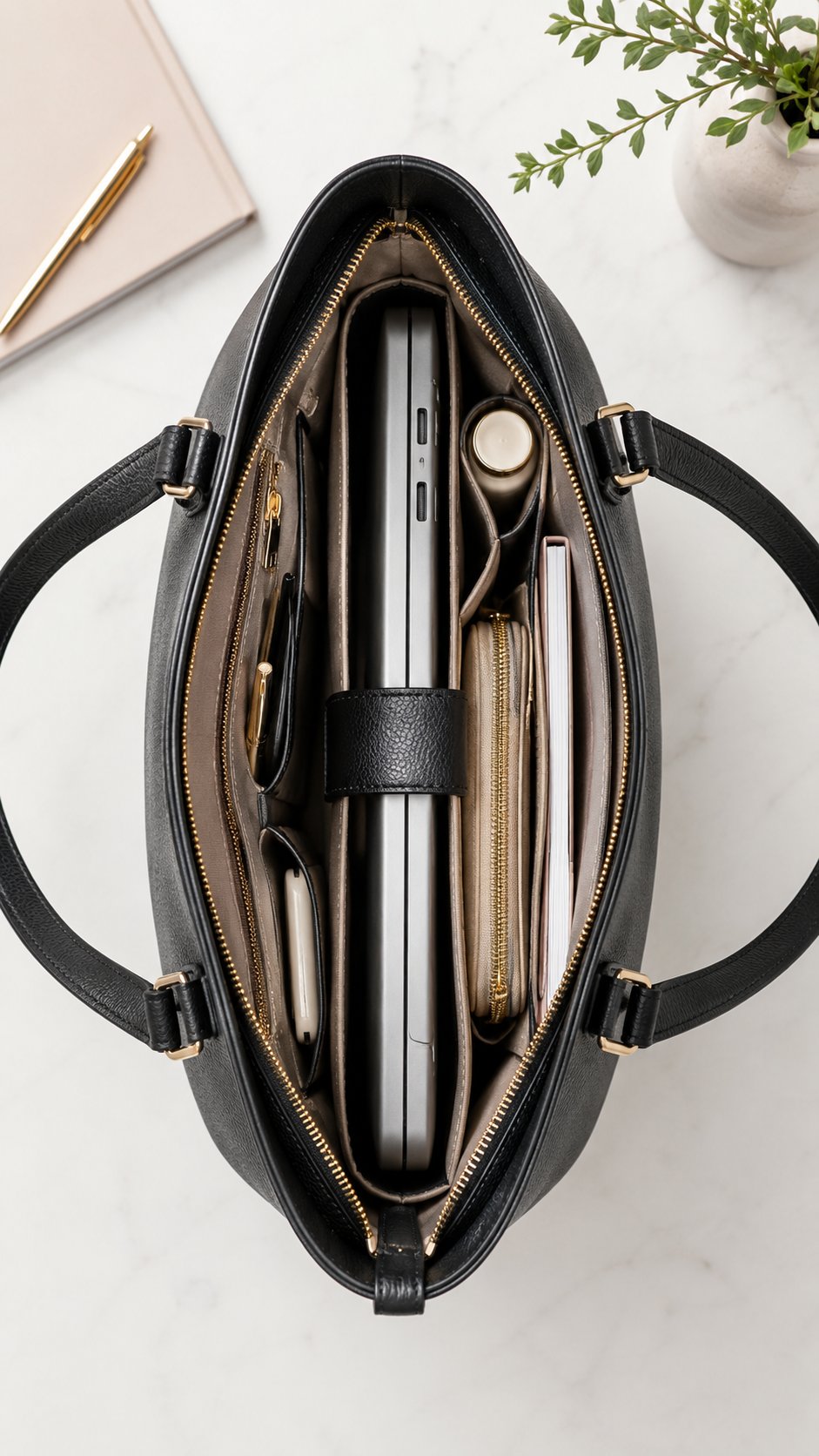
A well-chosen bag still becomes a black hole if you throw everything in loose. A few habits fix that permanently.
Use pouches. One for cables and chargers, one for personal items, one for anything medical. Three small zip pouches turn a bucket into a filing system, and you can move them between bags in seconds.
Give everything a home. Keys always in the same clipped pocket. Phone always in the same slip. You stop searching entirely, which matters most in the moments you are already flustered.
Put heavy things closest to your back. Laptop against the spine side, lighter items outward. It measurably reduces strain, and it stops the bag pulling away from you.
Empty it weekly. Friday afternoon, tip it out. You will be startled by the accumulated receipts, dead pens, and paperwork you have been carrying for a month.
Keep a small permanent kit. Plasters, a hair tie, a stain pen, painkillers, a phone battery. It lives in the bag and gets restocked, not repacked.
What Actually Belongs in a Work Bag
Worth auditing, because weight is the thing that makes people abandon an otherwise good bag.
Daily essentials: laptop, charger, phone, wallet, keys, notebook and pen, water bottle.
Worth carrying: a compact umbrella, a phone battery, hand cream, and something to eat. Small, high-value, rarely regretted.
Leave at the office or at home: the second notebook you never open, printed documents you have digital copies of, three pairs of headphones, and the makeup bag you have not touched since March.
A laptop and charger alone is often two kilos before you add anything. Everything else you carry is a choice, and most people are carrying several kilos of choices they never revisit.
If your bag is heavy enough to hurt, the answer is usually to carry less rather than to buy differently.
Buying Secondhand and Spotting Quality
Good work bags hold value well, and the secondhand market is genuinely strong — a well-made leather tote often outlives two or three owners.
What to inspect, secondhand or new:
The stitching. Even, tight, no loose threads. Check where the straps meet the body — that is where bags fail first, and it should be reinforced with extra stitching or rivets.
The zips. Run them fully open and closed several times. They should move smoothly with no catching. Metal zips from a known maker are a good sign.
The lining. A properly finished interior with no raw edges signals care throughout. Thin, papery lining is where corners get cut.
The base. Look for metal feet or a reinforced bottom. It keeps the leather off wet ground and is a strong indicator the bag was designed to be used rather than photographed.
The smell and feel of the leather. Real leather smells like leather and has slight surface irregularity. Uniform, plasticky texture usually means bonded material that will crack.
Buying a better bag secondhand generally beats buying a mediocre one new. The construction details above cannot be added later, but scuffs can be conditioned away.
Matching the Bag to Your Actual Job
The right bag depends less on your taste than on what your day physically involves.
If you are mostly at a desk with a short drive, a structured leather tote is ideal. It never has to be comfortable for long, so you can prioritise how it looks.
If you commute by train or on foot, get a convertible backpack. Twenty minutes of walking with a loaded shoulder bag is genuinely different from two minutes across a car park.
If you move between sites all day — sales, healthcare, property, consulting — prioritise a crossbody strap and a wipeable material. Your bag will spend time on car seats and floors.
If you travel monthly, the luggage sleeve stops being a nice extra and becomes the deciding feature.
If you work in a very formal setting, a structured satchel signals the right thing and carries plenty for a document-based day.
Most people buy for the job they imagine rather than the one they have. Look at your last two weeks honestly and choose for that.
Frequently Asked Questions
Is a backpack unprofessional for work?
Not anymore, in most industries. A structured leather or technical backpack reads as perfectly professional in tech, creative, healthcare, and education settings. In very traditional environments like law or private banking, a convertible style you carry as a tote on arrival is the safer choice.
Can I carry a work bag and a handbag?
You can, and many people do, but a work bag with a small internal pouch usually serves better. Two bags means two things to keep track of and one more thing to leave behind in a taxi.
How do I stop my bag hurting my shoulder?
Wide straps, less weight, and switching sides regularly. If you consistently carry more than a few kilos, a backpack or convertible style is genuinely the better answer — persistent one-sided loading is worth taking seriously rather than working around.
What colour should my first good work bag be?
Black if you want maximum versatility and minimum visible wear. Tan or cognac if your wardrobe leans warm and you want the bag to feel less severe. Either works with almost everything — our work capsule wardrobe guide shows how the neutrals pair up.
How do I keep a leather bag looking good?
Condition it two or three times a year, wipe spills immediately, and store it stuffed rather than folded so it holds shape. Keep it off the floor where you can — a flat base and a hook are what save a bag over years.
The Bottom Line

Measure your laptop and add an inch. Insist on a padded compartment, a flat base, wide straps, and a zip.
Pick the style that matches your actual commute rather than the one that photographs best — a convertible backpack if you walk, a structured tote if you drive, a satchel if your office is formal.
Buy in black or tan, mid-range, from somewhere that takes work bags seriously.
Then carry it for five years and stop thinking about bags entirely. That is the goal.
Related Post