

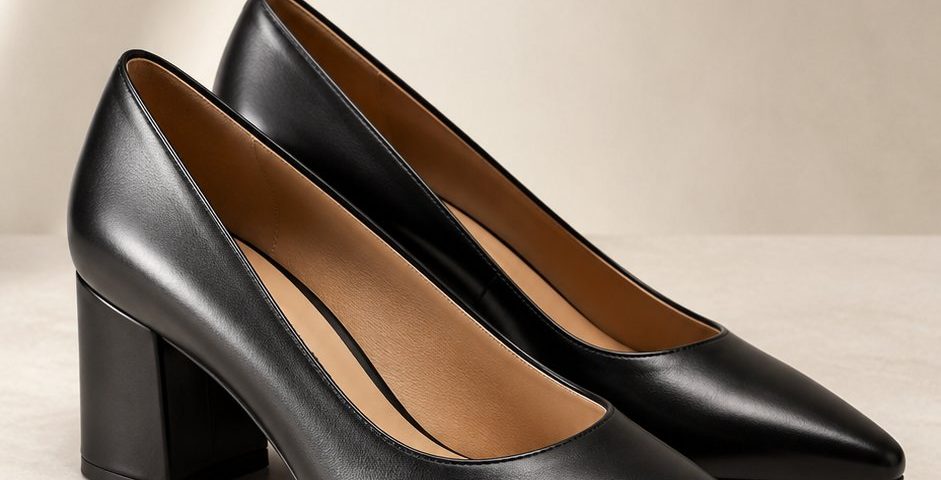
There is a specific kind of misery that comes from beautiful shoes and a long day.
You buy them because they look sharp. You wear them to something important. By three o’clock you are calculating how far the parking lot is and whether anyone would notice if you took them off under the desk.
Comfortable and professional are not opposites, though. That idea is mostly a hangover from when the only comfortable shoes looked like they belonged in a hospital. The options now are genuinely good — you just have to know what to look for.
Here is how to build a small rotation of work shoes that look polished and still let you walk to the train.
What Actually Makes a Shoe Comfortable
Comfort is not a vague quality. It comes from specific features you can check for before you buy.
A supportive footbed. Real arch support and some cushioning under the ball of the foot. A flat, hard insole is where most of the pain starts.
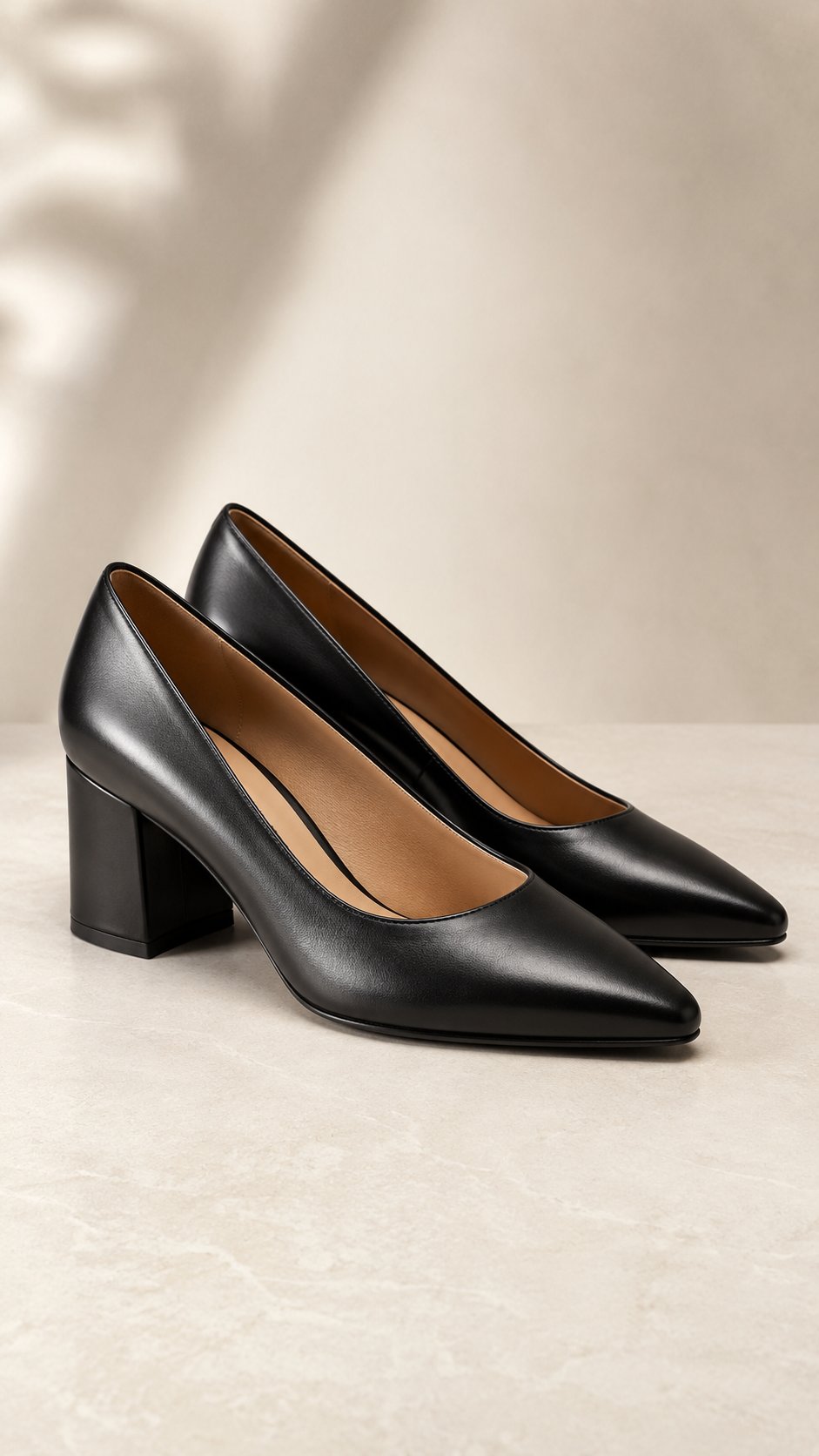
A low, stable heel. If you want height, a block heel under two inches distributes weight far better than a stiletto. Stability matters more than the number itself.
A wide enough toe box. Your toes need room to lie flat. Pointed shoes that squeeze them into a triangle are the classic long-day mistake.
Breathable, flexible material. Genuine leather or a quality knit moves with your foot and lets it breathe. Stiff synthetics rub and trap heat.
A secure fit. A shoe that stays on without you gripping it with your toes. Slingbacks and mules can be comfortable, but only if they actually hold.
Check those five and you have filtered out most of the shoes that look fine and feel awful.
The Styles Worth Owning
1. The Block Heel
The workhorse of a comfortable-but-polished wardrobe. A block heel gives you height and a dressed-up line while spreading your weight across a stable base.
Keep it under two inches for all-day wear. In black or nude it goes with trousers, skirts, and dresses without a second thought.
2. The Pointed Flat
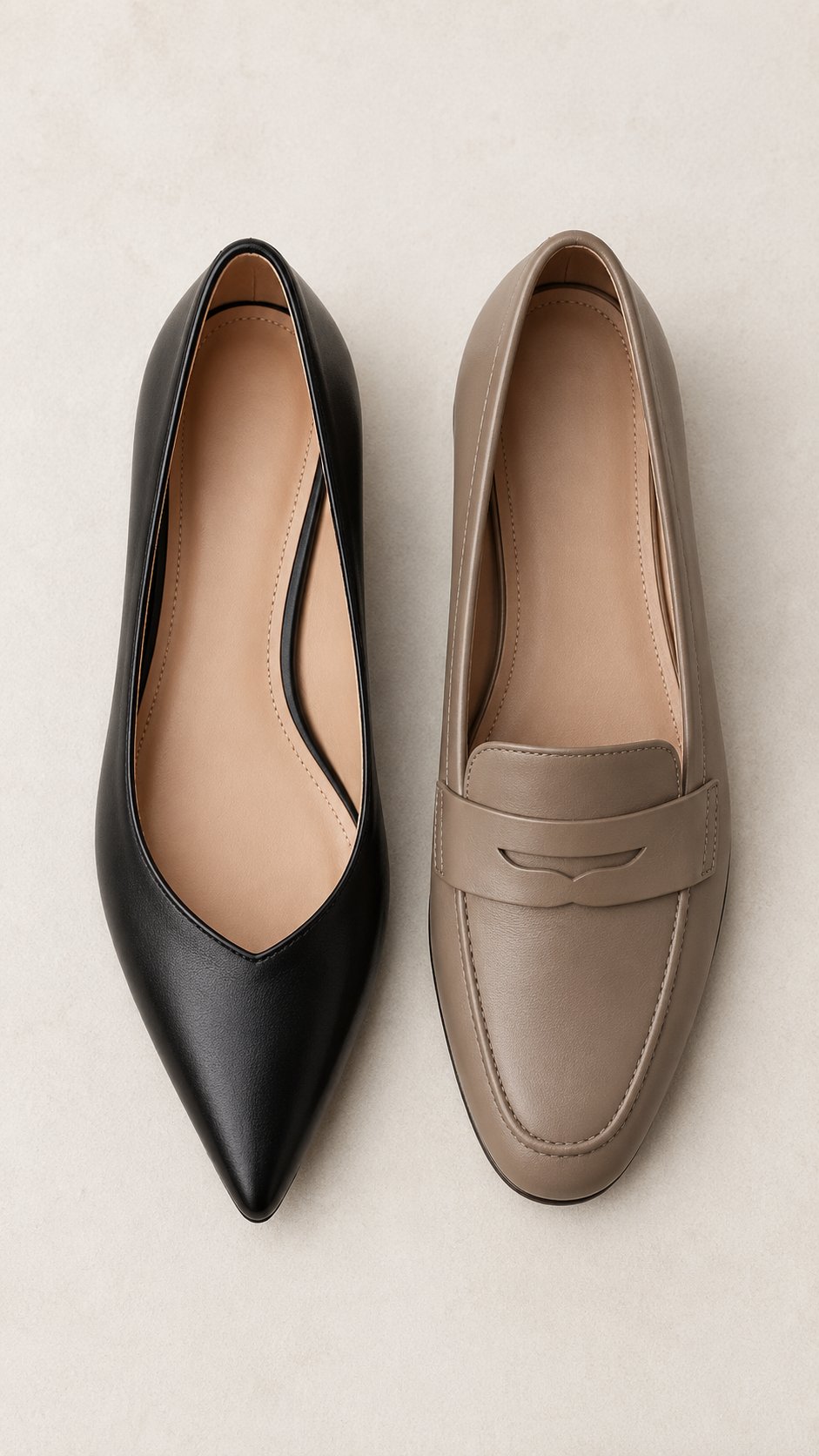
A pointed toe reads as sharp and professional; the flat sole keeps you comfortable. The best of both.
The trick is a slightly pointed toe with real room inside, not a severe point that crushes your toes. And insist on a cushioned footbed — cheap flats are often just a thin layer over hard board, which is its own kind of painful.
3. The Loafer
Having a real moment, and deservedly. A structured leather loafer looks polished with tailoring and pulls together more casual outfits too.
Easy to walk in, easy to slip on, and it works across a huge range of workplaces. If you buy one pair from this list, it is a strong candidate.
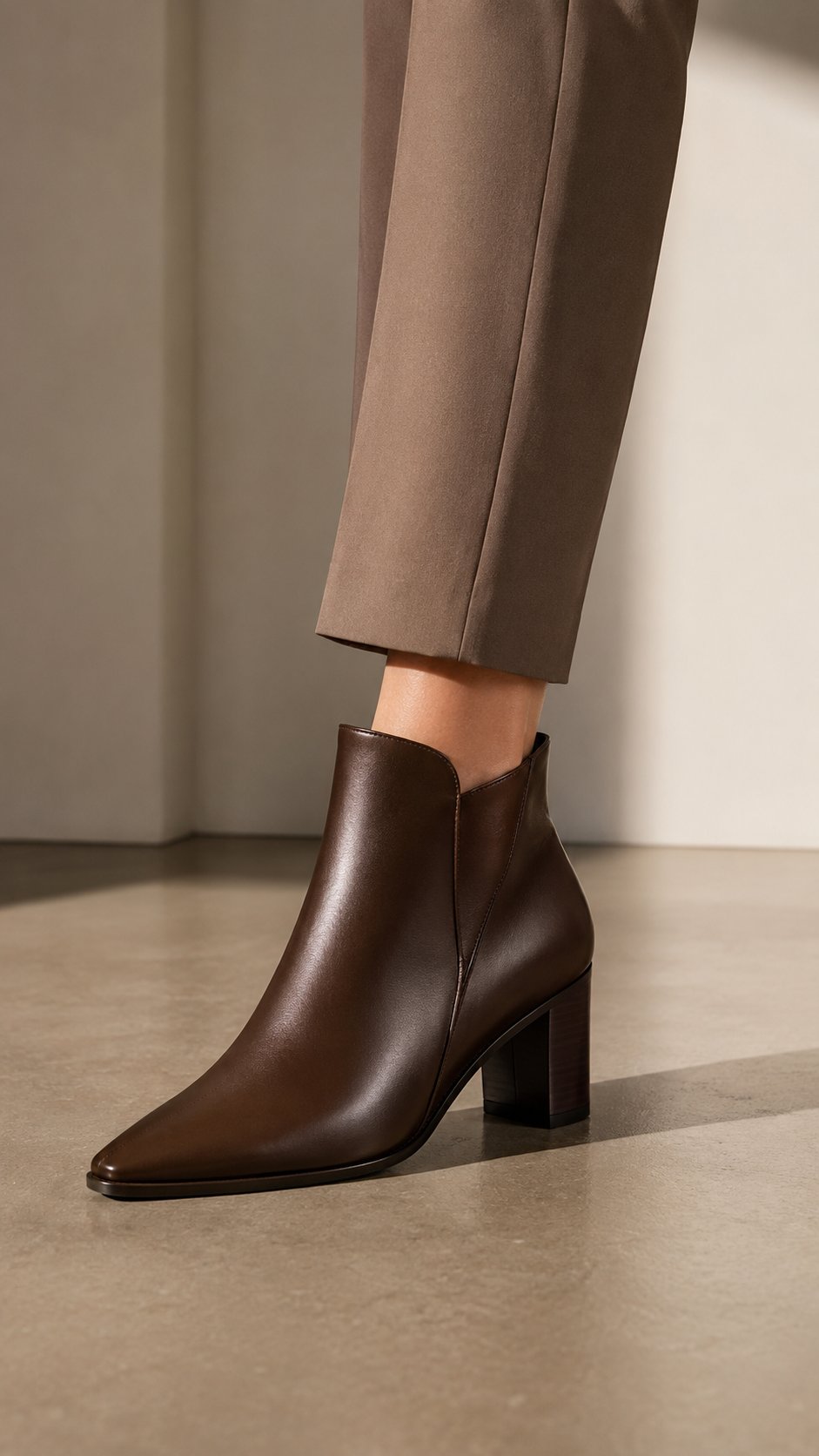
4. The Ankle Boot
For cooler months, a sleek ankle boot with a block or low heel is both comfortable and sharp. It works under trousers and with dresses and tights alike.
Look for a real footbed inside — plenty of fashion boots skimp there. Our winter work capsule covers how to build outfits around them.
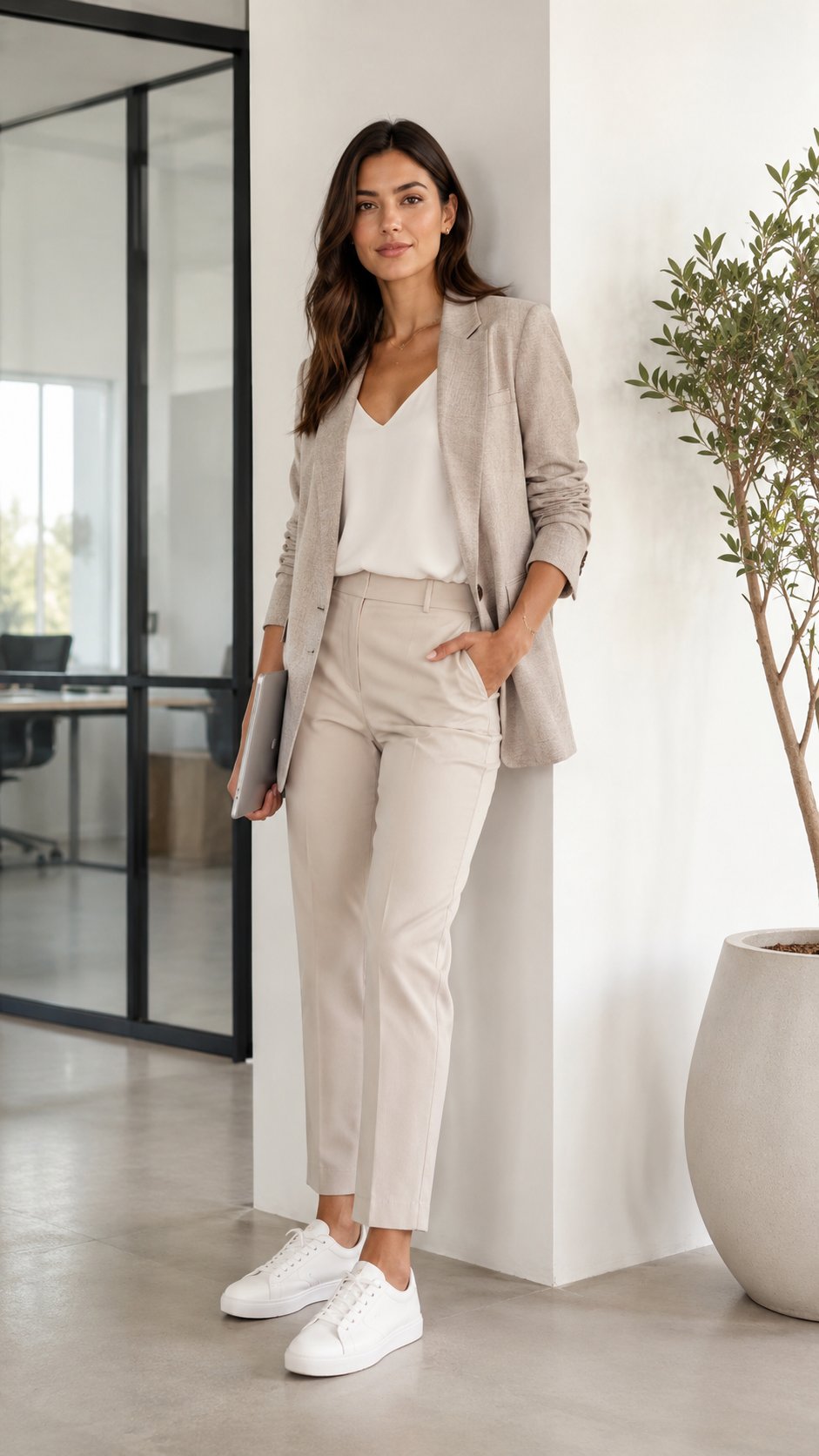
5. The Elevated Sneaker
In creative, tech, and casual offices, a clean minimalist leather sneaker is completely appropriate — and the most comfortable option here by a distance.
The line is style. A sleek white or neutral leather sneaker with no loud branding reads as intentional. A chunky running shoe reads as gym clothes. Keep it simple and low-key.
6. The Low Heeled Mule
Easy to wear, easy to walk in when the heel is low and the fit is right, and effortlessly polished. The open back keeps you cool in warmer months.
The only real risk is a mule that slips off with every step. Try before you commit, and prioritise ones with a bit of grip or a fitted shape at the toe.
A Small Rotation That Covers Everything

You do not need a wall of shoes. Three well-chosen pairs handle almost any professional week.
One polished flat or loafer in a neutral, for the bulk of your days.
One low block heel in black or nude, for when you want to look a notch more formal.
One seasonal pair — an ankle boot for winter, a mule or elevated sneaker for summer — depending on your climate and office.
Rotating shoes rather than wearing the same pair daily also makes them last longer, because the material gets time to dry out and recover between wears. The rotation is not just variety — it is economy.
This pairs naturally with a small, coordinated clothing rotation. Our carry-on capsule for work trips shows the same logic applied to packing.
Buying Shoes That Actually Fit
The most comfortable design in the world still hurts in the wrong size. A few habits solve most fit problems.
Shop later in the day. Feet swell as the day goes on, so afternoon sizing gives you a truer fit for real-world hours.
Do not trust “they’ll stretch.” Some leather gives a little; most tight shoes stay tight. Buy shoes that fit on day one.
Walk properly before deciding. More than a few steps. Notice any rubbing, slipping, or pressure now, because it only amplifies over eight hours.
Know your feet. Wide, narrow, high arch — buy for your actual foot, and seek out brands that make your width rather than forcing it.
Consider aftermarket insoles. A good gel or arch insole can transform a stylish-but-firm shoe into one you can wear all day, for very little money.
The Commute Trick Worth Stealing
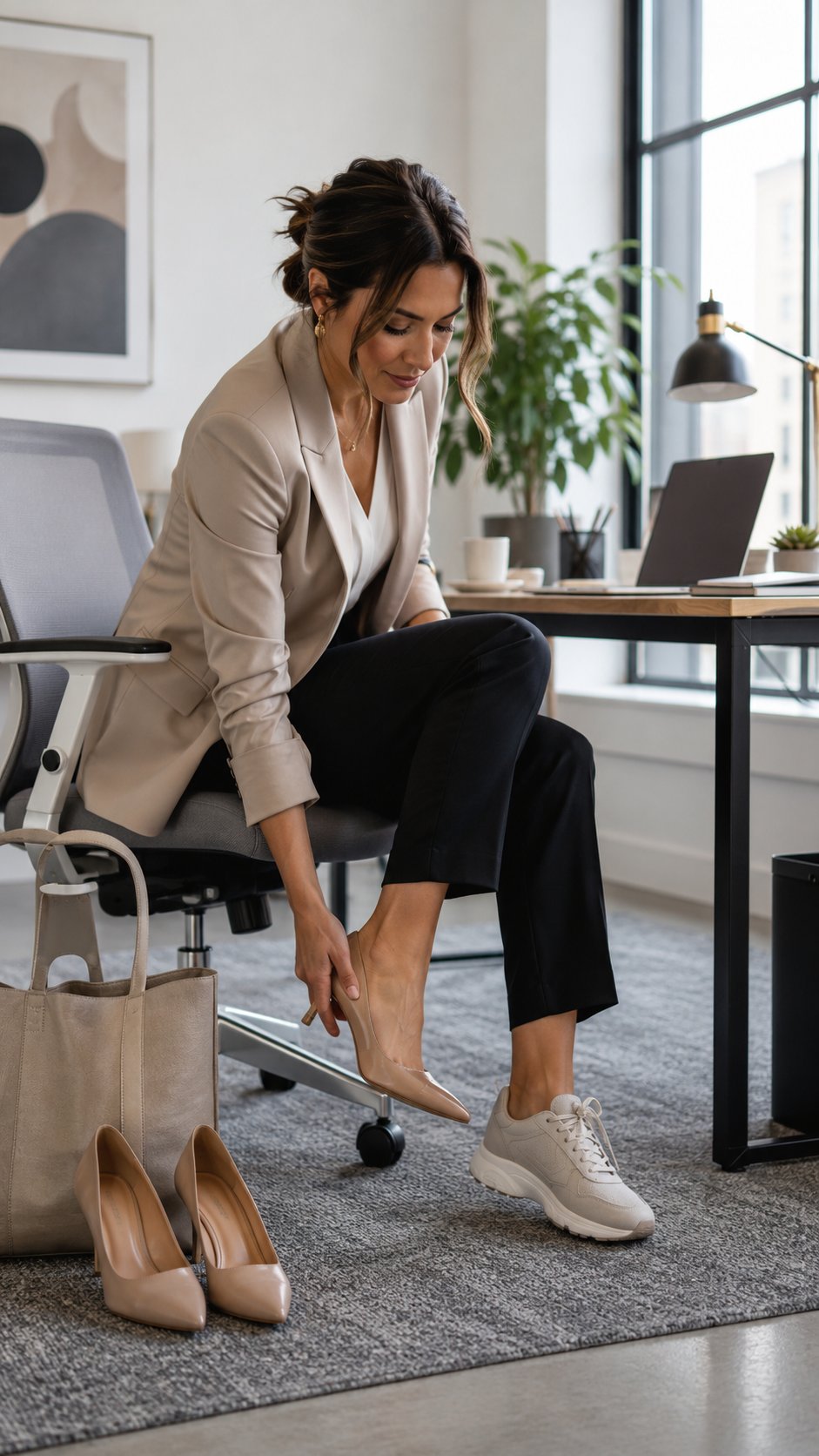
Even the best heels are not built for a mile of pavement. So do not use them for it.
Wear comfortable flats or sneakers to commute, keep your polished pair at the office or in your bag, and switch when you arrive. It is one of the oldest tricks going, and it works because it stops asking one shoe to do two very different jobs.
A work bag with room for a spare pair makes this painless — our guide to the best work bags covers choosing one that fits shoes and a laptop both.
Matching Shoes to Your Workplace
What reads as polished depends heavily on where you work. The same sneaker is sharp in one office and out of place in another.
Conservative offices — law, finance, corporate. Stick to closed-toe leather: a pointed flat, a loafer, or a low block heel in black, navy, or nude. Save sneakers for the commute and change on arrival.
Business casual — most modern offices. You have real range: loafers, block heels, ankle boots, mules, and clean leather sneakers all work. This is the easiest environment to prioritise comfort openly.
Creative and tech — agencies, startups, studios. An elevated sneaker is genuinely at home here, and often the smartest choice. Keep it minimal and neutral and it still reads as considered rather than casual.
On-your-feet roles — healthcare, teaching, retail, hospitality. Prioritise support and grip above all, and look for slip-resistant soles where safety matters. A supportive clog or a purpose-built comfort shoe beats anything chosen on looks alone.
When you are genuinely unsure, look at what respected people a level or two above you wear. That tells you the real dress code faster than any handbook.
Caring for Them So They Last
Good work shoes are an investment, and a little maintenance stretches that investment a long way.
Rotate, do not repeat. Wearing the same pair every day breaks them down fast. Alternating gives the material time to dry out and recover, which is why a three-pair rotation outlasts a single favourite worn to death.
Protect leather early. A water-and-stain protector spray on new leather shoes prevents the marks that age them prematurely. Reapply every so often.
Address heel tips and soles before they fail. A cobbler can re-tip a worn heel or add a protective sole for a few dollars, and doing it early saves the whole shoe. Ignoring it lets damage reach the structure.
Store them with shape. Shoe trees or even rolled paper help leather hold its form between wears, so they do not collapse and crease.
Swap out worn insoles. The footbed compresses over time, which is often why a once-comfortable shoe starts to hurt. A fresh insole can revive a pair you thought was finished.
A little of this turns a good pair of shoes from a one-season purchase into something you wear for years — which is where comfortable, well-made shoes genuinely pay for themselves.
When Comfort Is a Medical Need, Not a Preference
For some people, work shoes are not a style question at all. Bunions, plantar fasciitis, flat feet, and similar conditions make the wrong shoe genuinely painful and, over time, damaging.
If that is you, take it seriously rather than pushing through. The American Academy of Orthopaedic Surgeons notes that ill-fitting shoes are a leading cause of preventable foot problems in women — much of it avoidable with better choices.
A few practical moves. Look for shoes with a removable insole, so you can fit a custom or medical-grade orthotic if you need one. Favour brands that offer genuine width options rather than forcing a wide foot into a standard last. And for persistent pain, a podiatrist can identify the specific feature you need — often a small change that transforms your day.
The encouraging part is how much the market has caught up. Comfort-focused brands now make shoes with real support that genuinely look professional, so meeting a medical need no longer means sacrificing how you look. You are allowed to have both, and increasingly you can.
Do not treat daily foot pain as the cost of dressing well. It is a solvable problem, and solving it properly pays off in every hour you spend on your feet.
Frequently Asked Questions
Are sneakers really acceptable at work?
In many modern workplaces, yes — a clean, minimalist leather sneaker with no loud branding reads as polished in creative, tech, healthcare, and casual offices. In conservative environments like law or finance, keep them for the commute and change into a flat or loafer on arrival.
What heel height can I wear all day?
For all-day comfort, a block heel under two inches is the sweet spot — enough height to feel dressed, stable enough to walk in. Above that, comfort drops off quickly for most people, no matter how well-made the shoe.
How do I stop the backs of my heels blistering?
Usually a fit or friction issue. Make sure the shoe is snug but not tight, break new shoes in gradually rather than on a big day, and use a heel grip or protective balm on the spots that rub. If a shoe blisters you every time, it is the wrong shape for your foot.
Is it worth spending more on work shoes?
For shoes you wear constantly, generally yes — better construction and real footbeds cost more but last longer and hurt less. That said, price does not guarantee comfort; plenty of expensive shoes have no support. Judge by the features above, not the label.
How many pairs do I actually need?
Three covers most people: a neutral flat or loafer for everyday, a low block heel for more formal days, and one seasonal pair. Rotating them also extends their life, since the material recovers between wears.
Can I break in stiff shoes so they get comfortable?
To a point. Genuine leather softens and moulds to your foot over a few wears, so a snug leather shoe often improves. But a shoe that pinches your toes or the wrong shape entirely will not fix itself, no matter how long you persist. Break new shoes in gradually on short, low-stakes days, and if real pain persists past the first week, it is the wrong shoe rather than an unfinished break-in.
The Bottom Line
Comfortable and professional stopped being a trade-off a while ago. The shoes exist — you just have to buy for the features that matter rather than the ones in the photo.
Look for real support, a stable low heel, a roomy toe, and a secure fit. Build a small rotation of three, size them properly, and keep a comfortable pair for the commute.
Do that and you get to look sharp and still feel your feet at five o’clock. Which, it turns out, was always allowed.
Related Post