



Business insurance is one of those things you never think about, right up until the moment you desperately need it. A client claims your work cost them money. Someone slips in your studio. A laptop full of client data gets stolen.
Without coverage, any one of those can come straight out of your personal savings. With it, you pay a small monthly fee and sleep at night.
The problem is the jargon. General liability, E&O, BOP, it sounds like alphabet soup designed to confuse you.
So here is the plain-English version: what small business insurance you actually need in 2026, what it really costs, and how to get covered without overpaying.
Do You Even Need Business Insurance?

Short answer: almost certainly, yes, at least some.
If you have any clients, customers, contracts, or physical products, you have risk. And an LLC protects your personal assets from business debts, but it does not stop a lawsuit from draining the business itself. Insurance is what covers the actual claim.
Even a solo freelancer working from a laptop can get sued by an unhappy client. Many clients and landlords now require proof of insurance before they will even work with you.
The good news? For low-risk solo work, it is often cheaper than you think.
The Types That Actually Matter
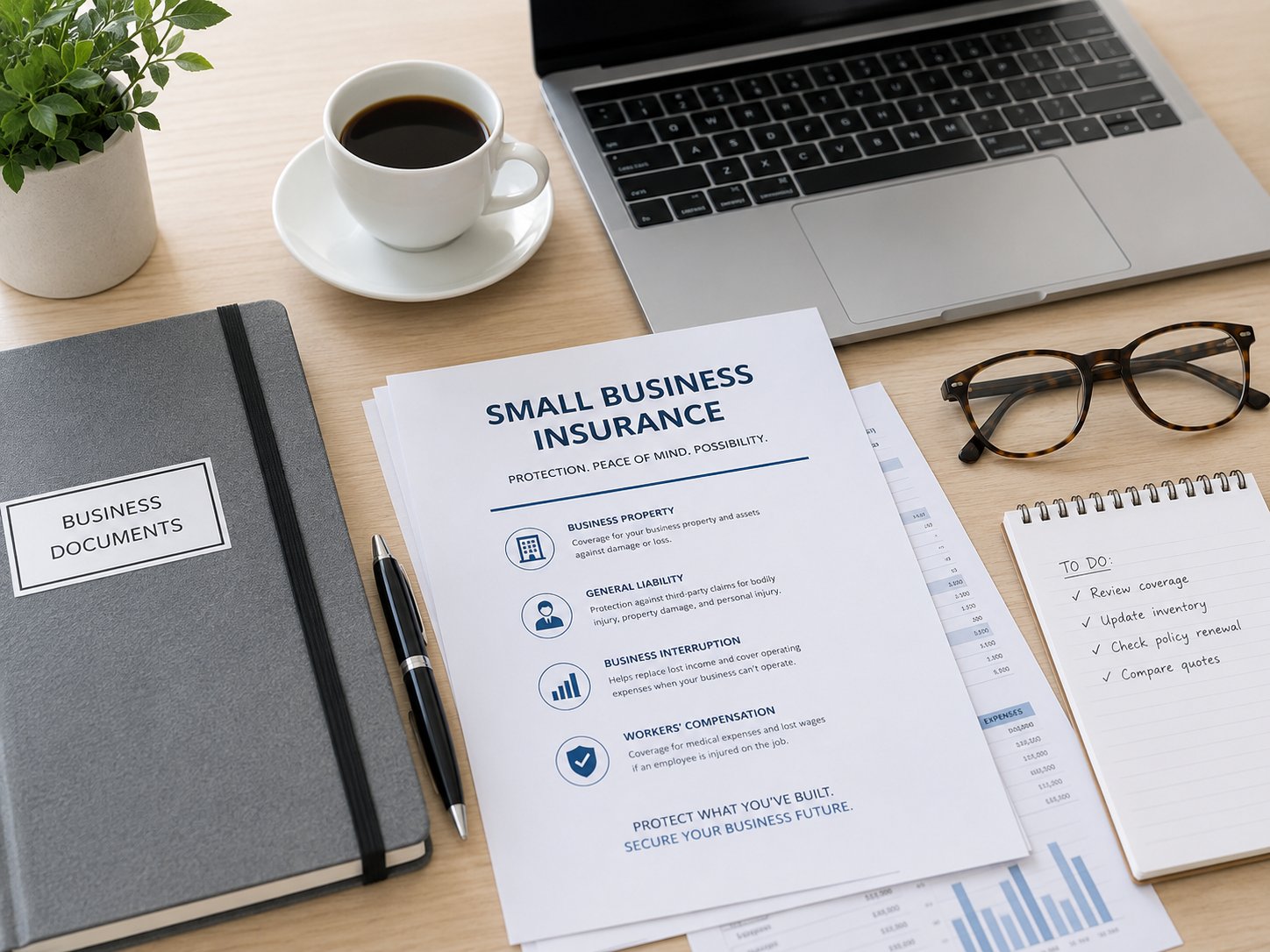
You do not need every policy that exists. Here are the ones that matter for most small businesses, and who each is for.
General Liability (almost everyone)
This is the foundation. It covers third-party bodily injury and property damage, think a client tripping in your office or you damaging a client’s property.
If you get one policy, this is usually it. Many contracts and leases require it.
Professional Liability / E&O (service providers)
Also called errors and omissions. It protects you if a client claims your advice, service, or work caused them financial harm.
Consultants, designers, coaches, marketers, anyone who is paid for their expertise, should strongly consider this. It covers the mistake, or even just the accusation of one.
Business Owner’s Policy / BOP (small businesses with stuff)
A BOP bundles general liability and commercial property into one discounted package.
If you have a location, equipment, or inventory, this is usually the most cost-effective way to cover the basics. Two policies for less than buying them separately.
Workers’ Compensation (if you have employees)
The moment you hire employees, most states legally require workers’ comp. It covers work-related injuries and illnesses.
Solo owners usually are not required to carry it, but check your state’s rules, they vary.
Cyber Liability (if you touch client data)
If you store customer information, payment details, or sensitive data, a breach can be expensive and legally messy.
Cyber liability covers the fallout of a data breach or hack. It is increasingly worth it even for small, digital-first businesses.
Commercial Auto (if you drive for work)
Your personal auto policy usually will not cover an accident while you are working. If you drive for your business, you need commercial auto coverage.
Skip it only if your business never involves the road.
What It Actually Costs in 2026

Here is the part everyone wants: real numbers. Prices vary by industry, size, and location, but these are typical 2026 ranges.
General liability runs most small businesses about $40 to $100 a month, with a median near $45. A low-risk solo consultant working from a laptop often pays closer to $30 to $40.
Professional liability (E&O) typically costs $30 to $70 a month, averaging around $56 for a one-to-four-person business.
A bundled BOP usually lands between $57 and $150 a month. And once you have a handful of employees and a location, budgeting $100 to $200 a month for a BOP or general liability is realistic.
Translation: for many solopreneurs, real protection costs less than a phone bill.
What Affects Your Price
Three big factors drive your premium, so understanding them helps you shop smart.
Your industry matters most, a roofer pays far more than a copywriter, because the risk is different. Your size (revenue and employees) is next, since more activity means more exposure. And your location plays a role, thanks to local laws and claim patterns.
Your coverage limits and deductible also move the number. Higher limits cost more; a higher deductible lowers your premium but means you pay more out of pocket if you claim.
How to Get Covered Without Overpaying

Getting insured is faster and easier than it used to be.
Start by getting quotes from a few providers, prices for the exact same coverage vary a lot. Online insurers like Next Insurance and Hiscox specialize in fast, affordable small-business policies you can buy in minutes.
Bundle where you can (a BOP beats separate policies), buy only the coverage your actual risks call for, and review your policy yearly as your business changes. That is genuinely most of it.
Mistakes to Avoid
A few common errors cost people dearly.
Do not assume your LLC alone protects you, it shields personal assets but does not pay a claim. Do not buy on price alone and end up underinsured, since a cheap policy that does not cover your real risk is worthless when you need it.
Do not forget cyber coverage if you handle any client data. And do not set it and forget it, review your policy each year so your coverage keeps up with your growth.
What You Need, by Business Type

Not sure where you fit? Here is a quick map.
Solo freelancer or consultant
Start with professional liability (E&O), since your risk is bad advice or a missed deliverable, not someone slipping in an office. Add general liability if clients require it or you ever meet them in person.
If you handle client data, add cyber. For most, that is an affordable, sensible bundle.
Product seller or maker
You want general liability (and often product liability) in case a product causes harm. If you hold inventory or equipment, a BOP that adds property coverage is usually the smart, cheaper route.
Storefront or physical location
A BOP is almost always the answer here, bundling liability and property so a fire, theft, or customer injury is covered. Your landlord will likely require proof of it anyway.
Business with employees
Add workers’ comp, which most states legally require the moment you hire. Layer it on top of your general liability or BOP, and check your state’s specific rules.
How Much Coverage Do You Need?
A common general liability policy covers up to $1 million per claim and $2 million total per year. For many small businesses, that is a sensible baseline.
But do not just default to the minimum. Bigger contracts, higher-risk work, or valuable clients may call for more, and some clients specify a required limit in their contracts.
The trick is matching coverage to your real exposure. Too little and a big claim wipes you out; too much and you overpay every month. When unsure, an agent can help you right-size it.
When Should You Buy It?
Sooner than most people think. The right time is basically as soon as you have clients, customers, or a signed contract, because that is when your risk begins.
Waiting until “the business is bigger” is a gamble, since the one claim you did not plan for tends to arrive early, when you can least absorb it.
The upside: because starter policies are cheap, insuring early buys a lot of peace of mind for very little money. And having proof of coverage can win you clients who require it.
Simple Ways to Lower Your Premium
You can trim the cost without cutting real protection.
Bundle policies into a BOP for a discount. Choose a slightly higher deductible if you have a cushion to cover it. Pay annually instead of monthly, which many insurers reward.
And keep your risk profile clean, accurate business classification and a good claims history both help. Then re-shop every year or two, since loyalty rarely earns you the best rate.
What to Do If You Ever Need to Claim
Insurance only helps if you use it correctly when the moment comes, so a little know-how pays off.
Report a potential claim to your insurer promptly, even if you are not sure it will amount to anything. Many policies require timely notice, and waiting can jeopardize your coverage.
Keep good records, contracts, emails, invoices, and photos, since documentation is what supports your side. And do not admit fault or agree to pay anything before talking to your insurer.
Handled right, a claim is exactly why you paid those small monthly premiums in the first place. That is the whole point of the coverage.
The Bottom Line

Business insurance is not about fear, it is about not betting your savings on nothing going wrong.
Most small businesses need general liability at a minimum, service providers should add professional liability, anyone with a location or gear benefits from a BOP, and employees mean workers’ comp. If you handle data, add cyber.
For many solopreneurs, all of this costs less than a phone bill. Get a few quotes, match the coverage to your real risks, review it yearly, and then get back to running your business, knowing one bad day cannot undo everything you have built.
Insurance vs an Emergency Fund
Some owners figure they will just self-insure, keep cash on hand and skip the premiums. It sounds thrifty, but it misses the point.
An emergency fund handles a slow month or a broken laptop. It does not handle a six-figure lawsuit or a client claiming your work cost them a fortune. Those are exactly the low-odds, high-cost events insurance exists for.
Think of it this way: you keep savings for the problems you can afford, and insurance for the ones that could end your business. You need both, doing different jobs.
Paying a small premium to hand off catastrophic risk is not wasted money, it is what lets you take on bigger clients and projects without lying awake over what could go wrong.
Frequently Asked Questions
What insurance does a small business actually need?
Most need general liability at minimum. Service providers should add professional liability (E&O), businesses with property benefit from a BOP, anyone with employees needs workers’ comp, and anyone handling client data should consider cyber coverage.
How much does small business insurance cost?
General liability commonly runs $40 to $100 a month (median around $45), and professional liability about $30 to $70. Low-risk solo owners often pay $30 to $40, while a bundled BOP typically costs $57 to $150 monthly.
Do freelancers need business insurance?
Often yes. Even solo, laptop-based freelancers can be sued by a client, and many clients require proof of coverage. The good news is low-risk freelance work is usually inexpensive to insure.
Does an LLC mean I do not need insurance?
No. An LLC protects your personal assets from business debts and lawsuits, but it does not pay claims or protect the business’s own assets. Insurance and an LLC do different jobs, and most owners want both.
What is a BOP?
A Business Owner’s Policy bundles general liability and commercial property coverage into one discounted package. For a small business with a location or equipment, it is usually the most cost-effective way to cover the essentials.
Can I get business insurance the same day I need it?
Often yes. Online insurers can quote and issue many small-business policies in minutes, and you can usually download proof of coverage right away, handy when a client asks for a certificate before signing.
This article is general information, not insurance or legal advice. Coverage needs, rules, and prices vary by business and location, so confirm details with a licensed insurance agent or provider before buying.
You might also like: LLC vs S-Corp: Which Is Right for Your Small Business? · Best Business Bank Accounts for Freelancers and LLCs · Best Accounting & Invoicing Software for Solopreneurs
Related Post